
Waste-free Easter with the advice of the Without Leftovers program

With the arrival of spring, Easter is also a time for shared meals, entertaining guests and traditional dishes. Various cakes, ham, boiled eggs and braided bread cannot be missing from the festive table at this time. However, abundant preparation often means that more food is prepared than the family will ultimately consume. The National Food Chain Safety Office (Nébih)’s Leftovers program draws attention to the fact that with a little foresight, Easter celebrations can be both traditional, food safety-conscious and waste-free.
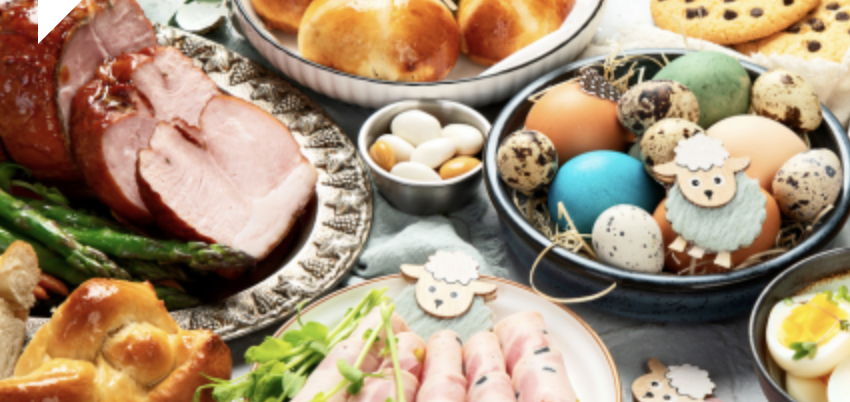 It is worth considering the kitchen supplies for festive preparations well before Easter. It can be practical to look through and partially empty the refrigerator and freezer compartments so that there is enough space for the Easter menu and leftover dishes. Some of the ingredients stored in the freezer can also be used to prepare the holiday menu: previously frozen minced meat, for example, can be an excellent base for meatballs, and spring vegetables can be ingredients for a classic French salad.
One of the biggest challenges of hosting guests at Easter for many families is the uncertain number of guests. That is why it is a good solution to prepare with dry, long-lasting cakes in addition to the more quickly perishable, foamy or creamy cakes. Linzer, pogácsa, cheese crisps or hókifli can be prepared in larger quantities, can be kept on the table for longer, and can even be eaten in the weeks after the holiday. These cakes can even be preserved by freezing, so they can be used later.
Traditional Easter dishes, such as ham, ham rolls, boiled eggs, egg salad, various fried meats or mousse-cream cakes, are particularly perishable foods, and therefore require increased attention from a food safety perspective. It is worth putting only small portions of these on the table at a time, and if they run out, replace them from the refrigerator. Safe storage is especially important during the holiday season: the ideal temperature of the refrigerator is between 0 and 4°C and you should also pay attention to ensuring that perishable foods do not remain at room temperature for more than two hours.
When planning the holiday menu, we should also think about how we will use the leftovers in the following days. For example, boiled eggs can be used to make egg cream, potato casserole or even pasta salad. Leftover ham can be an excellent base for a hearty bean soup, lentil stew, cheese and ham pasta or sandwich spread. The braided cake doesn’t have to go to waste either: you can make poppy seed cake, gratin cake or French toast from it. Such thoughtful solutions not only make meals in the days after Easter more varied, but also help prevent food waste.
We can also pay attention to sustainability in one of the popular programs of Easter preparation, egg painting. We can also use natural ingredients to color eggs, even from food waste generated in the kitchen: onion or red onion peel, beetroot peel, the outer leaves of purple cabbage or even coffee grounds can give beautiful, natural colors to Easter eggs.
Whether we color blown or boiled eggs, we should try to consume the valuable food. For example, raw eggs blown from eggs can be frozen for later baking or cooking, and boiled eggs – if they have been stored in the refrigerator until then – can be safely offered on the Easter table.
Related news

Kifli.hu is preparing to deliver approximately sixty thousand orders
🎧 Hallgasd a cikket: Lejátszás Szünet Folytatás Leállítás Nyelv: Auto…
Read more >
REGIO Játék: Families spend a maximum of ten thousand forints on Easter gifts
🎧 Hallgasd a cikket: Lejátszás Szünet Folytatás Leállítás Nyelv: Auto…
Read more >All ALDI stores will be open on Holy Saturday
🎧 Hallgasd a cikket: Lejátszás Szünet Folytatás Leállítás Nyelv: Auto…
Read more >Related news
Star chefs have moved to the PRIMA store in Aranyhegyi
🎧 Hallgasd a cikket: Lejátszás Szünet Folytatás Leállítás Nyelv: Auto…
Read more >
Kifli.hu is preparing to deliver approximately sixty thousand orders
🎧 Hallgasd a cikket: Lejátszás Szünet Folytatás Leállítás Nyelv: Auto…
Read more >
Tourism companies’ expectations have improved for the second month in a row
🎧 Hallgasd a cikket: Lejátszás Szünet Folytatás Leállítás Nyelv: Auto…
Read more >
