
FAO food price index falls for five months

The Food and Agriculture Organization of the United Nations (FAO) on Friday released its latest report on the world food commodity price index, which showed that food prices fell for the fifth consecutive month in January, mainly due to lower international prices for dairy products, sugar and meat.
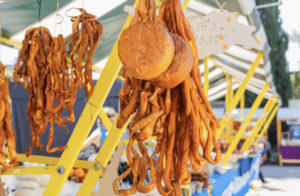 The FAO Food Price Index – which tracks the monthly price changes of the most important food raw materials in international trade – reached an average of 123.9 points in January. This was 0.4% lower than the previous month and 0.6% below the level a year earlier.
The FAO Cereal Price Index rose 0.2% compared to December, despite slight declines in world wheat and maize prices. Ample wheat stocks offset weather concerns over dormant crops in Russia and the United States, while ample global maize stocks compensated for adverse weather conditions in Argentina and Brazil and continued strong ethanol demand in the United States. In contrast, the FAO Total Rice Price Index rose 1.8%, driven by stronger demand for aromatic rice varieties.
Vegetable oil prices rose 2.1% in January. World palm oil prices rose on the back of a seasonal production slowdown in Southeast Asia and strong global import demand, while soybean oil prices rose on the back of tighter export supplies in South America and expected strong biofuel demand in the United States. International sunflower oil prices also rose, driven by tight supplies in the Black Sea region. Rapeseed oil prices, on the other hand, fell slightly, reflecting ample supplies in the European Union following recent strong imports.
The FAO Meat Price Index fell by 0.4% compared to December, mainly due to lower pork prices, driven by strong global supply and subdued international demand. World poultry prices rose, driven mainly by price increases in Brazil, driven by strong international demand. Meanwhile, sheep and beef prices remained broadly stable; in the latter case, increased shipments from Brazil to China offset the rapid depletion of the US duty-free quota.
Dairy product quotations fell by 5.0% compared to December, mainly due to lower cheese and butter prices due to ample supply. In parallel, world prices for skimmed milk powder strengthened, supported by renewed import demand from the Middle East, North Africa and parts of Asia.
The FAO Sugar Price Index fell by 1.0% in January, reflecting the expected supply expansion in the current season, driven by a significant recovery in Indian production, favourable crop prospects in Thailand and an overall positive production outlook in Brazil.
More details can be found here.
Global cereal supply/use ratio could rise to highest level since 2001
The FAO has released its latest forecast for global cereal production in 2025, with total output expected to reach 3,023 million tonnes, with record yields for wheat, cereals and rice. The upward revision reflects higher-than-expected wheat yields in Argentina, Canada and the European Union, as well as higher maize acreage and yields expected in China and the United States. Global rice production is also likely to increase, led by India, Bangladesh, Brazil, China and Indonesia.
The new Cereals Stocks and Demands Flash Report also assesses the 2026 crop outlook for the Northern Hemisphere. In India, winter wheat acreage is expected to reach a record high, driven by high domestic prices and favorable weather conditions, while
Related news
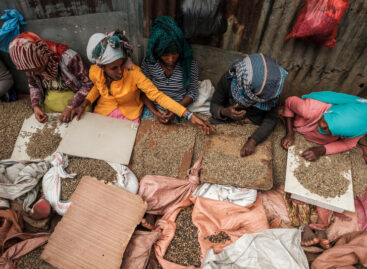
FAO welcomes UN resolution on International Coffee Day
🎧 Hallgasd a cikket: Lejátszás Szünet Folytatás Leállítás Nyelv: Auto…
Read more >
FAO food price index rises again in February after five months
🎧 Hallgasd a cikket: Lejátszás Szünet Folytatás Leállítás Nyelv: Auto…
Read more >
Corn 2026: soil moisture and hybrid choice may decide the season
🎧 Hallgasd a cikket: Lejátszás Szünet Folytatás Leállítás Nyelv: Auto…
Read more >Related news

SPAR renovated three of its stores with an investment of 880 million forints
🎧 Hallgasd a cikket: Lejátszás Szünet Folytatás Leállítás Nyelv: Auto…
Read more >
The government is helping dairy farmers with another 7 billion forints
🎧 Hallgasd a cikket: Lejátszás Szünet Folytatás Leállítás Nyelv: Auto…
Read more >
Vál-Völgye Bakery won ten awards at the 22nd International Bread Competition
🎧 Hallgasd a cikket: Lejátszás Szünet Folytatás Leállítás Nyelv: Auto…
Read more >
