NKFH-NAV action at the customs border – goal: to filter out dangerous products ordered from online platforms

The National Trade and Consumer Protection Authority (NKFH) and the National Tax and Customs Authority (NAV) inspected products ordered from third countries on online platforms at Liszt Ferenc International Airport. The aim of the joint inspection was to filter out products that were not compliant with product safety standards. On the day of the inspection, 500 packages were inspected by the authorities, 60 percent of which were found to be dangerous – primarily toys, plush toys, textile products and battery chargers were found to be unsafe or non-compliant.
The NKFH and NAV – with the involvement of the Budapest Metropolitan Government Office – conducted a targeted inspection on 5 December 2025. The inspection covered the market surveillance inspection of products ordered from third countries on online platforms. The authorities inspected, among other things, toys, technical goods, cosmetic products and Christmas accessories.
The joint customs action is one of the most important elements of the 7-point consumer protection action plan announced this fall. Hungary is one of the most important gateways for products from third countries, so decisive and strong action is needed at the customs border to prevent unsafe products from entering the country. With official action, we protect not only Hungarian and EU consumers, but also law-abiding Hungarian businesses and thus the purity of the market, which is clearly justified by market trends within online trade.
Third-country online platforms already had a turnover of HUF 493 billion in 2024, according to the data of the one-stop tax system. The turnover of international e-retailers increased by 80 percent last year alone, and by a further 28 percent in the first half of this year, while online stores based in Hungary achieved an average growth of 10 percent. This has also contributed to the fact that today every 10th forint we spend online: while the share of technical goods is nearly 50 percent, clothing has a weight of about 20 percent.
The expansion of e-commerce turnover is also confirmed by customs data. This year, 40 percent more packages are arriving than last year. NAV handled 136 million low-value shipments (under 150 euros) through customs in 2024, and this year the number of packages may exceed 190 million.
Both trade and customs data and inspection experiences clearly justify the need for decisive government and regulatory steps regarding products coming from third countries, similar to the French action against certain Far Eastern platforms.
Dr. Lilla Német-Weingartner, President of the NKFH, said that “the most important goal is consumer safety. Therefore, we must filter out dangerous products at the customs border so that they cannot reach customers, either directly or through commercialization – especially not children. A significant part of dangerous products are toys whose small parts can cause choking, or technical products that carry a serious risk of electric shock or fire. As the Christmas holidays approach, increased online orders pose an additional risk, which is why coordinated action by the authorities during this period is particularly justified. Our inspections affect the widest possible range of products: from the aforementioned toys (such as plastic dolls, projectile toys, plush figures) to textile products and battery chargers to technical products. There are product categories where up to 80 percent of the goods fail the tests, such as battery chargers and some technical products. articles, which makes it clear: targeted actions like the current one are not one-off interventions, but a necessary part of everyday official work.
One of the most important pillars of the 7-point consumer protection action plan is to protect Hungarian families from illegal or life-threatening products right at the border. Hungary is one of the most important gateways to the European Union, so our responsibility is not only to strengthen the safety of Hungarian but also EU consumers. The current action also proves that the cooperation established with the Hungarian Tax Service and government agencies is working, and we are able to take effective action against unsafe products coming from third countries.
Our most important message to consumers is clear: they can count on us. We are there at every point where a dangerous product could enter the market – from the customs border to online commerce – and we are working with all means to ensure that Hungarian people can buy safe products.”
Dr. Kristóf Péter Bakai, Deputy President of the Hungarian Customs and International Affairs Office, highlighted that “the long-standing, close cooperation has now reached another milestone. Our common goal remains to prevent the inflow of illegal and dangerous products. The task of the Hungarian Customs and Excise Office is to filter out from the consignments everything that may pose a risk to the public.
Related news

The consumer protection authority initiated the recall of contaminated lemongrass leaves
🎧 Hallgasd a cikket: Lejátszás Szünet Folytatás Leállítás Nyelv: Auto…
Read more >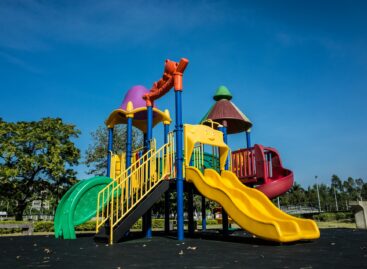
NKFH: increased official supervision for the safety of playgrounds
🎧 Hallgasd a cikket: Lejátszás Szünet Folytatás Leállítás Nyelv: Auto…
Read more >
NKFH: leisure facilities and equipment are being inspected nationwide
🎧 Hallgasd a cikket: Lejátszás Szünet Folytatás Leállítás Nyelv: Auto…
Read more >Related news
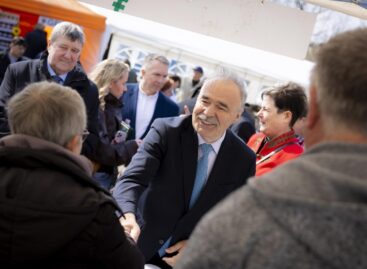
Ministry of Agriculture has started the preparation of a new state origin certification mark
🎧 Hallgasd a cikket: Lejátszás Szünet Folytatás Leállítás Nyelv: Auto…
Read more >
What do we spread on our bread? Young people prefer butter, older people prefer margarine
🎧 Hallgasd a cikket: Lejátszás Szünet Folytatás Leállítás Nyelv: Auto…
Read more >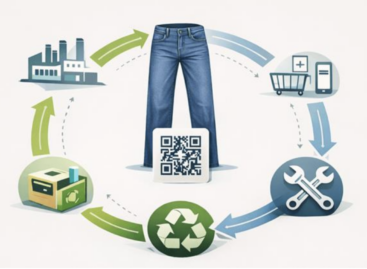
Products in the EU will receive a digital passport
🎧 Hallgasd a cikket: Lejátszás Szünet Folytatás Leállítás Nyelv: Auto…
Read more >
