
MNB Director: The central bank expects higher inflation and higher economic growth this year

Inflation peaked in February, and in 2025, consumer price growth will average between 4.5-5.1 percent, and will decrease again to the central bank’s tolerance band at the beginning of 2026, András Balatoni, head of the Economic Forecasting and Analysis Directorate of the Hungarian National Bank (MNB), said on Thursday at a press conference presenting the March Inflation Report.
 The Hungarian National Bank (MNB) has raised its inflation forecast for this year: it revised it from the 3.3-4.1 percent range expected in December to 4.5-5.1 percent. While it changed its GDP growth forecast for 2025 from the 2.6-3.6 percent expected in December to 1.9-2.9 percent in its latest Inflation Report. According to the report, inflation in 2026 may range between 2.9-3.9 percent, and in 2027 between 2.5-3.5 percent. GDP growth next year may range between 3.7-4.7 percent, while in 2027 it may be 2.8-3.8 percent.
András Balatoni explained: inflation has been on an upward trajectory since September, which is not a unique phenomenon, it can also be observed globally. The rate of price increases at the beginning of the year was above the historical average for industrial goods, market services and food. The strong price dynamics of market services are pointing towards higher inflation throughout the year. Both household and corporate price expectations have increased, he said.
He noted that domestic food prices are significantly exposed to the rise in world food prices. They expect the continued impact of rising world food prices, which is temporarily restrained by the restriction of food price gaps.
According to their calculations, the measure will reduce inflation by 0.8 percentage points in April and May and temporarily reduce the rate of food price increases to below 4 percent, they indicated. After May, they expect a gradual recovery of margins and some realignment.

Related news
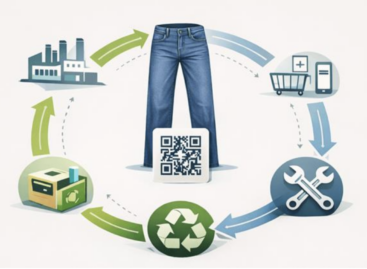
Products in the EU will receive a digital passport
🎧 Hallgasd a cikket: Lejátszás Szünet Folytatás Leállítás Nyelv: Auto…
Read more >
Henkel achieved organic growth in 2025, profitability improved thanks to innovation and increased efficiency
🎧 Hallgasd a cikket: Lejátszás Szünet Folytatás Leállítás Nyelv: Auto…
Read more >
The chamber will take over the registration of more than 640 thousand individual entrepreneurs from 2027
🎧 Hallgasd a cikket: Lejátszás Szünet Folytatás Leállítás Nyelv: Auto…
Read more >Related news

What do we spread on our bread? Young people prefer butter, older people prefer margarine
🎧 Hallgasd a cikket: Lejátszás Szünet Folytatás Leállítás Nyelv: Auto…
Read more >
Products in the EU will receive a digital passport
🎧 Hallgasd a cikket: Lejátszás Szünet Folytatás Leállítás Nyelv: Auto…
Read more >
The Hungarian sports drink manufacturer has launched three new functional drinks
🎧 Hallgasd a cikket: Lejátszás Szünet Folytatás Leállítás Nyelv: Auto…
Read more >
