
Microsoft: AI will evolve from a digital tool to a digital assistant this year

Microsoft’s view is that 2026 could be a turning point in how we work, create, learn and solve problems with artificial intelligence. Hungary is in a good position in for this transformation: the infrastructure is in place, so the key to moving forward lies primarily in strengthening digital skills.
This article is available for reading in Trade magazin 2026/04
Spreading at a pace that surpasses all previous innovations
According to the AI Diffusion Report, more than half of the adult population in developed countries uses AI-powered solutions on a daily basis, and more than 1.2 billion people worldwide already live with this technology. In Hungary AI penetration is approaching 30%, which is in line with the regional average but lags behind the 40-50% level typical in Western and Northern European countries. According to Microsoft’s forecast, the role of AI will radically transform in 2026, exceeding previous expectations and no longer just providing answers and automating routine tasks, but acting as a collaborative partner. AI will be able to complement human knowledge, support creative processes and bring new approaches to problem solving. This shift in perspective will be felt in almost all areas of life.
Cybersecurity
AI agents are really taking off this year and as they evolve from tools to teammates in everyday work, the issue of cybersecurity is also entering a new dimension. As AI agents take on an increasingly important role in decision-making and execution, they will need the same protection as their human counterparts. Security shouldn’t be an afterthought to systems, but rather an integral part of the workplace environment. As the attackers themselves use increasingly sophisticated AI tools in cyberspace, AI agents will also be used in cyber defence. The emergence of AI in healthcare could be a real turning point, as the WHO predicts that by 2030 there will be a global shortage of 11 million healthcare workers. AI will play a central role in research and development: in 2026 it won’t just analyse data, summarise studies and answer questions, but it will also actively participate in scientific work.
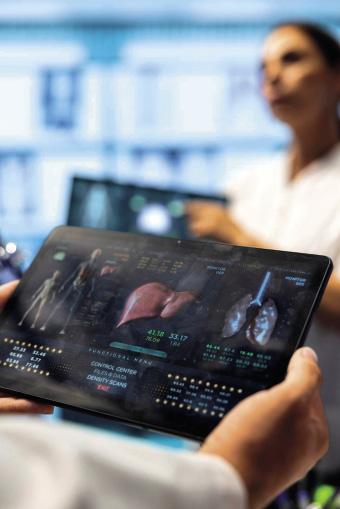
Smarter and more efficient infrastructure
The development of AI systems is no longer about building more and bigger data centres: the focus is now on getting the best performance out of existing machines. Microsoft says the AI infrastructure of the near future will function like a global, interconnected “AI superfactory”, where computing capacity is much better coordinated and more efficiently utilised. The explosive growth of software development is well illustrated by the surge in activity experienced on GitHub in 2025: developers merge 43 million pull requests per month by proposing code changes and reviews, 23% more than a year ago, and the number of commits tracking these changes has increased by 25% to 1 billion. Although quantum computing seemed like science fiction for a long time, we are now closer than ever to a breakthrough, known as “quantum supremacy”.

Related news
AI: Help or Addiction? Recent Research
🎧 Hallgasd a cikket: Lejátszás Szünet Folytatás Leállítás Nyelv: Auto…
Read more >
Zalando is scaling up its use of AI-powered warehouse robots
🎧 Hallgasd a cikket: Lejátszás Szünet Folytatás Leállítás Nyelv: Auto…
Read more >
(HU) FruttaMax Gold szörpök
🎧 Hallgasd a cikket: Lejátszás Szünet Folytatás Leállítás Nyelv: Auto…
Read more >Related news

Brake on Shein’s growth in Europe
🎧 Hallgasd a cikket: Lejátszás Szünet Folytatás Leállítás Nyelv: Auto…
Read more >
GKI: High base rate, low inflation?
🎧 Hallgasd a cikket: Lejátszás Szünet Folytatás Leállítás Nyelv: Auto…
Read more >
Lidl sold nearly 100 million liters of Hungarian milk
🎧 Hallgasd a cikket: Lejátszás Szünet Folytatás Leállítás Nyelv: Auto…
Read more >
