
What is found in our food, plastic packaging, cosmetics – and consequently in our bodies?

In his new book Poisoned Everyday, Dr. Szabolcs Bíró, a doctor of chemical engineering, seeks the answer to the question that concerns more and more people: how do the artificial chemicals used in everyday life affect us, and what can we do about them as average people? The gap-filling publication does not alarm, is not extreme, and does not advocate an unfeasible lifestyle change. Instead, it shows in an understandable, practical and scientifically thorough way how our bodies are polluted and burdened every day – often unnoticed.
We live in a global experiment – involuntarily

Dr. Szabolcs Bíró
Today, humanity has created more than two hundred million artificial chemicals. These were originally developed for convenience and efficiency. For example:
- pesticides for higher yields,
- preservatives for longer shelf life,
- plastics for cheap and (seemingly) hygienic packaging.
The problem begins with the fact that many of these substances harm the human body in the long term. They do not cause damage immediately, but slowly, insidiously, in the form of chronic diseases.
– Humanity has made itself an experimental subject. By the time a substance is found to be problematic, it has already become deeply embedded in our everyday lives, and its removal takes decades – says Dr. Szabolcs Bíró.
Profit or health?
The book also talks frankly about why regulations are delayed, how the affected industries slow down bans, and why the responsibility often shifts from manufacturers to consumers. He cites the tobacco industry as a classic example, which consciously denied the harmful effects of its products for decades.
Not perfect answers – but a usable compass
The book Poisoned Everyday does not promise miracles. Instead, it offers free choice: information, understanding, and concrete options.
– When I put together the logical framework for this book, my goal was to make the end result as practical as possible. And to do this, I had to face the fact that not many people besides me are interested in different chemicals and their biochemical effects. I think most people are interested in what they need to do to live a healthier life. And the “what to do” should be formulated as clearly as possible. Consequently, I did not focus on warning about the chemical ingredients of concern, but on what small things are worth doing in everyday life to make them less of a problem.
The volume is for those who want to maintain or regain their health and are not satisfied with “regulation will solve it.”
Related news

Tetra Pak wins major award
🎧 Hallgasd a cikket: Lejátszás Szünet Folytatás Leállítás Nyelv: Auto…
Read more >
Five WorldStar Packaging Awards 2026 for Rondo!
🎧 Hallgasd a cikket: Lejátszás Szünet Folytatás Leállítás Nyelv: Auto…
Read more >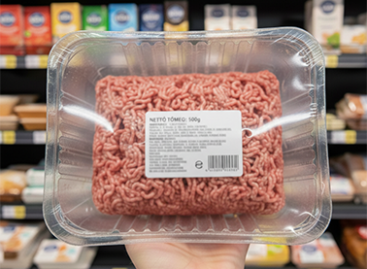
Oversized packaging not only deceives the customer, but also violates the principles of the circular economy
🎧 Hallgasd a cikket: Lejátszás Szünet Folytatás Leállítás Nyelv: Auto…
Read more >Related news

TUTTI turns 40 – a defining Hungarian family company with development spanning generation
🎧 Hallgasd a cikket: Lejátszás Szünet Folytatás Leállítás Nyelv: Auto…
Read more >
The message of Hungarian business leaders for 2026: Consolidation instead of revolution
🎧 Hallgasd a cikket: Lejátszás Szünet Folytatás Leállítás Nyelv: Auto…
Read more >
ALDI will be on Sziget again this year
🎧 Hallgasd a cikket: Lejátszás Szünet Folytatás Leállítás Nyelv: Auto…
Read more >
