
Egg price increases remain moderate

The price increase of eggs will remain moderate – at Easter and in the following years. Hungary is an egg-consuming nation, we eat more than the world average, but domestic production can keep up with demand.
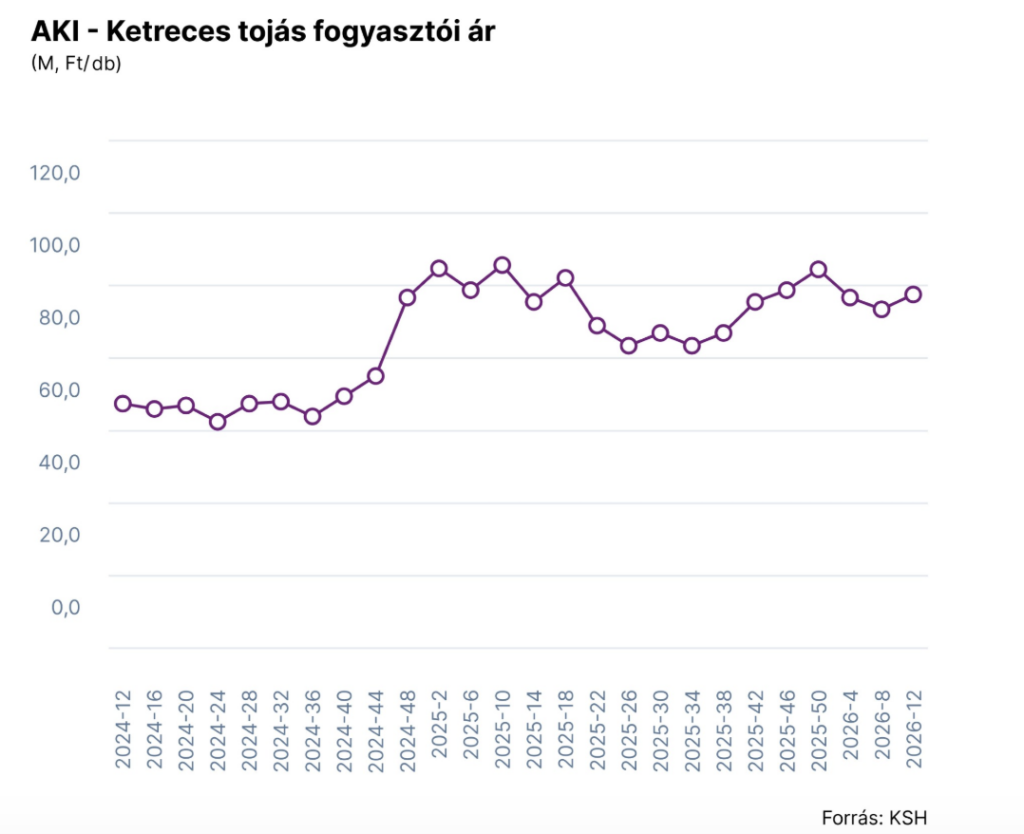
The price increase of eggs at Easter this year – which can be considered normal – will remain moderate – says Zoltán Fórián, agricultural expert at Erste. According to data from the Institute of Agricultural Economics, in the 13th week of this year, caged eggs were only 3 percent more expensive in stores than a year earlier, but in a two-year comparison the price increase is very large, 52 percent.
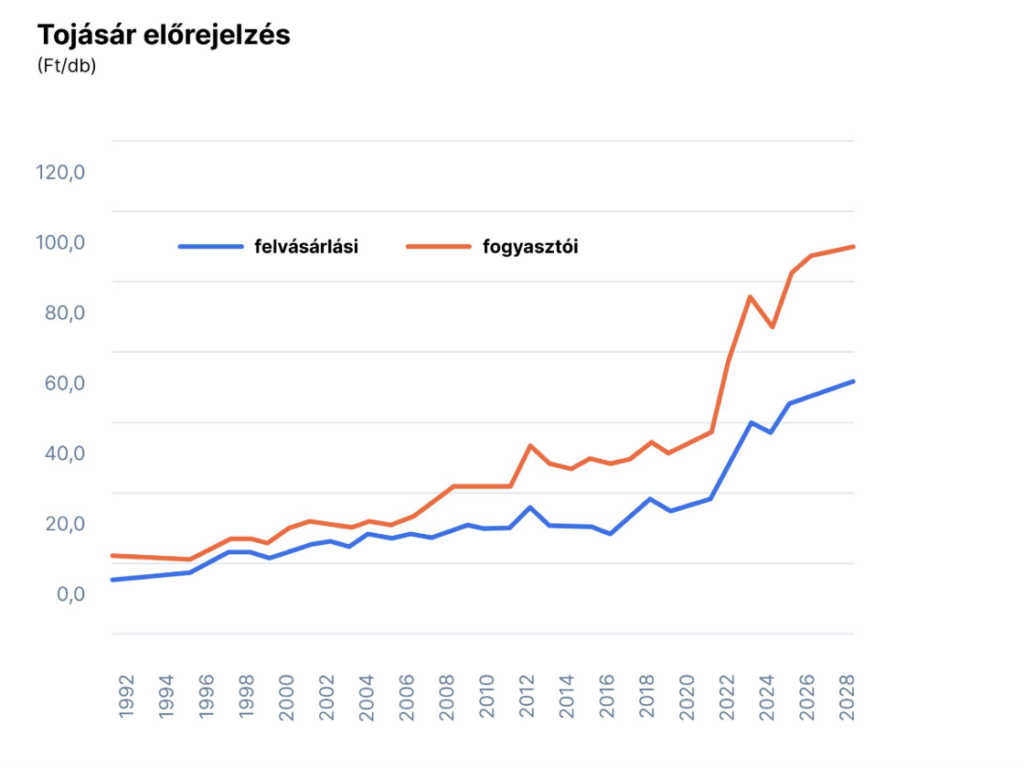
According to the forecast of Erste‘s agricultural workshop, the slow rise in egg prices will remain with us in the years ahead. Zoltán Fórián expects that the difference between purchase and consumer prices will not increase further. According to the forecast, after last year’s average level of 90 forints, the price may only increase to 98 forints by 2028, while producer prices will increase similarly moderately: from last year’s average of 54 forints to 60 forints in the next three years.
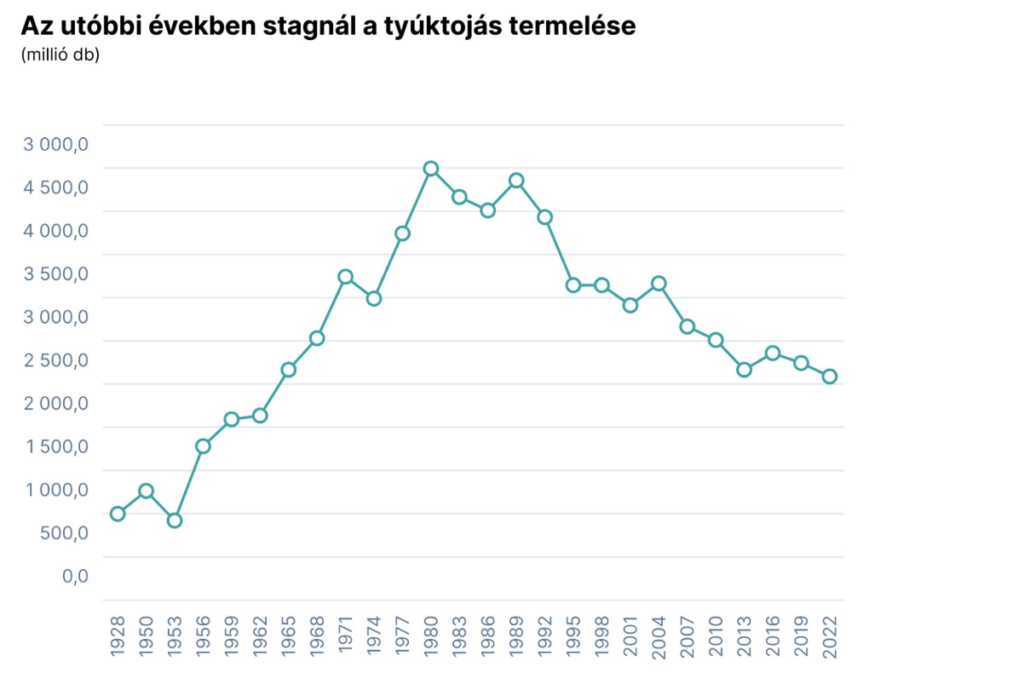
In Hungary, per capita egg consumption reaches 230-240 pieces per year – this exceeds the global average. More than 1.6 trillion eggs are produced worldwide each year, which is more than 10 kilograms per capita. Domestic self-sufficiency – including domestic production – is 80 percent. Production reached four million eggs per year in the mid-1970s, but declined rapidly after the change of regime, and has been around 2.4 billion since 2020. However, while the proportion of eggs from cage farming in the European Union is less than 40 percent, in Hungary it is still 75 percent. Although cage farming is also declining in Hungary, this is more due to EU regulations than consumer demand.
In the European Union, the problem is more the loss of self-sufficiency. Not only the loss of production due to last year’s bird flu epidemic, but the decline in cage farming and the accompanying reduction in capacity are also clearly visible in the increase in imports. EU egg imports jumped by more than 50 percent last year, with three-quarters of them coming from Ukraine.
Related news

Big shopping begins, trade is prepared
🎧 Hallgasd a cikket: Lejátszás Szünet Folytatás Leállítás Nyelv: Auto…
Read more >
Nearly one and a half kilograms of ham and two dozen eggs: this is how Hungarians prepare for Easter
🎧 Hallgasd a cikket: Lejátszás Szünet Folytatás Leállítás Nyelv: Auto…
Read more >
Waste-free Easter with the advice of the Without Leftovers program
🎧 Hallgasd a cikket: Lejátszás Szünet Folytatás Leállítás Nyelv: Auto…
Read more >Related news
Big shopping begins, trade is prepared
🎧 Hallgasd a cikket: Lejátszás Szünet Folytatás Leállítás Nyelv: Auto…
Read more >
Nearly one and a half kilograms of ham and two dozen eggs: this is how Hungarians prepare for Easter
🎧 Hallgasd a cikket: Lejátszás Szünet Folytatás Leállítás Nyelv: Auto…
Read more >
The goal is to improve the quality of life for generations: Nestlé’s summary of shared value creation has been published
🎧 Hallgasd a cikket: Lejátszás Szünet Folytatás Leállítás Nyelv: Auto…
Read more >

