
Milestone in domestic energy policy: new package of recommendations supports sustainable solar and wind power plant developments

A scientifically based policy recommendation package and a new GIS methodology to help designate facilitated areas for renewable energy sources – primarily solar and wind power plants became available thanks to international cooperation, which was discussed by industry, local government and government experts at the WWF Hungary conference on November 28, 2025. These tools were developed by the EUKI RENewLand project, which is being carried out by WWF Hungary, the HUN-REN Energy Research Center, and Romanian and Bulgarian partners, with the aim of creating a practical methodology to accelerate the renewable energy transition.
The facilitated areas – the EU RED III. According to the requirements of its directive for all member states, areas where investments based on solar and wind energy can be implemented safely, respecting nature conservation and social aspects. The project fills a gap in this area, as the coordination of energy policy goals and ecological constraints has so far only been partial, but now a multidimensional, coordinated system of criteria has been developed.
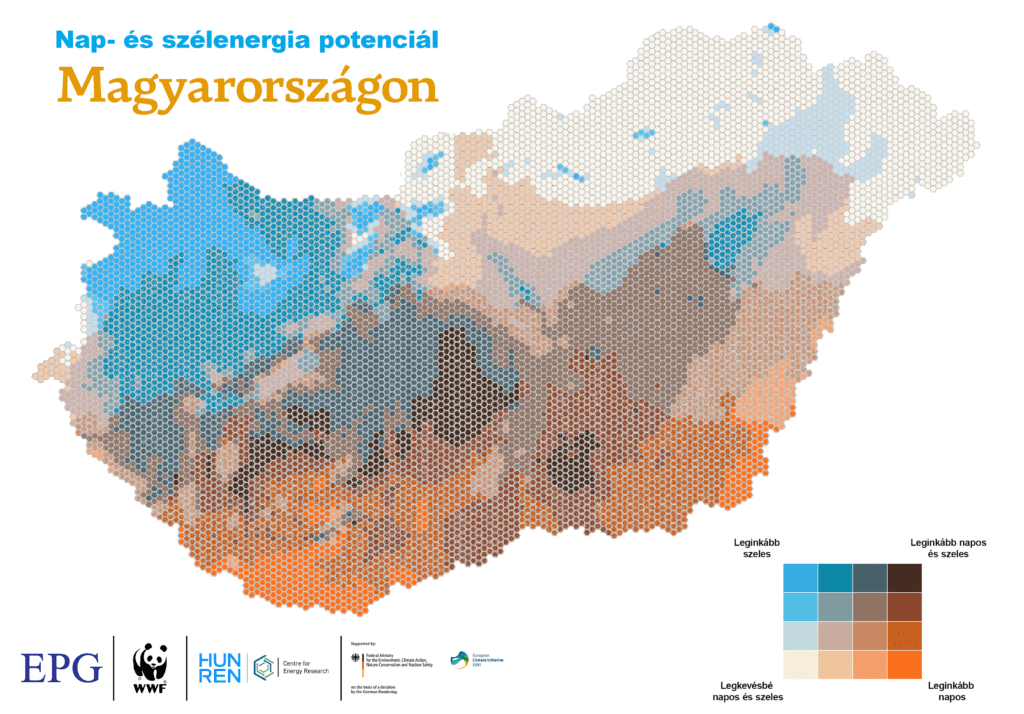
One of the greatest achievements of the RENewLand project is the development of a detailed GIS analysis concept that examines the country’s territory from several aspects: among other things, it takes into account landscape and nature conservation protection, species protection aspects, soil characteristics, land use conditions, proximity to populated areas and the availability of the electricity grid. The model aims to filter out regions where the installation of solar parks or wind farms would cause environmental risks and to show those areas where investments can be implemented with low environmental risk. Based on preliminary results, in the current regulatory environment, barely 1-2 percent of Hungary’s territory may prove suitable for designation as facilitated areas. This potential does not seem significant, but according to the maps prepared by experts from WWF and the HUN-REN Energy Research Center, twenty times the country’s current extremely low wind power capacity (330 MW) (up to 7,000 MW) could theoretically be created in a fraction of these areas in the next decade, but the development potential could be an expansion of capacity of up to 10,000 MW in the longer term.
In addition to the GIS analyses, it is important to highlight the a policy recommendation package that formulates specific proposals for modifying and improving the legislative environment. These include, for example, making the technical requirements limiting the installation of wind farms more viable, streamlining the licensing processes for renewable energy projects, and introducing regulatory frameworks that specifically encourage the utilization of degraded areas for energy purposes. The document emphasizes that local communities must be effectively involved – even in the form of energy cooperatives – which can contribute to increasing social support for such energy developments.
“The GIS analysis and policy recommendation package representing the results of the project were based on a broad professional consultation process, in which ministries, research institutes, local governments, civil and professional organizations, energy enterprises and local communities participated. We can say that we have implemented one of the most important domestic model projects for the development of a sustainable energy system. We hope that the knowledge produced will contribute in the future to Hungary expanding its renewable energy capacity while making responsible decisions not only from an economic and energy perspective, but also from an ecological and social perspective”
– said Csaba Csontos, head of the WWF Hungary climate protection program.
The The main results of the RENewLand project can be found on the project website.
Link to attached map: Solar and wind energy potential in Hungary (prepared by: Tamás Soha, HUN-REN Energy Research Center)
Related news
A change of perspective in forest management
🎧 Hallgasd a cikket: Lejátszás Szünet Folytatás Leállítás Nyelv: Auto…
Read more >
Water retention and ecological water replenishment: from now on, every idea will go into your pocket
🎧 Hallgasd a cikket: Lejátszás Szünet Folytatás Leállítás Nyelv: Auto…
Read more >
Water retention and ecological water replenishment: from now on, every idea goes into your pocket
🎧 Hallgasd a cikket: Lejátszás Szünet Folytatás Leállítás Nyelv: Auto…
Read more >Related news

Green transition on the air conditioning market
🎧 Hallgasd a cikket: Lejátszás Szünet Folytatás Leállítás Nyelv: Auto…
Read more >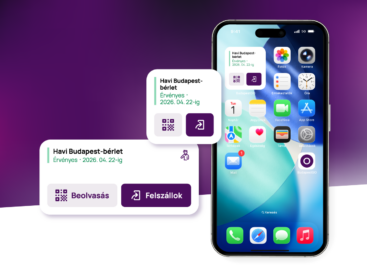
BudapestGO continues to develop: the March application update brings more convenient use
🎧 Hallgasd a cikket: Lejátszás Szünet Folytatás Leállítás Nyelv: Auto…
Read more >
Why does the rabbit lay eggs at Easter?
🎧 Hallgasd a cikket: Lejátszás Szünet Folytatás Leállítás Nyelv: Auto…
Read more >
