
Spring has come, the purchase of garden seeds has begun

Gardening work has begun nationwide, and in parallel with this, the season of colorful bagged garden seeds reaches its peak in March and April. According to data from the Seed Association Interprofessional Organization and Product Council, hobby gardeners in our country can choose from about 1,000 varieties of vegetables and 500 varieties of flowers, and due to the increase in production costs, turnover may amount to about 6 billion forints this year.
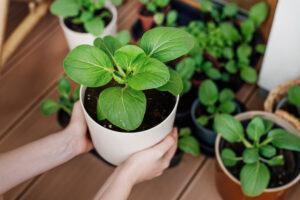
(Pak-choi is becoming increasingly popular in Hungary as well Photo: KRQ)
With the spring warming, hobby gardeners have started purchasing seeds nationwide. Although retailers have been waiting for customers with stocks filled since January, the peak of seed sales can traditionally be dated to March and April. Typically, the purchase does not happen all at once: many people only buy seeds of heat-loving plants, such as beans, cucumbers or sweet corn, at the end of April or beginning of May, explained Ferenc Marton, a member of the Vegetable Section Committee of the Hungarian Seed Association. According to the association’s data, about 17-20 million colorful bagged seeds are sold on the domestic market annually, and due to increasing production and other costs, the turnover could be worth about 6 billion forints this year.
Traditional plants and novelties in the vegetable garden
The classic vegetable species continue to be the most popular among hobby gardeners: the demand for seeds of carrots, parsley, cucumbers, beets, zucchini and sweet corn is stable. In recent years, interest in special vegetables has increased due to cooking shows and gastronomic trends: for example, the essential herb of Italian cuisine, several varieties of basil, as well as tomato specialties and previously less known salad varieties, chili peppers. For lovers of Asia, Chinese cabbage, ribbed cabbage (pak-choi), melons, Asian lettuce, Hokkaido-type pumpkin (Uchiki kuri) seeds are an opportunity.
Urban gardening and eco-awareness
One of the defining trends in recent years has been the rise of urban gardening. More and more people are growing vegetables and herbs on a balcony or terrace. Choosing the right pot and soil is key, as the limited amount of land significantly affects the yield. At the same time, the eco-conscious approach is strengthening: more and more people are using plant associations, for example, planting marigolds or velvet flowers next to crops to keep pests away. The creation of bee-friendly gardens is also becoming more and more common, which is important not only from an aesthetic but also from an ecological perspective. “I would be very happy if gardening became trendy among children. It would help to make it more popular if parents and grandparents playfully encouraged their children and grandchildren to plant crops together. For success, it is important to choose plants that are easy to grow and that are sure to produce flowers. Home-grown tender green peas are an excellent delicacy, or sunflowers and marigolds are spectacular flowers,” explained Ferenc Marton.
Small gardens are not spared by the changing climate
However, cultivation is increasingly affected by extreme weather conditions. Water-saving solutions, such as collecting rainwater or mulching, are gaining an increasingly important role. According to experts, the reason for unsuccessful germination is often not the quality of the seed, but the unsuitable sowing conditions. Too cold soil, incorrect sowing depth or a drying out seedbed can all hinder germination. The most important factors for successful germination are the right soil temperature, the right sowing depth and ensuring even moisture in the seedbed. Bagged seeds retain their germination capacity within the validity period under appropriate storage conditions. They should be stored in a dry, cool, low-humidity room until use, but it is advisable to use them in the year of purchase, advises Ferenc Marton.
Quality and safety on the seed market
The advantage of domestic seeds is that they adapt well to local conditions, and the information on the packaging helps gardeners in successful cultivation. Seeds sold in domestic stores are also officially checked, so buyers get reliable products. In addition to the species and variety name, the bags of home garden seeds usually contain a short, multilingual description of the characteristics of the variety and pictograms with basic information necessary for sowing. In addition, the bag label shows the amount of seeds in grams or grains, the time of metal sealing and the seed batch number, as well as its validity period. Some bags have a “plant passport” label, i.e. a label certifying phytosanitary requirements. The plant passport certifies that the cultivation and production were carried out in compliance with phytosanitary requirements and at the same time the product can be traced back to the producer.
VTSZ
Related news
Spring has arrived, the procurement of garden seeds has begun
🎧 Hallgasd a cikket: Lejátszás Szünet Folytatás Leállítás Nyelv: Auto…
Read more >
Seed sampling in focus: VSZT and Nébih held a training day
🎧 Hallgasd a cikket: Lejátszás Szünet Folytatás Leállítás Nyelv: Auto…
Read more >
Seed sampling in focus: VSZT and Nébih held a training day
🎧 Hallgasd a cikket: Lejátszás Szünet Folytatás Leállítás Nyelv: Auto…
Read more >Related news

EY: The EU customs system is undergoing fundamental changes: the reform will affect many companies
🎧 Hallgasd a cikket: Lejátszás Szünet Folytatás Leállítás Nyelv: Auto…
Read more >
A single courier can save up to 9 liters of fuel per day – this is how online ordering changes fuel consumption
🎧 Hallgasd a cikket: Lejátszás Szünet Folytatás Leállítás Nyelv: Auto…
Read more >
Shoppers loved chocolate bars
🎧 Hallgasd a cikket: Lejátszás Szünet Folytatás Leállítás Nyelv: Auto…
Read more >
