
Beef: Statistics are lagging behind despite a 40% increase in store prices

According to data from the Hungarian Central Statistical Office, the price of beef in domestic retail increased dramatically in 2025: the price per kilogram of grilled beef increased from 4,480 forints to 6,270 forints in one year, an increase of almost 40%. This is in stark contrast to the fact that consumer prices rose by an average of 4.4% in Hungary in the same year.
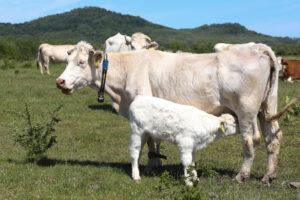 The increase in prices is primarily due to the increase in the purchase price of live cattle – this was pointed out by Zsombor Wagenhoffer, the executive director of the Hungarian Livestock Breeders’ Association. According to the expert, the process did not occur suddenly: an upward trend was already visible in 2024, which strengthened further in 2025, and this was also reflected in the prices of processed products – including beef in stores.
There was a VAT reduction, not a spectacular price drop
The article reminds us: from January 1, 2025, the VAT rate on beef (more precisely, beef and offal) was reduced to 5%, but this in itself did not bring a noticeable price reduction in stores. The reasons cited are the cost pressure accumulating on the processing side and the high level of producer prices, which processors find it increasingly difficult to “pass on” to retail.
It’s not just a feed issue: the “cost advantage” of grazing is also weather-dependent
Feed is an important item in the cost structure of beef cattle farming, but according to the article, the key to stable operation on many farms is long-term sustainable grazing, which is significantly cheaper than stable farming – but strongly depends on rainfall conditions and regional conditions. The report indicates a difference between Transdanubia and Great Plain: in the latter, feed supply problems have repeatedly occurred in several areas.
In grassland management, mowing practices are also becoming more valued: stubble that is too low can damage the grass, while stubble that is over 10 cm can help preserve soil moisture and re-sprout – i.e. indirectly also in feed security.
Labor force and disease control: two old, but increasingly expensive item
According to the article, one of the long-term problems in the beef cattle sector is the labor shortage: not only are there few applicants, but also long-term committed labor with animal husbandry experience is becoming increasingly difficult to find. In addition, disease control preparedness (farm disease control plan, risk-based vaccination, avoidance of traffic restrictions) is also a cost and organizational factor that farms must “price” into their operations.
Márton Török, the managing director of the Hungarian Charolais Breeders Association, emphasizes that a significant part of the domestic beef cattle sector produces for export, while domestic beef consumption is traditionally low. For this reason, there is no direct, easily deducible correspondence between store prices and domestic breeding; Price development is also strongly influenced by broader – European, partly Eastern European – market processes.
Related news

Domestic inflation was still high in 2025 compared to the EU
🎧 Hallgasd a cikket: Lejátszás Szünet Folytatás Leállítás Nyelv: Auto…
Read more >
Markets facing a structural turning point in 2026
🎧 Hallgasd a cikket: Lejátszás Szünet Folytatás Leállítás Nyelv: Auto…
Read more >
Will food be more expensive in Hungary than last summer?
🎧 Hallgasd a cikket: Lejátszás Szünet Folytatás Leállítás Nyelv: Auto…
Read more >Related news

What do we spread on our bread? Young people prefer butter, older people prefer margarine
🎧 Hallgasd a cikket: Lejátszás Szünet Folytatás Leállítás Nyelv: Auto…
Read more >
Products in the EU will receive a digital passport
🎧 Hallgasd a cikket: Lejátszás Szünet Folytatás Leállítás Nyelv: Auto…
Read more >
The Hungarian sports drink manufacturer has launched three new functional drinks
🎧 Hallgasd a cikket: Lejátszás Szünet Folytatás Leállítás Nyelv: Auto…
Read more >
