
400,000 people already use car sharing, but the number of people driving their own cars is not decreasing

Today, more than 400,000 people in Budapest use car-sharing services, while the Hungarian car fleet is growing year by year – last year there were 4.2 million cars registered. The two trends are not opposed to each other: sharing and ownership are developing in parallel. What this means for the future of transport will be one of the exciting questions of the Transport Research Arena 2026 (TRA 2026) European transport science conference, held in Budapest in May.
 The shared car fleet in Budapest is young: on average 1-3 years old. In contrast, the average age of privately owned cars in Hungary exceeds 15 years. This contrast well summarizes why car-sharing is an attractive alternative – especially in the capital. Three operators share the market: MOL Limo has more than 600 vehicles, GreenGo has around 500, and AutoWallis Group’s Wigo also has around 500.
Most of the fleets are electric or partly electric. MOL Limo expanded into rural areas last year and is constantly offering new types of vehicles and rental options, while in the case of GreenGo, environmental awareness is one of the most important aspects: it has saved 5,000 tons of carbon dioxide since its launch. Business use has grown exponentially in recent years for all three operators.
Car sharing is not only popular in the car form: 4.4 million trips were made in Budapest last year with shared e-scooters – 19 percent more than a year earlier. The city has also made progress in regulation: 940 designated Mobi points have brought the previously chaotic scooter parking into order. The figures are also telling in a European comparison: a total of 640 million shared mobility trips took place on the continent in 2024.
This does not mean that owning a car is being pushed into the background. The Hungarian vehicle fleet has grown by 12 percent since 2019, with 78 cars per 100 households today – a decade ago, this number was 54. There is also a lot of movement in the used car market: 4.95 million inquiries were recorded on the Használtautó.hu website during 2025 (this is how many times the seller’s email address or phone number was requested in advertisements), which is 2.7% more than in 2024, even though the average purchase price increased by 7.4%, to 5.13 million forints.
According to a McKinsey European survey, only 68 percent of Generation Z members consider it important to own a car, compared to 90 percent of older people.
According to Deloitte research, nearly a third of young adults would choose to use a car on a subscription basis instead of buying one. However, major consulting firms are not predicting a revolution: according to Roland Berger, the private car will remain the dominant form of transport until 2040, but leasing, subscription and occasional rental will gradually gain ground.
“The question today is not whether the car will disappear, but how the meaning of ownership will change. The car will remain with us for the time being, but the logic of exclusive ownership is weakening. The market is no longer just about the number of units sold, but increasingly about a combination of ownership, leasing, subscription and occasional use.”
– said Szabolcs Ress, conference director of the Transport Research Arena 2026.
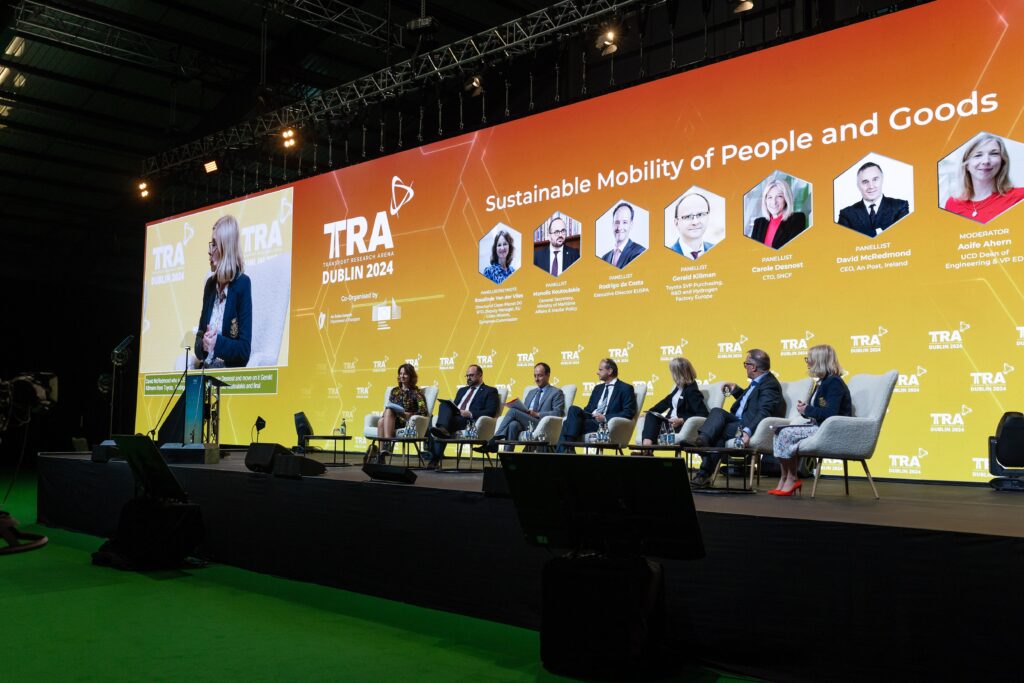
Among the issues shaping the future of transport, this transformation will also be discussed at the TRA 2026 (Transport Research Arena) conference, which will be held from May 18-21. will be held at the Hungexpo in Budapest. Europe’s largest and most prestigious transport research and innovation conference, organised every two years by the European Commission and international professional organisations, will bring together more than 3,000 researchers, industry professionals and decision-makers from 69 countries.
The conference’s motto “Re-Generation in Transport” signifies the generational renewal of transport – from shared mobility to digitalisation to the green transition.
The program will address shared transportation solutions, integrated mobility platforms, and how people’s relationship with cars is changing in separate sections.
Related news

BMW sales in Hungary increased by 24.5 percent in the first quarter
🎧 Hallgasd a cikket: Lejátszás Szünet Folytatás Leállítás Nyelv: Auto…
Read more >
Transportation in the smart cities of the future – how do self-driving and related technologies make our lives safer?
🎧 Hallgasd a cikket: Lejátszás Szünet Folytatás Leállítás Nyelv: Auto…
Read more >
Slowing electric transition, sales above EU average: this was the regional car market in 2025
🎧 Hallgasd a cikket: Lejátszás Szünet Folytatás Leállítás Nyelv: Auto…
Read more >Related news

István Nagy: the pig sector has received further assistance
🎧 Hallgasd a cikket: Lejátszás Szünet Folytatás Leállítás Nyelv: Auto…
Read more >
Weight loss injections: a breakthrough in the treatment of obesity, but access and price are still bottlenecks
🎧 Hallgasd a cikket: Lejátszás Szünet Folytatás Leállítás Nyelv: Auto…
Read more >
Ministry of Agriculture: At the initiative of Hungary, another EU source will help farmers affected by last year’s drought
🎧 Hallgasd a cikket: Lejátszás Szünet Folytatás Leállítás Nyelv: Auto…
Read more >
