
One of Hungary’s largest wind power plant investments starts in the Kisalföld

Green Energy Investhor Zrt. (GEI) is launching a large-scale wind power development in the Kisalföld: the investment planned in the Vadosfa area, in an area of approximately 15 kilometers, will create a total of 499 MW of new installed capacity with 70 modern wind turbines, and is expected to provide 1,200 GWh of electricity production annually. The investment is currently in the construction permit phase. The project will nearly triple the current domestic installed wind capacity of approximately 330 MW, thus representing a significant step in expanding Hungary’s renewable energy production and greening the energy mix.
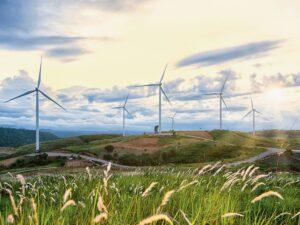 Hungary currently has approximately 330 MW of installed wind power capacity, which has not expanded significantly in the past decade. In the green transition of the domestic energy system, solar energy has played a decisive role so far, while wind energy has remained untapped. The new development of Green Energy Investhor (GEI) is coming into this renewable energy environment, which will be implemented in the Kisalföld, within a 15-kilometer radius of Vadosfa, with 70 turbines with a unit capacity of 7-7.2 MW, increasing the domestic wind capacity by 499 MW. The expected annual production is 1200 GWh – meaning the power plant would be able to meet the electricity demand of the entire country for 10 days – while the annual utilization of the technology, approximately 2500 operating hours, is almost double the average of solar power plants.
“The Vadosfa wind farm is a milestone in domestic renewable energy production. We are implementing a development on a scale that will bring substantial growth to the Hungarian wind energy sector again after a long time”
– said Antal Ritter, CEO of Green Energy Investhor.
“We are thinking long-term: our goal is to contribute to Hungary’s energy security and sustainability by applying the most modern technologies, taking into account both natural and social aspects. climate goals”.
The project has reached an important milestone
The investment is currently in the construction permit phase. However, the preparation of the project has been underway for a long time: the year-long environmental observations and measurements were completed in January, and the permitting process could begin with the data from these. Archaeological sample excavations have also begun on site. The construction of the connection and transmission network may start at the end of 2026, and the erection of the first tower is planned for the first quarter of 2028. The entire wind farm could be operational by the end of 2029 or the beginning of 2030.
The tower height of the turbines can reach 130 meters, the total building height is 220 meters, and the 90-meter rotor diameter ensures efficient operation even at lower speeds. When selecting the elements, a fundamental aspect is that the noise and vibration values remain below the regulatory limits at all times of the day, typically maintaining a distance of more than 1 kilometer from residential and recreational areas instead of the minimum distance of 700 meters specified in the law.
Nature conservation is a strategic aspect in the development
GEI pays special attention to the preservation of the natural values of the region during the development. A year-long, continuous wildlife monitoring was carried out in the area, with bird and bat monitoring, field data collection and seasonal surveys. Based on the results, environmental impact studies and necessary action plans are prepared with the involvement of independent environmental and regulatory experts. The goal is not only to comply with legislation, but also to ensure that the operation of the wind farm can be coordinated with the characteristics of the local ecosystem in the long term. To this end, the plans include, for example, operation adapted to sensitive periods, the use of temporary shutdown protocols if necessary, and the optimization of the placement and operation of the turbines in a way that minimizes the impact on wildlife. This includes adaptation and monitoring requirements not only for the construction period, but also for the entire 25-30-year operational cycle.
Dialogue with local communities
GEI ensures the involvement of local communities during and beyond the licensing procedures, conducts dialogue with the relevant municipalities, property owners and farmers, and prepares environmental education and training programs in the region.
The infrastructure developments necessary for the implementation of the project – primarily the renovation and reinforcement of existing municipal roads – affect settlements in several counties, with the aim of ensuring that the modernized road sections are available to local communities even after construction.
Related news
Turkish food company Dogus Cay is establishing its first plant outside Turkey in Orosháza, creating 440 jobs
🎧 Hallgasd a cikket: Lejátszás Szünet Folytatás Leállítás Nyelv: Auto…
Read more >
The largest investment program in the history of the Vajda-Papír Group, worth 40 billion forints, has begun
🎧 Hallgasd a cikket: Lejátszás Szünet Folytatás Leállítás Nyelv: Auto…
Read more >
Péter Szijjártó: the domestic food industry is further strengthened with the investment of SUGO FOOD Kft. in Baja
🎧 Hallgasd a cikket: Lejátszás Szünet Folytatás Leállítás Nyelv: Auto…
Read more >Related news

Using the system has a boost effect
🎧 Hallgasd a cikket: Lejátszás Szünet Folytatás Leállítás Nyelv: Auto…
Read more >
Hungarian consumers are saving on ham, label reading is becoming more important
🎧 Hallgasd a cikket: Lejátszás Szünet Folytatás Leállítás Nyelv: Auto…
Read more >
International food prices have risen due to the impact of the Middle East conflict on energy prices
🎧 Hallgasd a cikket: Lejátszás Szünet Folytatás Leállítás Nyelv: Auto…
Read more >
