
We subjected hygiene products to laboratory testing
The National Trade and Consumer Protection Authority (NKFH) conducted a comprehensive investigation into newborn diapers and various sanitary napkins to reveal the actual liquid-absorbing capacity of the products and to filter out any misleading product claims. The investigation covered diapers for babies (3-6 kg or 2-5 kg), sanitary napkins and sanitary pads for adults, menstrual underwear, and also checked incontinence pads. The authority’s goal is to enable consumers to make decisions based on reliable information, especially in the case of products that directly affect the comfort of consumers, especially babies.
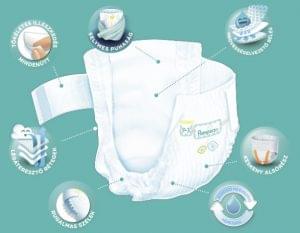 The products were sampled in shopping malls, department stores, chain stores, drugstores, online stores and other retail outlets selling the products. The sampling of 60 products included:
· 14 normal day sanitary napkins,
· 6 night sanitary napkins,
· 9 menstrual underwear,
· 10 normal sanitary napkins,
· 11 male and female incontinence pads,
· and 10 diapers.
The NKFH accredited Food and Chemical Laboratory determined the liquid absorption capacity of the products using a method developed in-house. The diapers and napkins were loaded with colored, body-temperature water, and the dosing cycles were repeated until the product could no longer absorb any more liquid.
The following results were obtained regarding the liquid-binding capacity: normal daytime sanitary napkins had values between 14 and 45 ml, nighttime sanitary napkins had values between 24 and 86 ml, menstrual underwear had values between 6 and 16 ml, and normal sanitary napkins had values between 2 and 14 ml, so that every consumer can choose the product that best suits their life situation and purpose of use, or the most economical product within the product category.
In the case of normal male and female incontinence pads, the results ranged over a wide range: the products had a liquid-binding capacity between 44 and 340 ml, which the buyer can find out about at the time of purchase, as the manufacturer of the product must inform him about this on the labeling by law. The same trend can be observed in the case of baby diapers, where laboratory tests have shown a liquid-holding capacity ranging from 77 ml to 395 ml, which the customer can learn about from their own experience or from similar comparative results. The detailed comparison table and report are available on the NKFH website (www.nkfh.gov.hu).
Another important element of the investigation is the verification of the authenticity of the claims and certificates indicated on the product packaging, which is currently ongoing. The manufacturer must prove the validity of these claims. If the NKFH detects deception or irregularities, official proceedings will be initiated.
The NKFH considers it of utmost importance that hygiene products available on the market meet real consumer expectations and that manufacturers provide accurate, verifiable information on the packaging. The authority aims to enable consumers to make decisions based on real, comparable data and to ensure fair competition between manufacturers by eliminating misleading claims. The NKFH will continue to regularly monitor products widely used by consumers in the future and remains committed to ensuring that consumers receive reliable, safe and quality products.

Related news

The GVH and the NKFH checked the price display practices of online stores in a European investigation
🎧 Hallgasd a cikket: Lejátszás Szünet Folytatás Leállítás Nyelv: Auto…
Read more >
The NKFH closed a store and withdrew food products from circulation due to serious violations.
🎧 Hallgasd a cikket: Lejátszás Szünet Folytatás Leállítás Nyelv: Auto…
Read more >
The consumer protection authority initiated the recall of contaminated lemongrass leaves
🎧 Hallgasd a cikket: Lejátszás Szünet Folytatás Leállítás Nyelv: Auto…
Read more >Related news
Good Friday is in a week: the Easter shopping season has begun
🎧 Hallgasd a cikket: Lejátszás Szünet Folytatás Leállítás Nyelv: Auto…
Read more >
Seed sampling in focus: VSZT and Nébih held a training day
🎧 Hallgasd a cikket: Lejátszás Szünet Folytatás Leállítás Nyelv: Auto…
Read more >
This is how the construction industry will change in 2026
🎧 Hallgasd a cikket: Lejátszás Szünet Folytatás Leállítás Nyelv: Auto…
Read more >
