
Different generations, common workplace

The phrase “it’s all in my time” is still often heard in workplaces, but more and more companies are realizing that generational differences are not an obstacle, but an opportunity. The experience of older employees provides security, while younger employees bring momentum and a new perspective – this balance creates the flexible, innovative knowledge on which the workplaces of the future are built.
 Younger employees learn quickly and experiment boldly, while older colleagues bring experience, stability and transparent systems to the work. It is no coincidence that where several generations work together on a project, according to surveys, innovation is up to 40 percent stronger. The most successful companies today no longer focus on differences, but on the learning and competitive advantage that comes from this collaboration.
According to labor market analyses, one of the biggest tests of collaboration today is the difference between generations. According to a DreamJo.bs survey, 53 percent of respondents experience generational differences in the workplace as a serious challenge, another 42 percent perceive the problem but do not consider it to be really significant, while only 7 percent said they do not encounter such a thing at all.
Up to four generations can work together at the same time in today’s workplaces, with completely different experiences, values, and expectations. For baby boomers, loyalty and predictability are the most important, Generation X thinks in a strong systems approach, while Generation Y and Z prioritize flexibility, continuous feedback, and self-realization. It is not surprising that these different rhythms and working styles sometimes create tension – but it is precisely from this diversity that the creative, innovative collaboration that is one of the most important drivers of modern workplaces can be born.
According to research, today those organizations that quickly respond to the different needs of different generations and consciously work to strengthen communication between them gain a real competitive advantage. Deloitte’s survey also supports this: today, collaboration is no longer determined by the traditional hierarchy, but by knowledge sharing and joint learning.
The role of mentoring is also becoming increasingly important: according to Deloitte research, 78 percent of young employees believe that knowledge transfer between generations plays a key role in shared success.
“Collaboration between different generations is not a challenge, but an opportunity. The experience of baby boomers, the focus of generation X, the flexibility of generation Y and the digital speed of generation Z all contribute to the diverse knowledge mix that creates the strongest teams. At K&H, we believe that knowledge is a two-way street – no matter how old you are, you can always learn from others. That is why we consciously build knowledge sharing between generations: with mentor programs, digital learning platforms and communication channels that bring colleagues closer together. Because development is not It’s not a question of age, it’s a question of attitude.”
– said Medvey Leila, HR Director at K&H.
Related news

The Bicycle-Friendly Settlement and Bicycle-Friendly Workplace Awards were presented
🎧 Hallgasd a cikket: Lejátszás Szünet Folytatás Leállítás Nyelv: Auto…
Read more >
BNP Paribas Cardif: Hungarians are less afraid of losing their jobs to artificial intelligence this year
🎧 Hallgasd a cikket: Lejátszás Szünet Folytatás Leállítás Nyelv: Auto…
Read more >
How to relieve autumn stress in the workplace
🎧 Hallgasd a cikket: Lejátszás Szünet Folytatás Leállítás Nyelv: Auto…
Read more >Related news

Green transition on the air conditioning market
🎧 Hallgasd a cikket: Lejátszás Szünet Folytatás Leállítás Nyelv: Auto…
Read more >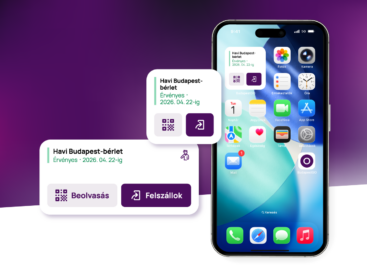
BudapestGO continues to develop: the March application update brings more convenient use
🎧 Hallgasd a cikket: Lejátszás Szünet Folytatás Leállítás Nyelv: Auto…
Read more >
Why does the rabbit lay eggs at Easter?
🎧 Hallgasd a cikket: Lejátszás Szünet Folytatás Leállítás Nyelv: Auto…
Read more >
