
K&H: travel budget has reached its ceiling

According to the K&H survey, the 30-59 year olds plan to spend an average of 389 thousand forints on vacation this year. This amount is essentially the same as the previous year, but it increased between 2021 and 2024. Although the travel budget did not increase nominally compared to last year, the financing background has been rearranged: the proportion of those who travel mainly from their own savings has decreased from 80 percent to 70 percent. The number of vacationers per household is stable at an average of 2.7 people, but among the capital’s residents, the proportion of solo travelers is outstanding, at 31 percent, who spend the most per capita, on average 364 thousand forints on recreation.
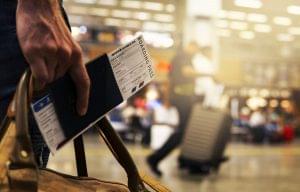 How and for how much would middle-aged people travel this year? Among other things, the K&H Sure Future survey, which examines the travel habits and annual plans of the 30-59 year-olds in the first quarter of each year, provided an answer. According to the latest survey data, nearly 66 percent of middle-aged people are planning to travel this year. They would spend an average of 389 thousand forints on travel this year. The dynamic growth that has been going on since the low point in 2021 – when the planned budget was only 183 thousand forints – seems to have stopped – at least for a while. The current budget is essentially the same as the 397 thousand forints a year earlier, and the increase in costs may have reached its ceiling by now.
The amount of money intended for vacation and travel is fundamentally determined by the place of residence, education and income level. Those living in county seats plan to spend the most, with 469 thousand forints, but those living in Budapest are also well above the average, with 421 thousand forints. The difference according to education is also marked: those with higher education allocate 490 thousand forints to vacation, while those with lower education allocate this amount to 324 thousand forints. As income levels rise, the budget also increases sharply: the difference between the lowest and highest income categories is more than two and a half times, ranging between 214 thousand forints and 518 thousand forints.
For 70 percent of respondents, the amount to be spent on travel comes mainly from their own income and savings. This is a significantly lower proportion than the 80 percent measured a year ago – which was an exceptionally high value – and previous years were also characterized by values slightly below 70 percent.
How much does a person spend per person?
The average number of people on holiday is 2.7, meaning that 2-3 people travel together most often, which is essentially the same as last year. 36 percent of respondents travel in pairs, which is especially typical for those in their fifties, where their share reaches 47 percent. The share of trips with three people is more typical for those in their 30s and 40s, where this share ranges between 30 and 32 percent, compared to an average of 25 percent. The higher a household’s income, the more common a trip with four people is, with the share rising from 3 percent to 21 percent across the income scale – and thus we get an average of 15 percent of trips with four people. And vacations with at least 5 people together are typical for one tenth of middle-aged people.
Solo travelers – 16 percent of middle-aged people – spend the most, as they expect to spend 329 thousand forints per person. In contrast, for trips with two people, the cost per person is only around 175 thousand forints, and for trips with three people, the average per person is 124 thousand forints. For trips with four people, this value is 147 thousand forints, which indicates that larger families often choose higher-quality, more or longer trips.
By car or by plane?
When traveling abroad, the use of one’s own car and the use of a plane are neck and neck, with half of the respondents – 49 percent – mentioning both. Owning a car is particularly popular among those with children (64 percent) and those with higher incomes (56 percent). In contrast, only 27 percent of capital residents choose the car, they much prefer the plane: in Budapest, the mention of air travel reaches 70 percent, while in the villages it is only 31 percent.
Other forms of public transport are less dominant: 18 percent of respondents plan to use the bus and 14 percent plan to use the train when traveling abroad. An interesting trend is that the proportion of those who travel in someone else’s car as a passenger has doubled: 14 percent after 7 percent last year, which is most typical of the thirty-something age group and those with lower incomes, where every fourth respondent uses this option.
As before, K&H experts highlighted that travel insurance is an essential accessory for foreign trips, which can be easily arranged via mobile phone. The cost of travel insurance is a small part of the total cost of your vacation, but in the event of an unforeseen problem, accident, or illness, it can cover expenses that can be several times the total cost of your trip.
Related news
New trend in tourism: Young travelers are no longer looking for a room, but for company in Europe
🎧 Hallgasd a cikket: Lejátszás Szünet Folytatás Leállítás Nyelv: Auto…
Read more >
Spaniards and Italians spend Easter in Hungary, but the number of English words is increasing
🎧 Hallgasd a cikket: Lejátszás Szünet Folytatás Leállítás Nyelv: Auto…
Read more >
K&H: Middle-aged people are traveling again: the proportion of those planning to travel abroad is increasing
🎧 Hallgasd a cikket: Lejátszás Szünet Folytatás Leállítás Nyelv: Auto…
Read more >Related news

Robert Pattinson impresses audiences in three roles at once
🎧 Hallgasd a cikket: Lejátszás Szünet Folytatás Leállítás Nyelv: Auto…
Read more >
MOL opens new Fresh Corner kiosk at Liszt Ferenc Airport
🎧 Hallgasd a cikket: Lejátszás Szünet Folytatás Leállítás Nyelv: Auto…
Read more >
The Törley Mausoleum was illuminated
🎧 Hallgasd a cikket: Lejátszás Szünet Folytatás Leállítás Nyelv: Auto…
Read more >
