
Two million hours in the wild, 800 protected livestock – we monitored domestic large predators for three years

The Interreg LECA (Protection and Coexistence of Large Carnivores in the Carpathian Region) project, involving 11 organizations from six countries, was completed at the end of March, in which WWF Hungary and the Bükk National Park Directorate, as full partners from Hungary, and several partner organizations participated.
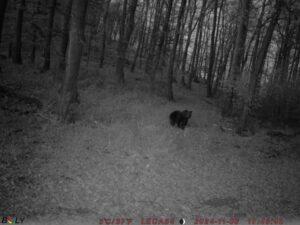 The international project, which runs between April 2023 and March 2026, aims to strengthen the protection of large carnivores in the Carpathian Region. As part of the project, predator-proof electric fence systems were provided to farmers in northern Hungary, which contribute to the protection of more than 800 farm animals in total. Thanks to the project, one farmer was able to supplement the protection of his flock with 2 Kuvasz dogs. A total of 100 game cameras were used to monitor large carnivores in the Northern Central Mountains for approximately two million hours. The footage provided valuable information about domestic large carnivores and their prey species.
All three iconic European large carnivore species – the gray wolf, the Eurasian lynx and the brown bear – are native to the mountains of the Carpathian Mountains. These large carnivores range over vast areas that also cross national borders. While wild animals do not respect national borders, conservation measures often do. Therefore, ensuring the long-term survival of large carnivores in the Carpathians requires cooperation across the entire region. Although legally protected, these species continue to face a number of threats, including poaching, habitat fragmentation, road strikes, intensive land use and increased human-wildlife conflict. Monitoring methods vary from country to country, making it difficult to compare data and to collaborate effectively on regional level to manage populations together.
This challenge was at the heart of the international LECA project. Over the past three years, the project’s participating organizations – ministries, universities, conservation authorities and NGOs from six countries – have worked to strengthen cooperation and develop practical solutions to monitor large carnivores, prevent human-wildlife conflict and reduce crime against protected species. From our country, WWF Hungary (as the lead partner of the Slovak and Aggtelek Karst project areas) and the Bükk National Park Directorate participated in the project as full partners, while the Aggtelek National Park Directorate, the Ministry of Agriculture and the International Council for Game and Wildlife Conservation (CIC) participated as associated partners. The WWF game cameras were operated in the field by Egererdő Zrt., Istenmezejei Vadásztársaság and Ádám Szabó, a conservation specialist from the Aggtelek National Park Directorate.
“Large predators know no borders, and their effective protection requires cooperation and knowledge sharing between the relevant states and various actors”
– emphasized Dávid Sütő, Head of WWF Hungary’s Large Predators Program.
During the project, researchers and stakeholders used a combination of modern observation methods, including camera trapping, genetic analysis and GPS telemetry. A total of more than 560 camera traps were deployed across the entire project area, which covers 6 countries, covering an area of 37,000 km². The researchers identified 108 animals individually, 27 of which were fitted with telemetry collars, which provided valuable data on their movements, territories and behaviour.
“During the active monitoring period – between March 2023 and March 2025 – the 100 domestic cameras recorded a large predator of some kind, the vast majority of them wolves, on a total of 587 occasions. 23 recordings were made of bears, but unfortunately we did not detect a single lynx in the examined Hungarian areas, not even traces of its presence”
– added Dávid Sütő.
Based on the data collected during the project, it can be said that damage caused to farm animals in Hungary remains rare based on the available data. However, the farmers concerned are often distrustful of preventive measures and do not have the resources to implement them. Despite this, human-large carnivore conflicts are also present in Hungary, which is indicated on the one hand by illegal hunting, and on the other hand by the fact that there are currently many areas in the northern part of the country that would be suitable for large carnivores, but are still unoccupied, so they cannot exert their beneficial ecological effects there.
Human impacts directly affect the lives of domestic, highly protected large carnivores. The project is currently During this period, six wolf carcasses were found killed by humans, and the circumstances of the deaths of two more animals are currently being investigated by experts. Veterinary examinations confirmed that one specimen was clearly hit by a road on Highway No. 21.
The LECA project also focused on how to facilitate the coexistence of humans and large carnivores throughout the Carpathians. In several pilot areas of the project – including Hungary – electric fence systems were installed for farmers, bear-proof bins and other preventive measures were tested to reduce conflicts with large carnivores. These practical measures were implemented in cross-border areas, in the Kiszczady Beskids, the Polish and Slovak Tatras, the Eastern Carpathians, the Bükk and Mátra, and the Slovak and Aggtelek Karsts. In total, more than 22 cross-border meetings were organized in the project, with the participation of more than 300 people – local authorities, livestock keepers, wildlife managers, nature conservation organizations and national park staff.
We trust that the trust and expertise built up during the cooperation of the relevant interest groups will continue to contribute to the sustainable coexistence of large carnivores, the preservation of the ecological role of the species and the regional stability of their habitats in the entire Carpathian region.
Related news

Earth Hour in the shadow of the energy crisis
🎧 Hallgasd a cikket: Lejátszás Szünet Folytatás Leállítás Nyelv: Auto…
Read more >
A change of perspective in forest management
🎧 Hallgasd a cikket: Lejátszás Szünet Folytatás Leállítás Nyelv: Auto…
Read more >
Water retention and ecological water replenishment: from now on, every idea will go into your pocket
🎧 Hallgasd a cikket: Lejátszás Szünet Folytatás Leállítás Nyelv: Auto…
Read more >
More related news >
Related news

KPMG: Easter boom: the season is exploding for families, retail and the chocolate industry
🎧 Hallgasd a cikket: Lejátszás Szünet Folytatás Leállítás Nyelv: Auto…
Read more >
Deteriorating foreign trade balance: causes and prospects
🎧 Hallgasd a cikket: Lejátszás Szünet Folytatás Leállítás Nyelv: Auto…
Read more >
Ultrarunner Szilvia Lubics helps with Ultrabalaton
🎧 Hallgasd a cikket: Lejátszás Szünet Folytatás Leállítás Nyelv: Auto…
Read more >

