
Blue Planet – Botanical gardens are becoming more valuable in urban environments due to climate change

Botanical gardens and natural environments are increasingly needed in cities because green spaces are becoming more valuable in urban environments due to climate change, said botanist, plant breeder, and plant geneticist László Orlóci in the latest episode of former President János Áder’s podcast Blue Planet, published on Monday, which is also available on the YouTube video sharing portal and TikTok.

The expert – who was the director of the Budapest Botanical Garden for 20 years and was also awarded the title of Gardener of the Year in 2020 – said in a conversation with the chairman of the board of trustees of the Blue Planet Climate Protection Foundation: nowadays, urban green spaces not only have a mental but also a public health impact, as the increasingly frequent hot summer periods put a lot of strain on the human body. Civilization diseases have emerged that were previously unknown but have appeared in increasingly populous cities, such as allergies. According to plant breeders and geneticists, native plants no longer have a place in urban environments. That is why – for now, at the university level – they have started working on breeding plants that can make the ecosystem sustainable – he added. Within a city, where there are many built things, dew condensation, which is essential for plants, is absent in the summer heat. Like people, plants are also stressed, and in the city, the stress hours of plants are longer than in the field – he indicated. This is of particular importance in the current climate crisis – he assessed.
This plant stress can best be studied in a research laboratory
Such a research laboratory is a botanical garden, where there are many opportunities for experiments. These experiments can also serve as a model for later urban vegetation research. János Áder noted that if plants do not filter dust in sufficient quantities, the number of respiratory diseases will increase, and more people will be hospitalized due to heat stress. He added that the health of urban vegetation is decisive in whether plants can help us in this situation. Therefore, we are facing an ecological turn in urban gardening, as these plants have serious adaptation problems. They are looking for plants that are suitable for filtering dust, for example. László Orlóci said: this requires an all-encompassing approach. After all, plants are part of an artificial association within the city. It must be taken into account that allergies are also becoming more widespread as the urban population grows – he emphasized. A research group is being planned within the framework of the Hungarian University of Agricultural and Life Sciences, in which plant breeders and geneticists will seek solutions to the challenges – he said. Finally, the interlocutors agreed that a botanical garden, in addition to its research purpose, also has an educational role. László Orlóci mentioned as an example that a children’s garden was built in the Botanical Garden fifteen years ago, where young people plant, learn about composting, and recognize different plants.
MTI
Related news
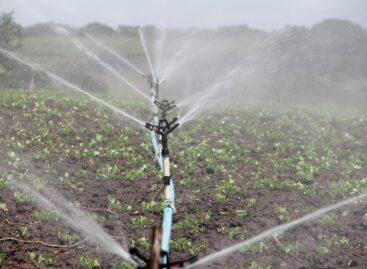
Csaba Lantos: the water replenishment project in the Sandbank will solve the irrigation of 4,000 hectares of land
🎧 Hallgasd a cikket: Lejátszás Szünet Folytatás Leállítás Nyelv: Auto…
Read more >
The annual event of UNICEF Hungary’s Climate Heroes program has evolved into a national youth climate protection meeting
🎧 Hallgasd a cikket: Lejátszás Szünet Folytatás Leállítás Nyelv: Auto…
Read more >
Adaptation and knowledge have become the key issues of climate change
🎧 Hallgasd a cikket: Lejátszás Szünet Folytatás Leállítás Nyelv: Auto…
Read more >Related news

Using the system has a boost effect
🎧 Hallgasd a cikket: Lejátszás Szünet Folytatás Leállítás Nyelv: Auto…
Read more >
Hungarian consumers are saving on ham, label reading is becoming more important
🎧 Hallgasd a cikket: Lejátszás Szünet Folytatás Leállítás Nyelv: Auto…
Read more >
International food prices have risen due to the impact of the Middle East conflict on energy prices
🎧 Hallgasd a cikket: Lejátszás Szünet Folytatás Leállítás Nyelv: Auto…
Read more >
