
This is how we’ll shop in 2026 – five food trends that will rewrite shopping

The relationship with food has changed dramatically in recent years, with consumers increasingly making careful decisions about what goes into their baskets. Based on its own sales data, customer patterns and international trend monitoring, Kifli.hu has identified five trends that will determine Hungarian food consumption in 2026.
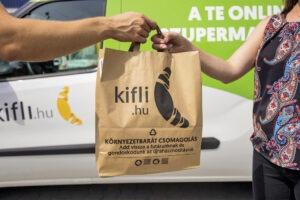 Based on its sales data, customer habits and international trend monitoring, Kifli.hu has identified five trends that will determine Hungarian food consumption in 2026. What connects these trends is that they actually work in everyday life. These are solutions that do not require special research, do not upset the family budget and are a convenient solution at the end of a long day.
A long, healthy life and well-being are taking on a more decisive role:
Eating is increasingly part of how customers think about their own well-being. What goes into the basket is no longer just a matter of taste or habit, but one of the most tangible forms of self-care. Superfoods are soaring, probiotic drinks are fizzing, and protein is suddenly in everything. Products that support the intestinal tract, skin and energy levels are particularly in demand. Collagen, kombucha and their peers are no longer layered products, but permanent features of modern shopping baskets. According to data from Kifli.hu, for example, regular consumption of natural yoghurts and kefirs is now typical of 33 percent of customers. The most popular probiotic products are MIIL’s organic natural yogurts and large-sized Greek yogurts.
The role of plant-based alternatives is also growing dynamically within conscious nutrition. Today, these go far beyond classic vegetable and meat substitutes, and new generation products such as plant-based tenderloin or plant-based octopus tentacles have also appeared in the range. The category expanded by about 30 percent annually in 2025, with plant-based drinks increasing sales the most. The interest in fermented solutions is not only tied to dairy products, plant-based fermented products – such as cashew alternatives – are also appearing in more and more baskets.
Domestic ingredients and local values are becoming a conscious choice:
For customers, it is not only what they eat that matters, but also where the food comes from and how transparent its path from the producer to the kitchen table. According to data from Kifli.hu, the demand for Hungarian vegetables and fruits increased by nearly 30 percent in 2025. The online supermarket works with more than 180 domestic suppliers, and the shorter supply chain means not only fresher products, but also guaranteed quality and a lower environmental impact. Choosing ingredients from domestic sources is increasingly about safety and predictability: customers know what they are getting, and also that these products are available as part of everyday shopping without compromise.
Convenience is given a new meaning, quality comes to the fore in addition to quick solutions:
The demand for quick solutions is not decreasing, but at the same time, expectations for quality are constantly increasing. It is also important that these products are not only healthy, but also budget-friendly. According to Kifli.hu data, the ready-to-eat food category grew by nearly 30 percent in 2025 in terms of the number of units sold, while it showed an increase of nearly 40 percent in value. The most popular product types include fresh pasta, stock soups and complete ready-to-eat pasta dishes. This suggests that customers are looking for solutions that save time, but do not compromise on ingredients or taste. Convenience in 2026 is increasingly about reducing stress and making predictable decisions, not just about speed.
Value for money and private labels continue to grow:
Price awareness yes, quality degradation no. Private labels will respond to exactly this need in 2026. They offer good quality at a fair price, making them the central elements of modern supermarkets. More choice, stable prices, good ingredients – this trend is here to stay. Consumers are increasingly weighing their decisions due to the economic environment. Kifli.hu’s private labels achieved double-digit sales growth in 2025 and became the first choice in several categories. Today, one in four dairy products sold is MIIL-branded, while Kitchin leads the sales charts in several staple food categories. The private label offering also includes products such as Kifli Szélekció’s cage-free eggs and HUSI!BIO’s organic Hungarian pork. Choosing private labels
Related news
Hungarians order with one sentence: this is how we shop with the help of AI
🎧 Hallgasd a cikket: Lejátszás Szünet Folytatás Leállítás Nyelv: Auto…
Read more >
Hungarians’ favorite is the non-carbonated one and a half liter mineral water
🎧 Hallgasd a cikket: Lejátszás Szünet Folytatás Leállítás Nyelv: Auto…
Read more >
The expanding Kifli.hu reaches hundreds of thousands of new customers in five counties
🎧 Hallgasd a cikket: Lejátszás Szünet Folytatás Leállítás Nyelv: Auto…
Read more >Related news

International food prices have risen due to the impact of the Middle East conflict on energy prices
🎧 Hallgasd a cikket: Lejátszás Szünet Folytatás Leállítás Nyelv: Auto…
Read more >
Every twentieth instant payment is now processed through the Qvik system
🎧 Hallgasd a cikket: Lejátszás Szünet Folytatás Leállítás Nyelv: Auto…
Read more >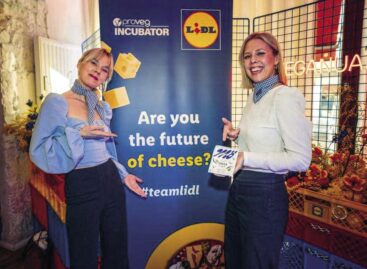
Oat-based “feta” wins the cheese innovation competition of Lidl Germany and ProVeg
🎧 Hallgasd a cikket: Lejátszás Szünet Folytatás Leállítás Nyelv: Auto…
Read more >
