
This is how the construction industry will change in 2026

The concept of home has fundamentally changed in recent years. While previously the value of a property was primarily determined by location, aesthetics or size, today it is increasingly important how sustainable, how energy efficient and how much it can be operated in the long term. The construction industry trends for 2026 clearly show that conscious design and technological integration are no longer extra, but have become a basic expectation.
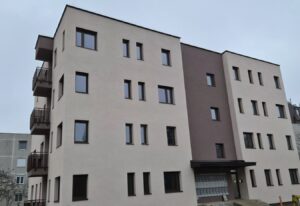 – Today, the question is not whether an apartment is beautiful, but how much it will cost to maintain it in five to ten years – saysDr. György Sziszák, a residential real estate developer and business consultant, believes that the real value in the modern real estate market lies in the invisible technical content. – Due to European and domestic regulations, nearly zero-energy buildings (nZEB) are now a basic requirement, so they do not represent a competitive advantage in themselves. Developers must offer more than that: they must implement systems that not only reduce energy consumption, but also make operating costs predictable and stable. Modern homes are now able to produce their own energy, intelligently regulate consumption, and in some cases even store energy, the expert explained.
According to Dr. György Sziszák, the real quality differences are often not visible at first glance. The performance of modern buildings is no longer determined solely by the thickness of the insulation, but by the complex functioning of the entire structure. The combination of thermal bridge-free design, premium-quality insulation materials, modern doors and windows and increased air tightness ensures the energy level that is now expected. In this system, the accuracy of the construction is a key issue, as even a small error can cause significant heat loss and thus additional costs.
– A marked transformation can also be observed in the field of mechanical solutions. Traditional systems are increasingly being replaced by electrically based, highly efficient technologies. Heat pump systems – especially air-to-water solutions – have now become dominant, which, combined with underfloor heating and modern cooling solutions, ensure not only more comfortable but also more economical operation. These systems can also be easily coordinated with renewable energy sources, which further increases their efficiency – emphasized Dr. György Sziszák.
The rise of smart home systems is also a defining trend. What was considered a luxury a few years ago is now an integral part of modern residential properties. Automated controls not only provide comfort, but also result in significant energy savings by continuously adapting to the habits of residents. A well-functioning system can optimize heating, cooling, lighting and shading, so that the home truly “lives together” with its users.
A significant change is also taking place in construction technologies. Prefabricated elements and standardized solutions are gaining more and more ground, as they make construction faster and more predictable. This is not only beneficial for investors, but also for buyers, as it reduces the risk of construction errors while ensuring a more stable cost structure.
– The issue of sustainability is no longer just important from an environmental perspective, but has also become an economic rationality. Low-carbon footprint building materials, water management solutions or green roofs all contribute to making a property more valuable and more affordable to operate in the long term. Sustainability is no longer an ideology, but a simple calculation: those who spend less on operation will gain more in the long run, the expert said.
A new approach is also taking hold in home design. Although the floor space is often reduced, the quality of design is significantly improved. The emphasis is on creating livable, well-organized spaces, where every square meter has a function. Multifunctional rooms and well-thought-out storage solutionssolutions, even smaller apartments can provide a high quality of life.
The construction industry in 2026 is therefore clearly moving towards higher technical content and lower operating costs. The value of real estate is no longer determined solely by where it is located or how it looks, but by the technological and energy standards it represents and how well it can adapt to future challenges.
– The good decision today is not what we build, but how – summarizes Dr. György Sziszák, who believes that a modern home is also a conscious, long-term investment.
Related news

Stable growth in a turbulent market: Terran strengthens with portfolio expansion and technological developments
🎧 Hallgasd a cikket: Lejátszás Szünet Folytatás Leállítás Nyelv: Auto…
Read more >
The Market Career Building Internship Program, which started a year ago, is now in its third year
🎧 Hallgasd a cikket: Lejátszás Szünet Folytatás Leállítás Nyelv: Auto…
Read more >
MFB Director: Interest-free loans worth HUF 39 billion will help businesses develop energy efficiency
🎧 Hallgasd a cikket: Lejátszás Szünet Folytatás Leállítás Nyelv: Auto…
Read more >Related news
Good Friday is in a week: the Easter shopping season has begun
🎧 Hallgasd a cikket: Lejátszás Szünet Folytatás Leállítás Nyelv: Auto…
Read more >
Seed sampling in focus: VSZT and Nébih held a training day
🎧 Hallgasd a cikket: Lejátszás Szünet Folytatás Leállítás Nyelv: Auto…
Read more >
Unmissable Easter dishes from three world-famous chefs
🎧 Hallgasd a cikket: Lejátszás Szünet Folytatás Leállítás Nyelv: Auto…
Read more >
