
HUN-REN: South coast ports could become an ecological “trap” in winter – risk of oxygen deficiency and fish kills

According to HUN-REN’s Balaton Limnological Research Institute, the large, dredged and heavily sheltered marina basins built in recent years along Lake Balaton’s southern shore can act as wintering refuges where limited water exchange may quickly lead to acute oxygen depletion – and, as a result, mass fish kills. Researchers stress that these are not isolated, “local” incidents, but a system-level phenomenon driven by the combined effects of climate change and intensive shoreline development.
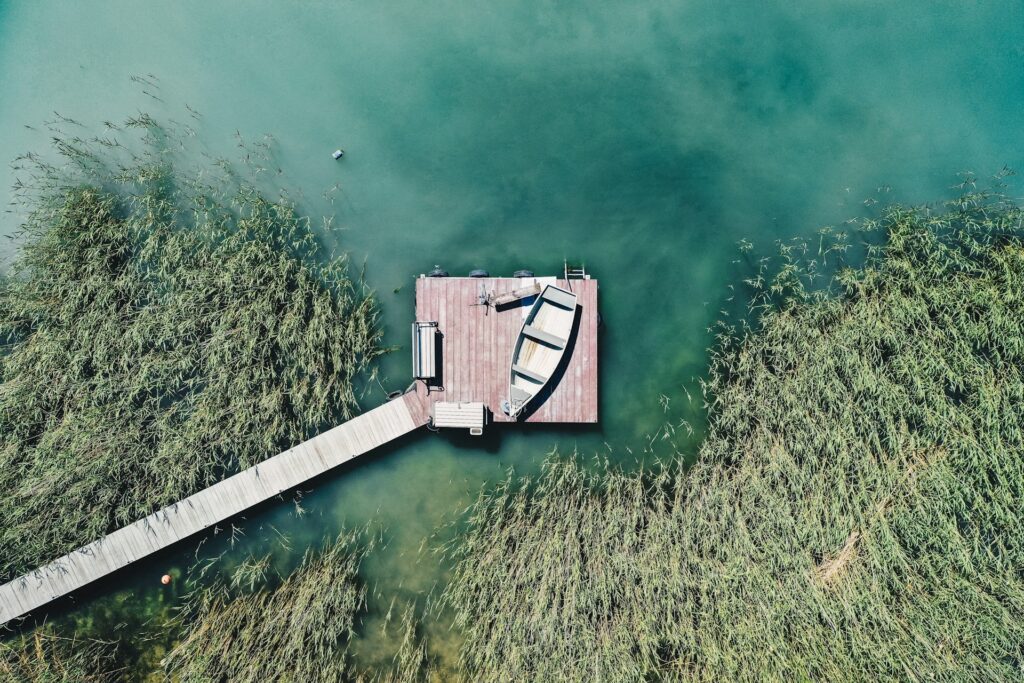
Why is the southern shore the most vulnerable? As Lake Balaton’s winters are increasingly ice-free, the open water is still characterized by strong wave action and continuous water movement even in winter. Fish that feed very little in the cold season therefore seek areas sheltered from waves and move in large numbers into calmer marina basins. There, however, the water mass becomes partly isolated; weak mixing, oxygen consumption by sediments, high fish density and low winter oxygen production by algae can together easily create an “oxygen trap.”
Which species are affected? According to the researchers, the phenomenon primarily impacts Lake Balaton’s native fish species that are most significant in terms of biomass: bream species (e.g., common bream, white bream, roach), and it also affects bleak and pike-perch (zander).
Cormorants are not the main cause – and neither are water-level fluctuations Based on the statement, cormorants may at most act as an aggravating factor (by forcing already dense shoals to cluster even more), but the underlying drivers are the winter hydrodynamics and limited pass-through/flush of marina basins, combined with the effects of climate change and shoreline construction. The researchers also explicitly distinguish the phenomenon from Lake Balaton’s natural water-level fluctuations.
What does this mean for stakeholders around Lake Balaton? HUN-REN says current interventions (e.g., aeration and cormorant deterrence) are at best symptomatic measures. A lasting solution requires improving water flow and permeability in marinas, and marina planning that incorporates contemporary aquatic-ecology considerations.

Related news
Love Lake Balaton! STRAND Festival launches campaign in collaboration with the Balaton Limnological Research Institute
🎧 Hallgasd a cikket: Lejátszás Szünet Folytatás Leállítás Nyelv: Auto…
Read more >
MÁV is already preparing for the high season and the weekend on the Balaton lines
🎧 Hallgasd a cikket: Lejátszás Szünet Folytatás Leállítás Nyelv: Auto…
Read more >
Duna House: large regional differences in the holiday rental market
🎧 Hallgasd a cikket: Lejátszás Szünet Folytatás Leállítás Nyelv: Auto…
Read more >Related news

The retail sector is in a double bind
🎧 Hallgasd a cikket: Lejátszás Szünet Folytatás Leállítás Nyelv: Auto…
Read more >
TUTTI turns 40 – a defining Hungarian family company with development spanning generation
🎧 Hallgasd a cikket: Lejátszás Szünet Folytatás Leállítás Nyelv: Auto…
Read more >
Opportunity for Hungarian small businesses to make a breakthrough: local foods can be placed on Auchan shelves in a national program
🎧 Hallgasd a cikket: Lejátszás Szünet Folytatás Leállítás Nyelv: Auto…
Read more >
