
How do plastics become soil killers? What should we pay attention to at Christmas to curb plastic dumping?

The latest research results show that plastics in the soil poison key microbes, posing a hidden ecotoxicity risk for soil microbial communities. How do these substances harm? Why is compostability in the soil different? What could be the solution? In its latest compilation, Körkörös.hu investigated the question by analyzing articles published in the international scientific press.
For decades, the marine environment was the focus of attention when it came to plastic pollution, but it has now been revealed that terrestrial ecosystems – especially soil – absorb much larger amounts of plastic waste than the oceans. The main sources of microplastics entering the soil are sewage sludge used for agricultural purposes, plastic films used during cultivation, and plastics entering the ground from landfills. Microplastics – whether polyethylene (PE), polystyrene (PS) or polypropylene (PP) – pose not only a physical but also a chemical burden on the soil. Additives (e.g. plasticizers and UV stabilizers) leached from polymers have a direct toxic effect on soil flora. Microbes settle on the surface of the plastic, whose unique community differs from that of a healthy soil ecosystem (Omidoyin and Jho, 2023).
The problem with compostable plastics
Despite their positive role in the circular economy, the degradation of bioplastics (e.g. polylactic acid) in the natural soil environment is far from smooth. The most critical problem is the misinterpretation of the “compostable” label. Most of these materials are optimized for industrial conditions (high temperature, controlled humidity), so in real soil – where temperature and conditions are much more variable – complete mineralization (transformation into carbon dioxide and water) is usually not achieved.
Instead of decomposing, bioplastics break down and fragment into tiny microplastics, and also accumulate in the form of intermediate, short-chain polymers, oligomers and chemical residues (for example, lactic acid when PLA decomposes) – we read in a study published in the scientific journal Environment Research last year, which also states that these residues pose a serious ecotoxicological risk.
Oxidative stress: the collapse of the defense system of soil microbes
The most serious toxicological effect is the oxidative stress caused by the decomposition residues. Accumulating oligomers and chemical components interfere with the normal metabolism of soil microbial cells, leading to excessive production of reactive oxygen species (ROS). ROS are a type of cellular free radicals that are triggered by stress and are toxic in large quantities. This oxidative stress damages the components of microbial cells, including DNA and cell membranes, drastically reducing cell viability and diversity.
Another critical sign of damage is the inhibition of the activity of soil enzymes (for example, phosphatase, urease, and dehydrogenase). Since these enzymes are responsible for maintaining the carbon, nitrogen, and phosphorus cycles of the soil, the damage directly threatens the fertility and ecological resilience of the soil.
So, far from solving the problem, bioplastics are creating a much more complex environmental problem in terrestrial ecosystems, laden with hidden toxicity.
A critical rethink of sustainable solutions
These results clearly indicate that compostability is in many cases nothing more than a greenwashing phenomenon, as demonstrated by Körkörös.hu, at the expense of the soil. The success of the circular economy would require that “green” solutions be rigorously tested throughout their entire life cycle, including the ecotoxicological consequences of the decomposition process.
In terms of solution directions, it would be necessary to introduce real “soil biodegradability” standards, not based on industrial composting conditions, and to develop bioplastics that guarantee complete mineralization even in low-temperature environments without toxic residues.
Of course, the best strategy would still be to radically reduce plastic use and effectively collect existing plastics, as any “sustainable” solution that imposes a new toxic burden on the ecosystem – in this case, on the soil – calls into question the fundamental goals of the circular economy. In everyday practice, one of the most concrete tools for this could be the container exchange and sharing, as demonstrated several times by Körkörös.hu.
Related news
Put a limit on plastic! – plastic waste reduction campaign for Green – Green for Pécs
🎧 Hallgasd a cikket: Lejátszás Szünet Folytatás Leállítás Nyelv: Auto…
Read more >
Products in the EU will receive a digital passport
🎧 Hallgasd a cikket: Lejátszás Szünet Folytatás Leállítás Nyelv: Auto…
Read more >
Oversized packaging not only deceives the customer, but also violates the principles of the circular economy
🎧 Hallgasd a cikket: Lejátszás Szünet Folytatás Leállítás Nyelv: Auto…
Read more >Related news
István Nagy: the government’s goal is to further strengthen the competitiveness of Hungarian agriculture and place the future of domestic agriculture on a solid foundation
🎧 Hallgasd a cikket: Lejátszás Szünet Folytatás Leállítás Nyelv: Auto…
Read more >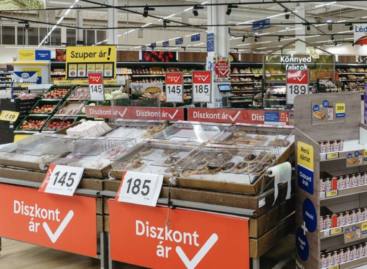
Bulk shopping has become significantly cheaper: more than 900 products are available at much lower prices than a year ago
🎧 Hallgasd a cikket: Lejátszás Szünet Folytatás Leállítás Nyelv: Auto…
Read more >
EY: Activity increased, yet the value of the Hungarian M&A market decreased significantly
🎧 Hallgasd a cikket: Lejátszás Szünet Folytatás Leállítás Nyelv: Auto…
Read more >
