
Three trends that will reshape the labor market due to AI

In recent years, the role of robotization and automation in modern labor market processes has come into focus more than ever. According to WHC Group experts, the question is no longer whether artificial intelligence and automated systems can replace human labor, but how they will transform the workforce and the structure of the Hungarian workforce in the coming years. Let’s see the three main directions!
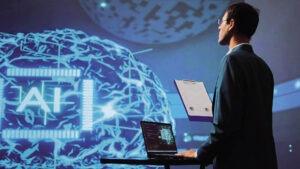 Artificial intelligence already brings numerous advantages and changes to the labor market structure. According to WHC Group’s experience, the rise of automation does not result in simple staff reductions, but also in the transformation of jobs and the redefinition of competencies. According to the 2025 Global AI Jobs Barometer, the skills employers expect in the jobs most impacted by AI will change 66% faster than a year earlier.
WHC experts point out that robotization will primarily affect repetitive, takes over low-value-added tasks, while the demand for employees with higher levels of expertise is growing. At the same time, companies are placing increasing emphasis on retraining and internal knowledge development, which can lead to significant cost increases.
“A less visible but critical factor goes hand in hand with technological investments: the development of human competencies. Robotization does not reduce, but transforms the demand for labor, and at the same time increases the importance of resources spent on training”
– emphasized Viktor Göltl, CEO of WHC.
According to experts, the transformation of the workforce structure is taking place along three main trends: the proportion of routine tasks requiring low qualifications is decreasing; the number of jobs requiring technological affinity and problem-solving thinking is increasing; and continuous learning and adaptability are becoming more valued.
This means that while companies will have to deal with higher retraining costs in the short term, the value created by employees can increase significantly in the long term. A properly trained, technologically prepared workforce not only works more efficiently with automated systems, but is also able to optimize and improve their operation. According to the barometer, in the industries most exposed to AI, revenue per employee grew three times faster than in the least affected sectors.
Based on WHC’s experience, companies that are not only investing in technology, but also in their employees are now gaining a competitive advantage are also investing in the development of machines. AI and robotization do not replace human work, but rather elevate it to a higher level.
According to experts, the key question in the coming years will be how quickly and effectively companies can coordinate technological developments with workforce development. Success depends not only on the performance of machines, but also on whether the knowledge is available to exploit their potential.

Related news
Digital trends and advertising market impacts: AI and podcast in focus
🎧 Hallgasd a cikket: Lejátszás Szünet Folytatás Leállítás Nyelv: Auto…
Read more >
Revolut Business Report: European companies increase spending on AI for better recruiting and faster time to market
🎧 Hallgasd a cikket: Lejátszás Szünet Folytatás Leállítás Nyelv: Auto…
Read more >
We spend more and more time stuck in traffic jams, but AI can solve this problem for us too
🎧 Hallgasd a cikket: Lejátszás Szünet Folytatás Leállítás Nyelv: Auto…
Read more >Related news

Big shopping begins, trade is prepared
🎧 Hallgasd a cikket: Lejátszás Szünet Folytatás Leállítás Nyelv: Auto…
Read more >
Nearly one and a half kilograms of ham and two dozen eggs: this is how Hungarians prepare for Easter
🎧 Hallgasd a cikket: Lejátszás Szünet Folytatás Leállítás Nyelv: Auto…
Read more >
The goal is to improve the quality of life for generations: Nestlé’s summary of shared value creation has been published
🎧 Hallgasd a cikket: Lejátszás Szünet Folytatás Leállítás Nyelv: Auto…
Read more >
