
Tire shop – is more expensive really better?

Among motorists, changing to summer tires is a mandatory spring program, which some people do as early as early March, but others wait until the first really warm day to change. Regardless of which category we belong to, let’s keep in mind: the lifespan of tires is finite, so it’s not just worth paying attention to tires at this time. Ayvens, one of the largest fleet managers and mobility service providers in our country, has now summarized what we should pay attention to.
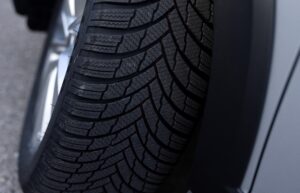 Whether we use our car for daily commuting or longer trips, the selection, maintenance and periodic replacement of tires play a key role in the vehicle’s performance, handling, fuel efficiency and grip. If the connection between the vehicle and the road, i.e. the tires, is not in order, even the simplest maneuver can easily become dangerous.
All-season vs. winter and summer
Safe driving therefore begins with choosing the right tires. In the case of passenger cars, we can decide for ourselves whether to purchase all-season or a set of winter and summer tires. All-season tires provide adequate traction all year round, in all weather conditions, are characterized by a long service life, and are suitable for most passenger cars and SUVs. They combine the properties of winter and summer tires, but they do not reach the level of efficiency of traditional tires, which can withstand even extreme weather conditions.
In the case of winter tires, one of the reasons for this is the structured tread pattern, which optimizes braking and handling on snowy and icy roads. These types of tires were developed for weather below 7°C, which is why they wear out more easily and have less grip at higher temperatures due to their softer compound. Their mandatory partners are summer tires: their main feature is the harder rubber compound and the pattern consisting of larger blocks, which provides excellent grip at temperatures above approximately 7°C, both on dry and wet roads. However, it is important to note that it is not suitable for cold, snowy or icy road conditions, because its grip capabilities are drastically reduced on cold road surfaces, and it is clearly not suitable for safe driving in snowy and icy conditions.
Size and speed index
In each category, we can find more expensive, at first glance better products, but in many cases, a higher price does not necessarily mean a better choice.
The size characteristics of the tire are indicated by a combination of letters and numbers on the sidewall of the tire. “215/65R15” means: the width of the tire tread is 215 mm, the sidewall ratio (i.e. the percentage of the tire’s sidewall relative to the width) is 65%, the tire ply is radial, and the rim size (i.e. the rim diameter) is 15 inches. If the tires are replaced, only tire sizes and designs approved by the vehicle manufacturer for the given vehicle may be used. This information can typically be found on the inside of the driver’s door pillar, but also in the vehicle’s manual. Pay special attention if you have purchased a used car, as these may often come with unsuitable replacement tires.
The tire’s load capacity and speed index are found after the size, also on the side of the tire (e.g. “91S”). The number indicates the load index, i.e. how much weight the tire can safely carry – for example, the index 91 means a maximum load of 615 kg. The letter indicates the speed index, i.e. the maximum speed up to which the tire can be safely used under ideal conditions. While the R mark indicates a maximum speed of 170 km/h, S already 180 km/h, and so on. We can get expert help in choosing the right tire at specialized services.
Of course, we can’t sit back even after we’ve found the right tires. As we drive, the tire gradually wears out, the rate of which is also indicated by an official number, the treadwear grade. This indicates how long the tire can be expected to last, i.e. how long it takes for the tread to wear out. However, it is not worth marking this date on the calendar, as the wear of the tread depends on our driving habits, the quality of the road and the weather conditions.
But when should you change your tires?
According to the legislation, the tread pattern depth must be at leastIt should be 1.6 mm – below which you can be fined if you don’t replace your tires. However, according to professional organizations and general manufacturer statements, the safe limit is 3 mm for summer tires and 4 mm for winter tires – below which the tire is no longer considered winter according to the law. It is worth taking these numbers seriously, because according to AAA research, at highway speeds, braking distances can be up to 43% longer in wet conditions with worn tires, which means an additional 26 meters on average — more than the entire length of a truck — compared to new tires.
But it’s not just wear that we should pay attention to. Tires are also affected by UV radiation, which breaks down the structure of the rubber and can lead to cracks – even if the tread is still in good condition. Cracks can also be caused by potholes, curbs or other impacts, and small defects can grow into larger cracks over time, which can result in tread separation or a flat tire. Typically, it is also the result of a bump or blister on the sidewall of the tire caused by a pothole or curb – in this case, change the tires immediately, as even a small bump can easily cause a flat tire.
It is also a warning sign if the tire pattern is not wearing evenly – in this case, we should investigate the causes, as the background may be a chassis defect, poor balancing or incorrect tire pressure.
Related news

Slowing electric transition, sales above EU average: this was the regional car market in 2025
🎧 Hallgasd a cikket: Lejátszás Szünet Folytatás Leállítás Nyelv: Auto…
Read more >
The head of Bridgestone’s Tatabánya factory was awarded the Hungarian Golden Cross of Merit
🎧 Hallgasd a cikket: Lejátszás Szünet Folytatás Leállítás Nyelv: Auto…
Read more >
400,000 people already use car sharing, but the number of people driving their own cars is not decreasing
🎧 Hallgasd a cikket: Lejátszás Szünet Folytatás Leállítás Nyelv: Auto…
Read more >Related news

How will we pay for coffee in 2030, and will Europe finally get its own financial infrastructure?
🎧 Hallgasd a cikket: Lejátszás Szünet Folytatás Leállítás Nyelv: Auto…
Read more >
The government supported food industry developments with more than one thousand billion forints
🎧 Hallgasd a cikket: Lejátszás Szünet Folytatás Leállítás Nyelv: Auto…
Read more >
While the world changes, the shared experience is eternal: Unicum’s new commercial debuts with a journey across universes
🎧 Hallgasd a cikket: Lejátszás Szünet Folytatás Leállítás Nyelv: Auto…
Read more >
