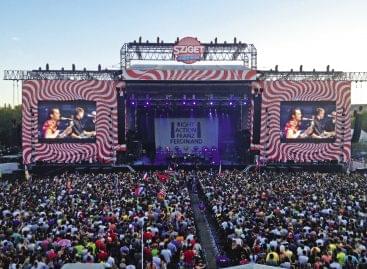

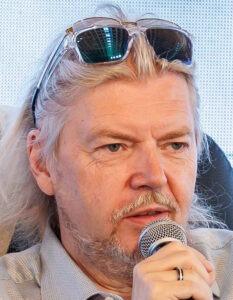
The Budapest City Council has decided: the public space use agreement for the Sziget Festival for the next ten years has been reached. The contract provides a stable framework for the event until 2036, while the company’s finances have shown a serious loss in the past two years, and an ownership restructuring is also underway: the festival’s founder, Károly Gerendai, has returned after eight years, and he spoke about the background of Sziget in the Klasszis Podcast published on Mfor.
Two consecutive loss-making years
Sziget Zrt. closed with a loss of 1.8 billion forints in 2023, and 3.8 billion forints in 2024. The losses are due to both cost and revenue factors: the increase in the gas prices of international star performers, the increase in security and technical costs, and the decrease in the number of foreign guests arriving at the festival.
According to what was said in the Klasszis Podcast, the previous owners – the international festival group and financial investors – were no longer able to build a sustainable model for this market environment, which is why the ownership was bought back and Gerendai returned to managing the company.
New strategy: focus on the “core” of the festival
In the conversation, Gerendai also reported that the key issue for the coming years will be the positioning of the festival: what makes Sziget unique on the international market, and what to a large extent, we need to go back to our “roots”, to the multi-day, diverse cultural and community experience.
The goal is to cut down on loss-making, risky elements, redesign the program structure and cost structure, while preserving the international appeal of the brand. The festival market as a whole is struggling with the increasingly expensive service provider background, stricter safety regulations and changing consumer habits; Sziget must become profitable again in this environment.
Capital agreement: a predictable framework for the next decade
The new public space use agreement provides a long-term legal and financial framework for the use of Hajógyári Island. The agreement makes the coming years more plannable for both the capital and the festival organizers: the city can count on the event’s tax and rental revenues and tourism effects, while Sziget can put its investments and partnership contracts on a stable basis.
The festival, as a “summer highlight”, continues to be a key player in Budapest’s international branding and the turnover of the hotel, catering and adventure tourism sectors.