Consumer protection authorities have withdrawn choking hazard toys from circulation – 62% of the toys tested failed at the customs border

Last year, 64% of toys sampled in the trade, while 62% of toys checked at the customs border, did not comply with product safety regulations. Based on the accredited laboratory tests of the National Trade and Consumer Protection Authority (NKFH), products that pose a choking hazard and other serious risks were withdrawn from the market and recalled from consumers, or their placing on the market was prohibited.
 The NKFH and the government agencies under its professional management continuously pay special attention to the safety of families, for which purpose the most vulnerable consumer group, i.e. the year-round inspection of toys intended for children, was also emphasized in the 2025 inspection program. Inadequately designed toys can cause choking, injury, and in some cases, damage to health, so it is a fundamental requirement that products with different functions, offered in a wide range, meet the technical regulations that comply with EU standards and currently require a high level of safety. The aim of the inspection was to filter out unsafe children’s toys from the market, to detect illegal distribution – with particular regard to the markings and instructions for use of the toys – and to enforce law-abiding behavior in the event of a violation.
During the 2025 inspection, a total of 79 types of children’s toys were sampled in a targeted manner, taking into account designs and properties that raise suspicions from the point of view of product safety. 66 types of toys were sampled in commercial circulation, and 13 types of toys were sampled at the customs border. The tests included plastic dolls and bath toys, rattles, plush toys and plasticine sets.
Based on the tests carried out by the accredited laboratories of the NKFH, 42 out of 66 types of toys sampled in the market did not comply with the requirements, i.e. the objection rate was 64%. Out of 13 types of toys sampled at the customs border, 8 toys (62%) did not meet the requirements during the test, all of which posed a serious risk to young children. Among the children’s toys sampled at the customs border, no product complied with the labelling requirements.
Tables containing data on the sampled products can be found on the NKFH website (www.nkfh.gov.hu).
In the case of plastic toys, the most serious problem was that one or more of the phthalate ester type plasticizers were above the permitted limit, which poses a serious health risk. In the case of the rattles in question, the use of toys with protruding parts poses a choking hazard. Furthermore, in several cases, plush rattles were also examined in which the seams were torn and the fibrous filling material was exposed through the gaps that formed, which could cause a choking hazard if it got on the palate of the baby.
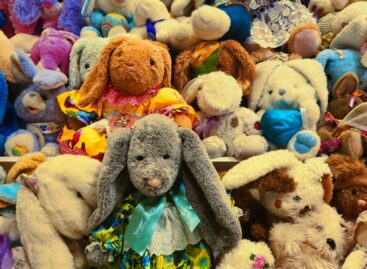
Among the plush toys that were found to be unsuitable, the danger was that the fibrous filling material became exposed when the zipper was pulled, and the seams were torn during mechanical tests, thus making these filling materials accessible. In addition, during the intended use of several products, small parts also became exposed, and the detached parts could end up in the child’s mouth, get stuck in the larynx and block the airways, thus posing a choking hazard.
Due to the established medium, high and severe risks, the regionally competent government agencies ordered the withdrawal of dangerous toys from the market and, in the case of severe risks, their recall from consumers, while the placing on the market of children’s toys sampled at the customs border was prohibited.
Child protection is a priority of the 7-point consumer protection action plan announced last fall, so the NKFH and the government agencies under its professional guidance will continue to do everything in their power to protect vulnerable consumers in 2026. Increased action at the customs border, which is also part of the 7-point action plan, will help prevent dangerous toys from entering the country and from falling into the hands of children.
Related news
REGIO Játék: Families spend a maximum of ten thousand forints on Easter gifts
🎧 Hallgasd a cikket: Lejátszás Szünet Folytatás Leállítás Nyelv: Auto…
Read more >
NKFH: Dörmi filled with milk cream was recalled from circulation due to mold
🎧 Hallgasd a cikket: Lejátszás Szünet Folytatás Leállítás Nyelv: Auto…
Read more >
The mineral water bottling company made significant commitments as a result of the GVH proceedings
🎧 Hallgasd a cikket: Lejátszás Szünet Folytatás Leállítás Nyelv: Auto…
Read more >Related news
KSH: in February the foreign trade surplus for goods was 665 million euros, the volume of exports was 2.3 percent lower, and that of imports was 6.7 percent higher than in the same period of the previous year
🎧 Hallgasd a cikket: Lejátszás Szünet Folytatás Leállítás Nyelv: Auto…
Read more >
REGIO Játék: Families spend a maximum of ten thousand forints on Easter gifts
🎧 Hallgasd a cikket: Lejátszás Szünet Folytatás Leállítás Nyelv: Auto…
Read more >
Péter Szijjártó: the domestic food industry is further strengthened with the investment of SUGO FOOD Kft. in Baja
🎧 Hallgasd a cikket: Lejátszás Szünet Folytatás Leállítás Nyelv: Auto…
Read more >
