
The Alföldi Tej case is drifting towards an uncertain outcome

The story of the sale – and then the non-sale – of Alföldi Tej has been going on for months, and it is providing more and more lessons about the functioning of the domestic food industry. The case of the raw milk purchasing and processing company with a nearly 20 percent share simultaneously highlights the structural limitations of the Hungarian dairy sector, the difficulties of the capital-deficient production model and the unpredictability of state intervention, writes Telex.
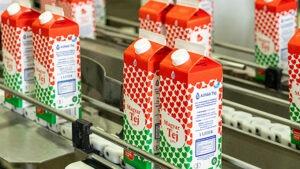 Alföldi Tej operates with a unique ownership structure: a joint venture of small, medium and large milk producers, which has been a stable player in the market for a long time. However, the operating model has reached its limits. It has become increasingly clear to the owners that a significant capital increase and developments would be necessary to move forward, which the majority of the membership did not undertake. That is why the decision was made a year and a half ago: to sell the company.
The transaction advisor commissioned by the farmers was looking for industry investors, and a European trend quickly emerged: while there is a surplus of milk in the north, there is a shortage of raw materials in the southern countries – with adequate capital. The interest of the Greek Hellenic Dairies, which made the highest offer for Alföldi Tej, fit into this logic.
With a turnover of more than 650 million euros, Hellenic Dairies is a key player in the southern European dairy industry, and its flagship product is the protected origin feta cheese. The company’s management – headed by CEO Sztilianosz Sarantisz – has visited Hungary several times, and the preparation of the transaction is at an advanced stage. However, opinions within the industry were divided: some welcomed the capital-rich EU investor, while others feared that the Greek company would primarily take raw materials out of the country and would not significantly increase domestic added value.
The process was eventually stopped by state intervention. The Ministry of National Economy banned the sale, citing national strategic reasons. After that, it was suggested that the state itself would take the place of the buyer and buy Alföldi Tej, emphasizing the strategic importance of the domestic dairy sector. Negotiations progressed, sample contracts were drawn up, and then the state – according to information, due to a lack of resources – backed down.
This turn of events put the owner-farmers in a particularly unpleasant situation: the foreign buyer was rejected, and the state did not take on the role. Although the business environment of Alföldi Tej improved somewhat in the second half of 2025, the question of long-term sustainability remained open.
The case may now reach a turning point again. The Greek investor side – although disappointed by the procedure – has not completely ruled out a return. Hellenic Dairies has expanded in recent years with acquisitions in Romania, Bulgaria and Cyprus, and has strengthened its presence everywhere with developments and by retaining local products. According to information, in Hungary they were not thinking only about raw material exports, but also about expanding processing capacity and building export markets.
It is understood that negotiations may resume at the beginning of 2026, possibly based on an updated version of the previous scenario. However, this requires updating financial data, and gestures from the state may also be needed to restore investor confidence.
The story of Alföldi Tej goes beyond the fate of a single company: it clearly shows how difficult it is to find a balance between national food strategy, market rationality and investor predictability. The final outcome may be decisive not only for the future of the dairy sector, but also for the entire Hungarian food industry.
Related news
Greek Hellenic Dairies’ plans regarding Alföldi Tej Kft. have been made public
🎧 Hallgasd a cikket: Lejátszás Szünet Folytatás Leállítás Nyelv: Auto…
Read more >
The Greek investor received a red light: the future of Alföldi Tej is uncertain
🎧 Hallgasd a cikket: Lejátszás Szünet Folytatás Leállítás Nyelv: Auto…
Read more >
The state banned the purchase of Alföldi Tej
🎧 Hallgasd a cikket: Lejátszás Szünet Folytatás Leállítás Nyelv: Auto…
Read more >Related news

What do we spread on our bread? Young people prefer butter, older people prefer margarine
🎧 Hallgasd a cikket: Lejátszás Szünet Folytatás Leállítás Nyelv: Auto…
Read more >
Products in the EU will receive a digital passport
🎧 Hallgasd a cikket: Lejátszás Szünet Folytatás Leállítás Nyelv: Auto…
Read more >
The Hungarian sports drink manufacturer has launched three new functional drinks
🎧 Hallgasd a cikket: Lejátszás Szünet Folytatás Leállítás Nyelv: Auto…
Read more >
