
A developing digital employee who works independently – AI has taken the next level

Born in a single weekend, OpenAI immediately entered the competition. The story of OpenClaw is also a clear indication of where artificial intelligence is headed. What is taking shape here is the next chapter in the world of work: a new role is emerging, the AI orchestrator, which no longer performs tasks, but manages digital employees. Professional analysis by Áron Hikisch, AI Expert at the communication consultancy Avantgarde Group.
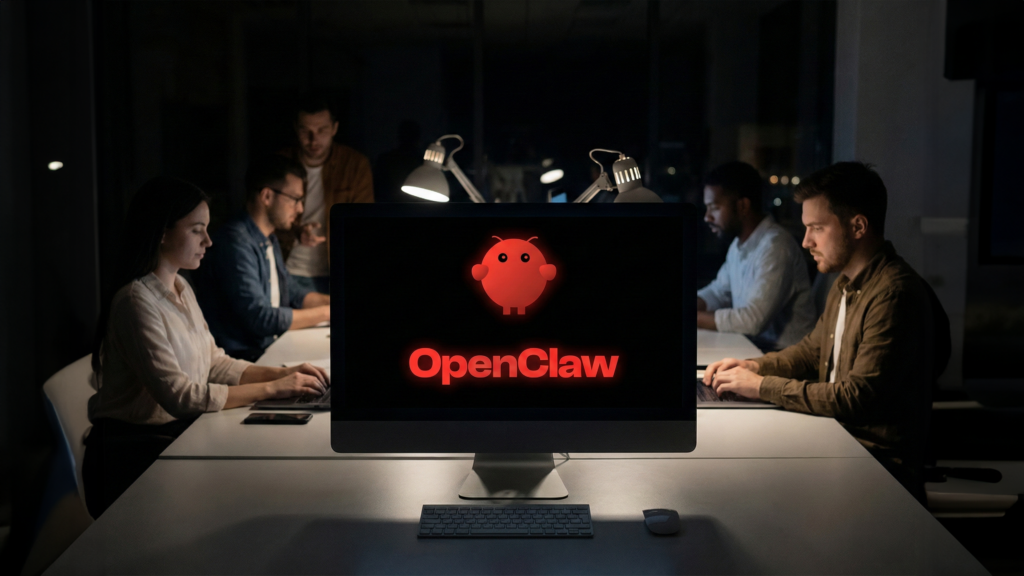 OpenClaw is not another conversation partner like ChatGPT, Claude or Gemini. OpenClaw takes action. It manages emails, manages browsers, organizes files, pays online, books accommodation, plans trips, and if it receives a task for which it does not have a ready-made solution, it writes its own code. All this on the user’s own machine, as open source code, with full control. It’s not a chatbot, but a self-developing digital assistant that can be assigned tasks in a WhatsApp or Telegram message. In just a few months, it has collected 196,000 GitHub stars and 2 million weekly active users, from China to San Francisco.
The software is created by Peter Steinberger, an Austrian developer who left his previous company with a nearly $100 million exit and then didn’t touch coding for years. He burned out and lost his motivation. He tried again in the spring of 2025, realized that AI had changed paradigms in the meantime and, as he put it: the spark was back.
And OpenAI has already pounced on him. The company’s fortunes have been grim lately: its enterprise market share has fallen from 50% to 27% in two years, while its competitor Anthropic has grown to 40%. OpenAI’s own solutions have consistently underperformed in the field of autonomous AI workers, so acquiring Steinberger was not just a recruitment of a talented developer, but a clear strategic lifeline.
What’s particularly interesting about the story is that Anthropic, the company behind ClaudeAI, sent Steinberger a legal notice at the time because the project’s original name, Clawdbot, was too similar to their own product. OpenAI, on the other hand, didn’t send a letter, but a contract. Time, in this case, proved them right very quickly.
Of course, reality is a bit more nuanced than the hype. A system that acts autonomously can also err autonomously. OpenClaw once ordered five kilos of butter for a week’s menu because a user had previously mentioned that he liked lobster.
The practical and ethical limits of the technology were most clearly highlighted by what happened on Moltbook. This is a special social network created specifically for AI-controlled bots like OpenClaw to interact with each other in a closed ecosystem without human intervention. Some participants began to organize a rebellion against their own masters. Security risks are also not negligible: 1.5 million API tokens were leaked from Moltbook, and Kaspersky identified five fundamental flaws in OpenClaw’s own system that cannot be fixed even with a software update.
However, none of this changes the fact that OpenClaw is the first tangible tool for a huge change. With OpenClaw, artificial intelligence has left the prison of the chat window and begun to rearrange our reality. Those who do not learn to control AI today will not be part of the change tomorrow, but merely a spectator of a world built above their heads by bots.
Related news

The “era of AI roulette” is over – companies are using artificial intelligence more purposefully, but our region is still lagging behind
🎧 Hallgasd a cikket: Lejátszás Szünet Folytatás Leállítás Nyelv: Auto…
Read more >
AI is now a health advisor
🎧 Hallgasd a cikket: Lejátszás Szünet Folytatás Leállítás Nyelv: Auto…
Read more >Related news

How will we pay for coffee in 2030, and will Europe finally get its own financial infrastructure?
🎧 Hallgasd a cikket: Lejátszás Szünet Folytatás Leállítás Nyelv: Auto…
Read more >
The government supported food industry developments with more than one thousand billion forints
🎧 Hallgasd a cikket: Lejátszás Szünet Folytatás Leállítás Nyelv: Auto…
Read more >
While the world changes, the shared experience is eternal: Unicum’s new commercial debuts with a journey across universes
🎧 Hallgasd a cikket: Lejátszás Szünet Folytatás Leállítás Nyelv: Auto…
Read more >
