
FAO: International food prices have been declining since September

The Food and Agriculture Organization of the United Nations (FAO) has released its latest report on the World Food Commodity Index, which shows that food prices continued to decline in November, as quotations for all major staple foods, except cereals, fell.
 The FAO Food Price Index — which tracks monthly price changes for the most important food commodities in international trade — reached 125.1 points in November, 1.2% lower than the revised figure for October. The index has now fallen for three consecutive months, is 2.1% below its level a year earlier, and is 21.9% below its peak in March 2022.
The FAO Cereal Price Index rose 1.3% in November. Despite a generally favorable global supply outlook and reports of good harvests in Argentina and Australia, global wheat prices rose by 2.5% in November, driven by potential Chinese demand for US crops, the ongoing conflict in the Black Sea region and a reduced planting in Russia in 2026. International maize prices also rose, driven by strong demand for Brazilian stocks, while the FAO All Rice Price Index fell on subdued import demand for Indian and fragrant rice varieties.
Vegetable oil prices fell by 2.6% compared to October, as lower palm, rapeseed and sunflower oil quotations offset a slight increase in soybean oil prices, driven by strong demand from the biodiesel sector, particularly in Brazil.
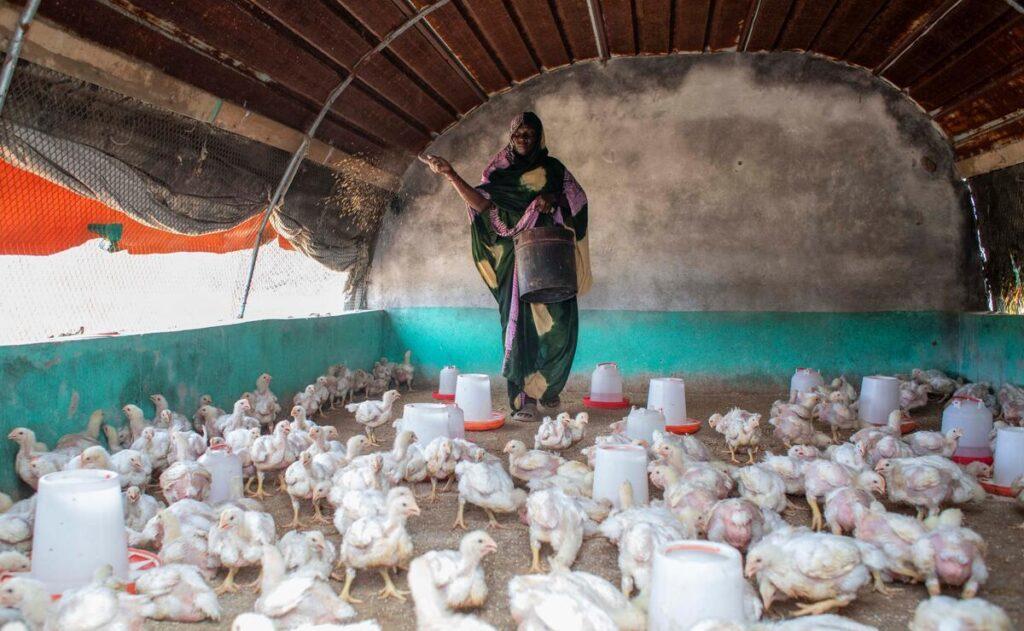
The FAO Meat Price Index fell by 0.8% in November compared with October. Poultry prices fell due to ample exportable stocks and increasing global competition, partly driven by Brazil’s efforts to regain market share following the lifting of restrictions due to avian influenza. Pork prices also fell, largely due to strong supply from the European Union and weaker demand from China, driven by newly imposed import tariffs. Beef prices were broadly flat, while mutton prices rose.
The dairy price index fell by 3.1% in November, mainly due to lower prices for butter and whole milk powder. The decline was driven by rising milk production and ample supply in major exporting regions.
The FAO Sugar Price Index fell 5.9% from the previous month, driven by ample global supply expectations for the current season and strong production trends in Brazil, India and Thailand.
Global cereal production and stocks expected to reach near-record levels
The FAO also released its updated forecast for global cereal production in 2025 today. Global cereal production is expected to exceed three billion tonnes for the first time, thanks to a larger-than-expected wheat harvest, particularly in Argentina, rising by 4.9% to 3.003 billion tonnes.
Cereal and rice output could also increase compared to the previous year; world rice production is expected to expand by 1.6%, driven mainly by the performance of Bangladesh, Brazil, China, India and Indonesia.
The FAO’s Cereal Stocks and Demands Flash Report also includes preliminary information on trends in the winter sowing season in the Northern Hemisphere and on cereal sowing in the Southern Hemisphere.

Related news
Old gene bank cereal varieties are being tested in a new Hungarian sample program
🎧 Hallgasd a cikket: Lejátszás Szünet Folytatás Leállítás Nyelv: Auto…
Read more >
Will food be more expensive in Hungary than last summer?
🎧 Hallgasd a cikket: Lejátszás Szünet Folytatás Leállítás Nyelv: Auto…
Read more >
FAO welcomes UN resolution on International Coffee Day
🎧 Hallgasd a cikket: Lejátszás Szünet Folytatás Leállítás Nyelv: Auto…
Read more >Related news

Food Retailer Biedronka Eyes Carrefour Assets In Poland
🎧 Hallgasd a cikket: Lejátszás Szünet Folytatás Leállítás Nyelv: Auto…
Read more >
AM: agricultural support to reach tens of thousands of producers in the coming days; Ministry of Agriculture helps farmers with accelerated payments
🎧 Hallgasd a cikket: Lejátszás Szünet Folytatás Leállítás Nyelv: Auto…
Read more >
Ikea owner Ingka to cut 800 roles as CEO says it has “grown too complex”
🎧 Hallgasd a cikket: Lejátszás Szünet Folytatás Leállítás Nyelv: Auto…
Read more >
