
Frost damage devastated last year’s fruit crop

According to the 2025 FruitVeB sector report, domestic fruit production suffered the most severe frost damage in recent decades – or even half a century – with two-thirds to three-quarters of the crop destroyed. The situation was aggravated by the fact that the extreme drought and heat stress of 2024 had already weakened the condition of the flower buds, so the frost on April 7–8, 2025, affecting 80–90% of the plantations – and then the cooling on May 10 in the northern and eastern regions – caused a dramatic loss.
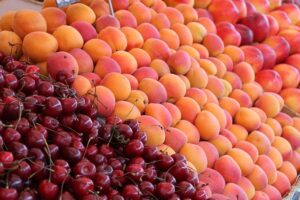
(Photo: Pixabay)
The cool, low-light May following flowering worsened fruit set and fruit size development, and in June, the heat wave, drought and high UV exposure caused further quality and quantity losses, especially in unirrigated plantations. Although precipitation arrived in July, the effects of the spring extremes could no longer be corrected. The greatest damage was inflicted on cherries, apricots and peaches: with an 80–90% crop loss, prices rose to double the multi-year average. Apricots reached 2–4 thousand tons instead of the usual 20–30 thousand tons, peaches reached 5–8 thousand tons instead of 20–40 thousand tons, and cherries reached only 2–3 thousand tons instead of 10–12 thousand tons. Plums closed at a 50–60% yield level, with moderate price movements.
In the case of sour cherries, the drop was at a European level, while stocks of processed products were also exhausted
The domestic harvest of 30–35 thousand tons was close to a historic low, which caused an extreme price explosion: after prices of 200–350 HUF/kg in previous years, the seasonal average reached 1,000 HUF/kg in 2025, which is unprecedented in the domestic agricultural market. Apples and pears also had a weak year. The apple harvest fell to 160–170 thousand tons, which is half of the previous, already low year, and is far below domestic consumption and processing industry needs. Despite this, prices remained moderate: industrial apples fell from 70–80 HUF/kg, and table apples from 200–220 HUF/kg to 160 HUF/kg due to Polish imports. The pear harvest has shrunk to 6-8 thousand tons compared to the potential of 15 thousand tons. The year 2025 made it clear that only irrigated, intensive or super-intensive plantations equipped with ice nets and frost protection technology can be competitive in fresh market fruit production. In the case of industrial fruit, the investment requirement for ice nets is often not repaid, but irrigation and frost protection are essential here as well for future stability.
FruitVeb

Related news

István Nagy: government to help dairy farmers with around 7 billion forints
🎧 Hallgasd a cikket: Lejátszás Szünet Folytatás Leállítás Nyelv: Auto…
Read more >
Tens of thousands of producers to receive agricultural support in the coming days – Ministry of Agriculture helps farmers with accelerated payments
🎧 Hallgasd a cikket: Lejátszás Szünet Folytatás Leállítás Nyelv: Auto…
Read more >
Hungarian agriculture is capable of renewal
🎧 Hallgasd a cikket: Lejátszás Szünet Folytatás Leállítás Nyelv: Auto…
Read more >Related news

What do we spread on our bread? Young people prefer butter, older people prefer margarine
🎧 Hallgasd a cikket: Lejátszás Szünet Folytatás Leállítás Nyelv: Auto…
Read more >
Products in the EU will receive a digital passport
🎧 Hallgasd a cikket: Lejátszás Szünet Folytatás Leállítás Nyelv: Auto…
Read more >
The Hungarian sports drink manufacturer has launched three new functional drinks
🎧 Hallgasd a cikket: Lejátszás Szünet Folytatás Leállítás Nyelv: Auto…
Read more >
