
This hinders young Roma from achieving their professional goals.

 Residents of Roma segregated areas usually start from a particularly difficult situation in terms of education and employment – points out the HBLF-Romaster Foundation, which supports the further education and employment of young Roma. In families living in extreme poverty and disadvantaged areas, children often miss a lot of school because they have no way to get to school or, in the event of illness, no money for medicine, so recovery takes longer. And due to isolation, they usually learn the problem-solving and communication patterns expected in education and employment later and with more difficulty, which further deepens the gap. A large proportion of Roma do not live in segregated areas, yet the inequalities of opportunity accumulated over generations and the resulting lack of education also reduce the chances of new generations to continue their education and to live an intellectual life.
School dropout and unemployment
Professional and community support
“The HBLF-Romaster Foundation, which is celebrating its 15th anniversary this year, plays an important social role: we help talented Roma high school and university students who, due to their social and economic situation, do not have the chance to obtain a degree according to their merits and abilities. Our model is built on five pillars: a scholarship program, personal mentoring provided by our corporate partners, community building, gaining corporate experience, and knowledge and experience-sharing events involving the business sector that help inclusion and mentoring of excluded social groups. In recent years, we have supported hundreds of young people with our corporate partners.
Related news
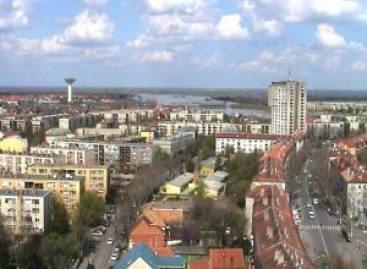
A book was published about the Roma gastronomy of the Szolnok region
🎧 Hallgasd a cikket: Lejátszás Szünet Folytatás Leállítás Nyelv: Auto…
Read more >Related news

Hungarian consumers are saving on ham, label reading is becoming more important
🎧 Hallgasd a cikket: Lejátszás Szünet Folytatás Leállítás Nyelv: Auto…
Read more >
International food prices have risen due to the impact of the Middle East conflict on energy prices
🎧 Hallgasd a cikket: Lejátszás Szünet Folytatás Leállítás Nyelv: Auto…
Read more >
It doesn’t matter how big the egg is on the shelves: genetics, age, and the chains’ tender logic decide
🎧 Hallgasd a cikket: Lejátszás Szünet Folytatás Leállítás Nyelv: Auto…
Read more >
