
Cultured beer consumption is at the forefront: quality and shared experience

Beer consumption habits are changing throughout Europe, and this trend was clearly evident in Hungary last year. Consumers are choosing more and more consciously: quality and experience come to the fore instead of quantity. The Hungarian beer industry is adapting to this change in attitude and is promoting a wide range and cultured beer consumption in 2026. This is also the goal of the 1 Hungarian Beer campaign, implemented through industry cooperation, which was jointly launched by the Association of Hungarian Breweries and the Association of Small Breweries in February this year.
European-style decline, rapid adaptation to the new trend
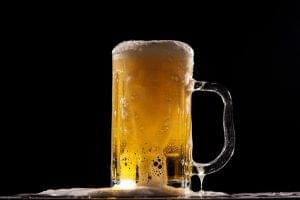 European data describing the results of the beer industry in 2025 show a general trend of a decrease in production. The Austrian Beer Association recently reported a 7.1% decrease in the volume of beer produced. In comparison, the production of the five largest Hungarian producers shows a more favorable picture: it decreased by only 4.8% in 2025, to 4,728 thousand hectoliters. All this indicates that the Hungarian beer industry was able to adapt to changing consumer expectations despite the significant challenges posed by rising costs, said Dr. Sándor Kántor, Director of the Hungarian Brewers Association, in his assessment of last year.
The picture in Europe regarding consumption is less favorable. According to a report by the German Statistical Office, domestic sales in Germany decreased by 4,970 thousand hl last year, exceeding the total Hungarian production, which meant a 5.8% decrease in German beer consumption. The volume of beer sold domestically by the five largest domestic beer producers on the Hungarian beer market also fell short of the previous year: it decreased by 516.9 thousand hectoliters, thus amounting to only 5,032.6 thousand hectoliters, which means a decrease in their domestic sales of approximately 9.3%.
The rising costs and the transformation of consumer habits also posed a serious challenge for small breweries, but the profitability of individual enterprises was very different in 2025, said Péter Starcsevics, president of the Small Brewers Association.
Industry collaboration
In response to the declining beer consumption trends, the Association of Hungarian Brewers and the Association of Small Breweries have joined forces and launched a joint campaign called 1 Hungarian Beer. The initiative aims to highlight the diversity and high quality of Hungarian beer, emphasizing that there is a good Hungarian beer for everyone – for different tastes and occasions.
The central element of the campaign is a three-minute film, which shows what Hungarian beer means to people through different life situations. The characters from the different stories meet at a common table at the end of the film, symbolizing that beer naturally brings people together.
“Quality and innovation are both decisive for the Hungarian beer industry. The increase in the share of the premium category clearly shows that consumers are looking for value, which determines the development of the beer industry in the long term. We are also committed to cultured and responsible alcohol consumption. The aim of the 1 Hungarian Beer campaign is to show that quality and cultured beer consumption are a common value, regardless of whether the drink poured into a glass is made in a large-scale or small-scale brewery,” said Dr. Sándor Kántor, Director of the Hungarian Breweries Association.
“For small breweries, supporting cultured and responsible beer consumption and strengthening communities is particularly important. The 1 Hungarian Beer campaign is authentic for us because it does not divide, but connects: beer drinking is a shared experience that brings people together and gives space for the coexistence of different tastes,” added Péter Starcsevics, President of the Small Breweries Association.
Structural transformation: premium and alcohol-free trends
The Hungarian beer market is clearly undergoing a structural transformation that can also be experienced in other European countries. This is supported by the fact that in our country, the premium segment experienced the smallest decline among product categories, while its market share increased: from 23 percent in 2024 to 25 percent in 2025, reaching a quarter of the total market. The share of non-alcoholic beers is stable at over 7 percent, thanks to the continuous emergence of new product categories and products in this segment. These trends indicate that quality and conscious alcohol consumption are increasingly playing a role in consumer decisions.
Related news
Unusual cooperation
🎧 Hallgasd a cikket: Lejátszás Szünet Folytatás Leállítás Nyelv: Auto…
Read more >
Half full or half empty?
🎧 Hallgasd a cikket: Lejátszás Szünet Folytatás Leállítás Nyelv: Auto…
Read more >Related news

Brake on Shein’s growth in Europe
🎧 Hallgasd a cikket: Lejátszás Szünet Folytatás Leállítás Nyelv: Auto…
Read more >
GKI: High base rate, low inflation?
🎧 Hallgasd a cikket: Lejátszás Szünet Folytatás Leállítás Nyelv: Auto…
Read more >
Lidl sold nearly 100 million liters of Hungarian milk
🎧 Hallgasd a cikket: Lejátszás Szünet Folytatás Leállítás Nyelv: Auto…
Read more >
