
The time has come for domestic professional asset management.

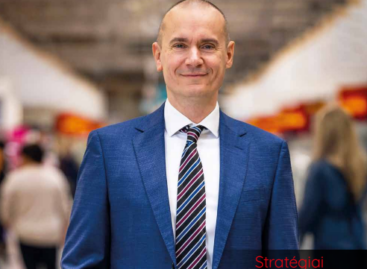
Geopolitical tensions, fluctuating interest rates and tax policy uncertainty are rewriting previous security models of asset management worldwide. – points out Balázs Horváth, member of the board of directors of SQN Trust. Wealthy families are increasingly faced with the fact that even “safe” foreign structures do not always provide protection – banking compliance is tightening, transparency is increasing, and distrust is growing in both directions. And the issue affects at least 50,000 families, the most important tenth of entrepreneurs and taxpayers.

The international financial environment, the business climate and the operating conditions are becoming more unpredictable month by month. In this environment, the public discourse surrounding the possibility of introducing a wealth tax is particularly sensitive to the most active Hungarian entrepreneurs. The question arouses the same instinctive fear in many today: how can their wealth be preserved so that it does not become a victim of unpredictable tax policy or financial decisions? This is accompanied by a third, less spectacular, but all the more serious factor: the aging of the wealthy founding generation. The fate of companies, real estate portfolios and family assets built over the past decades often ends up in hands that are not necessarily familiar with how the systems work. An unexpected death or incapacity can often freeze access to assets for days or even months – while the family, the business and everyday operations would also require immediate decisions.
The three risks – international uncertainty, tax policy pressure and generational change – together create a new challenge that traditional, ad hoc solutions no longer provide an answer to. Trust-based asset management provides a legally regulated, long-term sustainable framework for precisely these problems, which simultaneously ensures asset protection, continuity of operations and tax transparency – now at a level recognized both domestically and internationally.
Trustee asset management, the century-old solution
In the above risk environment, solutions that simultaneously ensure legal stability, operational continuity and long-term planability are particularly valued. Hungarian trust asset management is exactly such a structure: it provides a framework for managing assets that is able to overcome uncertainties arising from personal life situations, the regulatory environment or changes in the financial sector. Trust asset management has become a decisive tool because it uniquely coordinates legal, financial and operational aspects. The settlor can precisely record in the contract the method of managing the assets, the purposes of use and the decision-making principles of the asset manager, so the structure is suitable for organizing any asset element into a uniform framework. The operation of a well-structured BVK does not depend on a single person: the system operates smoothly even if the settlor temporarily or permanently fails, thus avoiding uncertainty or operational shutdown, which could otherwise endanger the family and businesses. Asset management is also effective if the settlor does not completely withdraw into the background, but only entrusts part of his assets to someone else. In such a case, an independent legal entity appears through the managed assets, which, although independent, operates the assets entrusted to it in the interests of the settlor and the beneficiary. Since this entity operates in the accounting and corporate tax system – not in the personal income tax –, its different legal and tax position creates a room for maneuver that would not be directly available to the settlor.
Trust asset management is also an outstandingly effective solution in the area of preparing for a generational change. The majority of the domestic wealthy class are first-generation company builders, who have managed their companies and finances in a highly centralized manner for decades. This was an advantage at the start, but it poses a serious risk when transferring assets: if all knowledge and decision-making powers are tied to one person, an unexpected health event can immediately block the family assets. Trust management eliminates this risk by creating a framework during the founder’s lifetime that ensures continuity of operations. Beneficiaries do not have to wait for probate proceedings and do not have to understand the structure of the assets in a crisis situation. The transfer of assets does not take place unexpectedly, but in a predetermined order and in a predictable manner.
The third major advantage of trust management is that it is a legally regulated, transparent and stable form. The separation of the managed assets in itself provides significant security: the assets operate according to their own set of rules, which are not dictated by external or internal circumstances
Related news

AI at the service of investments: new dimensions in asset management
🎧 Hallgasd a cikket: Lejátszás Szünet Folytatás Leállítás Nyelv: Auto…
Read more >Related news
THE LATEST ISSUE OF TRADE MAGAZINE HAS BEEN PUBLISHED!
🎧 Hallgasd a cikket: Lejátszás Szünet Folytatás Leállítás Nyelv: Auto…
Read more >
Spring renewal: interest in surprising products increased in spring
🎧 Hallgasd a cikket: Lejátszás Szünet Folytatás Leállítás Nyelv: Auto…
Read more >
A new director will lead Nestlé’s factories in Szerencs and Diósgyőr from April
🎧 Hallgasd a cikket: Lejátszás Szünet Folytatás Leállítás Nyelv: Auto…
Read more >
