
We spend more and more time stuck in traffic jams, but AI can solve this problem for us too

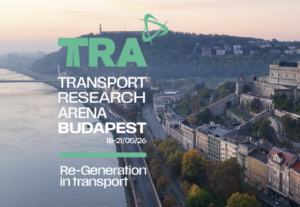
In many major cities around the world, the time spent in traffic jams is increasing year by year: in 2025, drivers in Budapest will spend an average of 58 hours a year waiting in traffic, which is 5% worse than a year earlier. Instead of expecting drivers to change their behavior, experts are deploying intelligent traffic management systems. These will also be discussed on May 18-21. at the Transport Research Arena 2026 transport science conference to be held in Budapest between.
 According to the list published by the Inrix analysis company at the end of 2025, although there are cities where the time spent in traffic jams has decreased compared to 2024, in the Hungarian cities examined it has increased to a greater or lesser extent: for example, in Budapest by 5%, in Szombathely by 6%, in Pécs by 56%, and in Győr by 100%. It may be comforting to know that we are far from the top 10: in Dublin, for example, people spend an average of 95 hours and in London 91 hours in traffic jams per year.
There are many ideas on how this could be solved by changing the behavior of transport participants: using public transport, car sharing, sharing cars with people going in the same direction can all help, but AI-based analysis and decision-making systems, as well as data-driven solutions, can do the most for the goal. According to the latest international research and industry experience, AI not only reacts to traffic situations, but also predicts and actively optimizes them.
Modern transport systems now collect data in real time from sensors, cameras, vehicles and mobile devices. This information is analyzed by advanced algorithms that can recognize the development of congestion and even predict critical points hours in advance.
One of the most impressive achievements is in the field of intelligent traffic management. AI-based traffic lights continuously adapt to traffic, reducing waiting times and improving the efficiency of traffic flow. Some systems have already achieved more than 30% improvement in traffic flow compared to traditional solutions.
Artificial intelligence can also optimize the entire transport network. Dynamic routing distributes vehicles between less congested routes, thus preventing the chain reaction-like formation of congestion. There are systems that detect accidents and irregularities in real time, allowing immediate intervention.
Digital twin technology is already being used in several places, including the M1-M7 interchange, which allows the simulation of the entire transport system. This allows decision-makers to test new traffic management solutions before they are introduced.
“The optimization of transport systems is no longer primarily an infrastructure issue, but a data integration and decision support issue. Artificial intelligence will bring a real breakthrough if it is able to interpret data from different sources – from vehicles, infrastructure and users – in a unified system, and based on this, not only react but also proactively intervene in traffic processes. Digital twin technologies play a key role in this: they provide the opportunity to validate transport interventions before applying them in the real environment, thus reducing risks and increasing system-level efficiency” – noted Dr. Zsolt Szalay, Head of the Department of Automotive Technology at BME.
According to industry players, the transport of the future is built on the close cooperation of data, AI and urban planning. Mobility data platforms such as Inrix are already analyzing data from hundreds of millions of vehicles, supporting cities in organizing transport more efficiently.
Experts agree that AI-based solutions not only play a key role in reducing traffic jams, but also contribute to creating a more sustainable, livable urban environment – with fewer emissions and more efficient transportation.
The use of data and AI in transportation management will be discussed at the Transport Research Arena 2026 conference, to be held in Budapest from May 18-21. On the fourth day of the event, Giovanni Circella, a researcher at Ghent University will give a lecture on artificial intelligence, with the participation of several renowned international researchers.

Related news
Digital trends and advertising market impacts: AI and podcast in focus
🎧 Hallgasd a cikket: Lejátszás Szünet Folytatás Leállítás Nyelv: Auto…
Read more >
Three trends that will reshape the labor market due to AI
🎧 Hallgasd a cikket: Lejátszás Szünet Folytatás Leállítás Nyelv: Auto…
Read more >
Revolut Business Report: European companies increase spending on AI for better recruiting and faster time to market
🎧 Hallgasd a cikket: Lejátszás Szünet Folytatás Leállítás Nyelv: Auto…
Read more >Related news

Big shopping begins, trade is prepared
🎧 Hallgasd a cikket: Lejátszás Szünet Folytatás Leállítás Nyelv: Auto…
Read more >
Nearly one and a half kilograms of ham and two dozen eggs: this is how Hungarians prepare for Easter
🎧 Hallgasd a cikket: Lejátszás Szünet Folytatás Leállítás Nyelv: Auto…
Read more >
The goal is to improve the quality of life for generations: Nestlé’s summary of shared value creation has been published
🎧 Hallgasd a cikket: Lejátszás Szünet Folytatás Leállítás Nyelv: Auto…
Read more >
