
Equilibrium Institute: GDP growth this year, but consumption remains the driving force

This article is available for reading in Trade magazin 2026/02-03
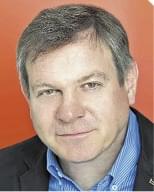
Dr. Ákos Kozák
co-founder,
director of economic
research
Equilibrium Institute
Dr Ákos Kozák, co-founder and director of economic research at the Equilibrium Institute told our magazine: they forecast a 2.4% GDP growth for 2026 and a 2.9% rise in 2027, following the +0.3% in 2025.
“The main driver of economic growth will continue to be household consumption: real income growth and fiscal policy incentives are going to strengthen domestic demand”,
said Dr Ákos Kozák.
In the field of investment – following the expected decline in 2025 – the institute expects a turnaround in 2026. The arrival of EU funds, the revival of foreign direct investment and the improving macroeconomic environment may trigger growth, albeit at a modest pace for the time being.
The time to cut interest rates hasn’t come yet
According to the Equilibrium Institute, inflation has already peaked and although the rate of price increases remains above the central bank’s target range, an overall slowdown is emerging. Average inflation in 2025 could be 4.5% (the exact figures will be available in the spring), which could moderate to 4.2% in 2026 and 3.7% in 2027. The Equilibrium Institute expects the restrictive monetary environment to remain in place in the short and medium term. High real interest rates and the overvaluation of the forint against the euro continue to hold back economic activity.
Slowing real wage growth
Economic growth in the coming years is expected to have only a moderate impact on employment. The unemployment rate will decline from 4.6% in 2025 to 4.4% in 2026 and 4.2% in 2027. According to the forecast of the Equilibrium Institute, employment in the competitive sector will drop by a few tenths of a percent this year and in 2026, while it is expected to increase again somewhat in 2027. Real wage growth is slowing down and the institute forecasts a 4.7% gross median real wage growth for 2025, +3% for 2026 and a 2.6% rise for 2027 in the competitive sector.
Consolidation processes are expected to continue in the FMCG sector
Dr Ákos Kozák reckons that the April elections will have little impact on the Hungarian economy’s performance this year. Long-term global economic trends and EU regulations have a greater influence and the current government has little room for manoeuvre in the short term. With regard to the FMCG sector, he believes that although many complain, domestic suppliers have already adapted to the situation in recent years. Those who have successfully overcome the obstacles of the past five years can achieve progress via mergers, acquisitions and improvements in efficiency.
In 2026 large companies can plan in a more predictable environment
According to K&H’s analysis, for large domestic companies 2026 will no longer be about continuous adaptation, but rather a return to a predictable growth trajectory. The expected upturn in investment, the stabilising macroeconomic background and the strengthening of financial discipline could together create favourable conditions for companies.

Tibor Bodor
head of corporate
division
K&H
“In 2026 it is likely that uncertainty will finally give way to conscious foresight. Trends are emerging that will allow multi-year investment programmes to be restarted”,
explains Tibor Bodor, head of K&H’s corporate division.
He believes 2026 could be a year of realignment and the start of a new growth cycle for large companies. Those who plan consciously now won’t just weather the changes, but will also be able to start the next few years from a stronger, more stable position.

Related news

Generation Z vs. senior executives: young people are ready, companies need to act now
🎧 Hallgasd a cikket: Lejátszás Szünet Folytatás Leállítás Nyelv: Auto…
Read more >

Széchenyi Card Programme: a lasting driving force for the domestic economy
🎧 Hallgasd a cikket: Lejátszás Szünet Folytatás Leállítás Nyelv: Auto…
Read more >Related news
Good Friday is in a week: the Easter shopping season has begun
🎧 Hallgasd a cikket: Lejátszás Szünet Folytatás Leállítás Nyelv: Auto…
Read more >
Seed sampling in focus: VSZT and Nébih held a training day
🎧 Hallgasd a cikket: Lejátszás Szünet Folytatás Leállítás Nyelv: Auto…
Read more >
This is how the construction industry will change in 2026
🎧 Hallgasd a cikket: Lejátszás Szünet Folytatás Leállítás Nyelv: Auto…
Read more >
