
God bless you, kitchen table: Hungarians are twice as likely to eat dinner in bed as the rest of the world

It seems that we can finally forget the image of a disciplined kitchen table: IKEA’s latest global research, the Cooking & Dining report, highlights that the millennial ritual of eating is undergoing a drastic transformation. The survey, which examined the habits of 31,000 people – including more than 1,000 Hungarian respondents – shows that the monopoly of the classic kitchen table when it comes to meals has been broken for good. Modern lifestyles, the rise of digital devices and cramped living spaces have combined to give rise to a new phenomenon, which the report calls “Comfortable Chaos”. In this world, meals are no longer tied to a fixed point, but are even moving into the most intimate corners of the home.
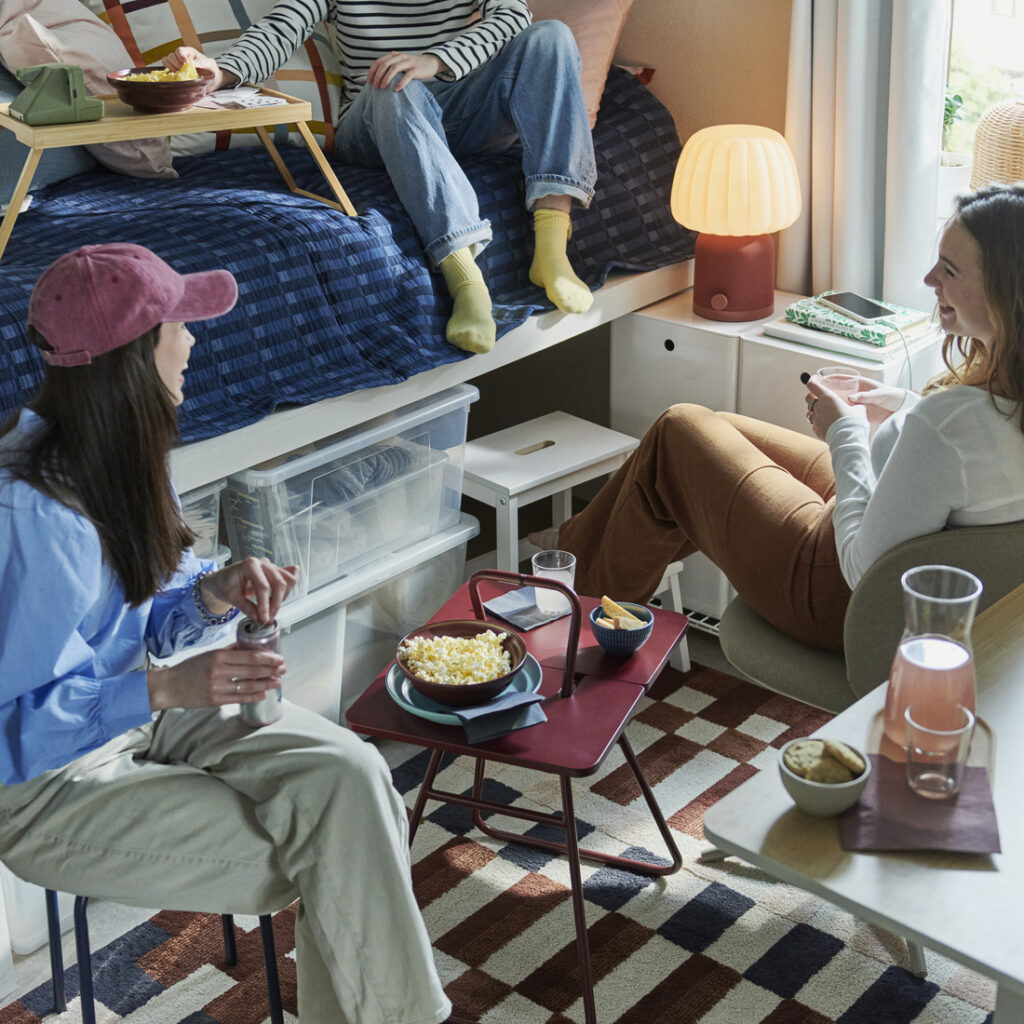 Although leaving the kitchen table is a global phenomenon (globally, only 44% of respondents now have dinner there), we Hungarians were able to show something new in this regard. While on average only 4% of people in the world eat in bed, in our country every twelfth person (8%) regularly has dinner in their bedroom. This has made Hungarians – along with Americans – the world’s biggest “bed eaters”, indicating that everyday comfort often overrides the usual rules here.
“Although the emotional significance of eating has not waned, the ritual of sharing dinners is under serious pressure today”
– points out Stuart Cowan, IKEA’s regional food manager.
“We are experiencing that among Hungarians, too, the rush of everyday life and smaller living spaces are overriding traditions. We no longer organize our lives around the table, but rather take our meals wherever we can find space, be it the sofa or even the bedroom. This flexibility is our answer to the challenges of a modern lifestyle.”
This The physical clutter is also exacerbated by our dissatisfaction with our kitchens. The research highlights that only 32% of people worldwide are satisfied with their kitchens: most complain about the lack of storage space (25%) and work surface (25%). This frustration affects Hungarian millennials the most, as one in five young adults (20%) finds hosting guests particularly stressful, primarily because they feel their home is not presentable or spacious enough for social events.
The loneliness of morning rituals is also telling. 58% of Hungarians start the day alone, and conversations are replaced by screens. Although we may crave attention, barely 7% of Hungarian households manage to “banish” technology from the table. When eating alone, 41% of Hungarians watch TV, but nearly three in ten respondents (26%) still reach for a video or series when they sit down to dinner with their family or partner. This type of digital attention division is most visible among Generation Z: 37% of them watch their phone or TV even during a shared family meal, and 13% of them consciously choose to eat alone so that dinner is not a social obligation, but an uninterrupted “me-time”.
Despite the chaos and technology, we still crave security, which is what we look for most on our plates. For 45% of Hungarians, nostalgic, childhood flavors represent true comfort. In addition, awareness is also breaking new ground, as 40% cook at home to eat healthier and cheaper, and every third Hungarian is ready to eat food that is close to its expiration date in order to avoid waste.
The results of the report and domestic trends were summarized by Katalin Andor, Consumer and Customer Insights Manager for IKEA Czech Republic, Hungary and Slovakia:
“One of the most important lessons from our research is that the function of the kitchen has changed. It is no longer just a place for cooking, but the multifaceted, beating heart of the home. We see that customers increasingly want to live in their spaces according to their own rules, and we help them to experience complete comfort and coziness, whether in front of the screens or during an impromptu dinner in bed.”
Related news

IKEA further expands its services: design studio opens in Szeged
🎧 Hallgasd a cikket: Lejátszás Szünet Folytatás Leállítás Nyelv: Auto…
Read more >
Ikea owner Ingka to cut 800 roles as CEO says it has “grown too complex”
🎧 Hallgasd a cikket: Lejátszás Szünet Folytatás Leállítás Nyelv: Auto…
Read more >
God bless you, kitchen table: Hungarians are twice as likely to eat dinner in bed as the rest of the world
🎧 Hallgasd a cikket: Lejátszás Szünet Folytatás Leállítás Nyelv: Auto…
Read more >Related news

Aldi, Auchan, Lidl, PENNY, SPAR, Tesco: in 2024 they paid more than 710 billion into the budget, while closing with a loss
🎧 Hallgasd a cikket: Lejátszás Szünet Folytatás Leállítás Nyelv: Auto…
Read more >
OKSZ: Household consumption cannot keep up with the growth rate of real wages
🎧 Hallgasd a cikket: Lejátszás Szünet Folytatás Leállítás Nyelv: Auto…
Read more >
KSH: retail turnover in February exceeded the same period of the previous year by 3.8 percent and the previous month by 0.4 percent
🎧 Hallgasd a cikket: Lejátszás Szünet Folytatás Leállítás Nyelv: Auto…
Read more >
