
Digital fasting: one fifth of Hungarians would not last a minute without their phones

Nearly a fifth of Hungarians would not last even a minute without using their mobile phone exclusively for making calls, even though the fasting period before Easter is about conscious renunciation for many.
 Mobile phone use has become so integrated into everyday life that 18% of respondents would not last a minute without videos or social media, and one in five could spend no more than an hour without scrolling through social media or watching videos*. Nearly the same number said they could avoid these functions for a maximum of one day.
The weeks before Easter are traditionally a period of fasting. In the classical sense, this meant primarily avoiding food – especially meat – for a long time, but today more and more people interpret it more broadly. Fasting can be a conscious break from anything that takes up too much space in our lives. Some people give up sweets, others try to avoid alcohol or social media for a while. More and more people are reexamining their relationship with digital devices. “Digital fasting”, i.e., periodically leaving the online world, is becoming a form of modern fasting, as the IKONO immersive exhibition space points out.
It’s harder to put down your phone than you think
Although many people feel that it would be good to spend less time in front of screens from time to time, in practice this often poses a serious challenge. According to a recent survey**, 58% of Hungarian respondents explicitly reject the idea of temporarily abandoning smart devices. The most common reasons include fear of isolation and missing out on important information.
What can an offline day do for you?
A digital fast is not about completely rejecting technology, but rather about taking a break from constant connectivity from time to time. Such a break gives us the opportunity to notice small details in our environment again and return to sensory experiences, colors, sounds, spaces or even the joy of movement.
5 simple steps to a digital fast
According to IKONO, you don’t need to make radical changes: even one offline day can give you a lot.
- Start your morning without your phone – Don’t check your notifications in the first hour.
- Plan your offline program – A walk, an exhibition or a book can help you break out of your usual routine.
- Meet someone in person – A conversation is often a deeper experience when you don’t have a phone in your hand.
- Pay attention to sensory experiences – Colors, sounds, smells or movement help you return to the present.
- Allow yourself to slow down – You don’t have to spend every minute productively, rest is also important.
When an experience brings you back to the present
In offline periods, programs that take you out of your usual routine are especially important. Immersive experiences, for example, create a multisensory environment where visitors are not only observers, but also participants in what is happening. In the Budapest exhibition spaces of IKONO, lights, colors and interactive installations invite visitors to rediscover the experience of play, curiosity and presence. “The digital world offers so many opportunities, but sometimes it’s worth stepping away. Offline moments help us reconnect with each other and our own experiences,” says Fernando Pastor, Co-Founder and CEO of IKONO. “Even a single offline day can remind us that the world doesn’t just exist on our phone screens, but is all around us, and can be experienced with all our senses.”
*KOMETA survey, February 2026, Europion, **STADA Health Report, 2025
Related news
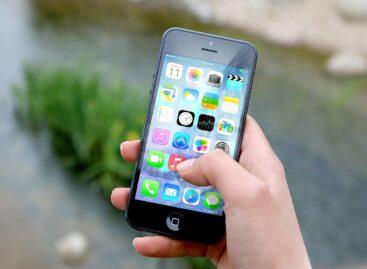
Digital detox during Easter: addictive phone use is a much more serious and widespread problem than we think
🎧 Hallgasd a cikket: Lejátszás Szünet Folytatás Leállítás Nyelv: Auto…
Read more >
NMHH: we use more and more mobile internet abroad
🎧 Hallgasd a cikket: Lejátszás Szünet Folytatás Leállítás Nyelv: Auto…
Read more >
The position of the National Association of Hungarian Dietitians on intermittent fasting
🎧 Hallgasd a cikket: Lejátszás Szünet Folytatás Leállítás Nyelv: Auto…
Read more >Related news
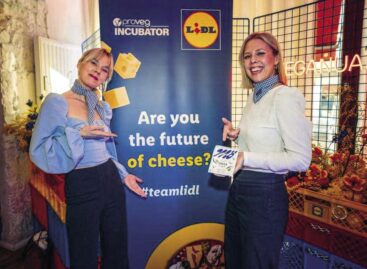
Oat-based “feta” wins the cheese innovation competition of Lidl Germany and ProVeg
🎧 Hallgasd a cikket: Lejátszás Szünet Folytatás Leállítás Nyelv: Auto…
Read more >
The horticulture of the future is being built in Szentes
🎧 Hallgasd a cikket: Lejátszás Szünet Folytatás Leállítás Nyelv: Auto…
Read more >
Finger Food Experience
🎧 Hallgasd a cikket: Lejátszás Szünet Folytatás Leállítás Nyelv: Auto…
Read more >
