
Csemege: the taste and essence of an era

Csemege wasn’t just a chain of grocery stores but the taste, smell and essence of an era. On the occasion of the opening of the Csemege exhibition, we talked about this period and the spirit of the retail chain with Zoltán Házi, who had joined Csemege as an apprentice in 1966 and then ran the company as CEO of Csemege and Csemege-Julius Meinl between 1991 and 2000.
This article is available for reading in Trade magazin 2025/12-2026.01

Zoltán Házi
former CEO
Csemege-Julius Meinl
The history of Csemege began on 1 January 1953s, when the nationalised grocery retail shifted from simply supplying quantity to providing a more organised service that met quality demands. The store network was based on the former Hangya, Stühmer, Pick, Győri Keksz, Szerencsi, Meinl and Fiumei stores.
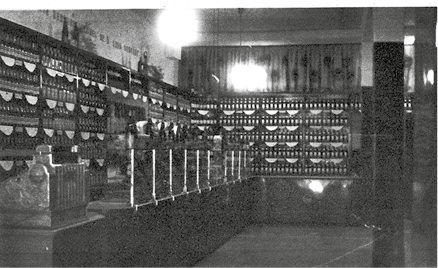
The interior of a Csemege-store in 1953 – bottles and counters neatly arranged in an early unit
With this the concept of “delicatessen” evolved from a term used for special foods to a symbol of modern urban grocery retail: the uniform image, elegant counters and professional, polite service made the brand known throughout the country.
Zoltán Házi recalled that the entire retail sector of the era was organised according to regional principles and the moving of products between stores was a daily practice.
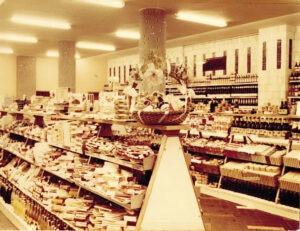
The interior of a Csemege-store in 1963: finely packaged treats, curated gift baskets, and neatly arranged shelves reflect the network’s display and assortment culture
Innovation from the very beginning
One of the pillars of modernisation was the switch to full self-service from 1958 onwards. Although the infrastructure was initially far from perfect, Csemege introduced innovative solutions: it was the first to package meat in breathable foil and then did the same for sliced cheese and salads. There were so-called seasonal stores too – in the summer at Lake Balaton, where Budapest-based shops lent staff for campsites and resort areas. Csemege was also a pioneer in home delivery, as from 1967-1968 four Budapest stores offered free home delivery.
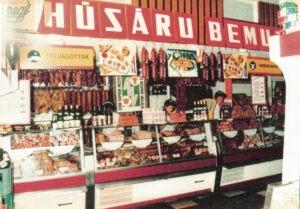
Meat presentation at a Csemege counter in 1981 – cold cuts, deli products, and the network’s distinctive identity captured in a single frame
Csemege’s visual culture is an essential part of the company’s heritage: the counters were memorable for their aesthetically presented fresh foods, cheese towers, cold dishes and festive installations. Professionalism also played a key role in training the next generation. In 1962-1976 the company offered advanced vocational training, with three days of learning in practice in the training store, followed by three days of theory.
Csemege after the political transformation
After 1990 the former state-owned enterprise structure gradually broke down: in 1991 Julius Meinl acquired Csemege, who later sold the company to the Belgian group Delhaize in 1999, before the stores gradually closed in the 2010s and Delhaize liquidated the company. However, the spirit of Csemege didn’t disappear, because the professionals who gained their first experience at Csemege took their discipline, empathetic service and customer focus with them to other companies.
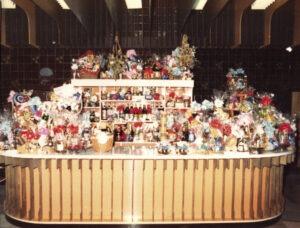
Festive gift counter in a Csemege store in the early 1980s: rows of gift-wrapped delicacy baskets, beverages, and sw
The new temporary exhibition of the Hungarian Museum of Trade and Tourism recalls the 40-year history of Csemege, opening at 18:00 on 11 December and running for nine months – thanks to the dedicated work and financial support of László Baldauf.
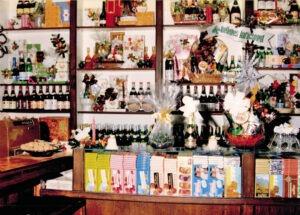
Christmas-decorated Csemege shop in the mid-1980s – gift baskets, champagnes, and classic Hungarian chocolates recalling the festive delicatessen atmosphere
Related news
Transition to a plant-based diet could transform the labour market in agriculture
🎧 Hallgasd a cikket: Lejátszás Szünet Folytatás Leállítás Nyelv: Auto…
Read more >
The golden age of savoury croissants
🎧 Hallgasd a cikket: Lejátszás Szünet Folytatás Leállítás Nyelv: Auto…
Read more >
Gordon Ramsay – no longer just a visitor
🎧 Hallgasd a cikket: Lejátszás Szünet Folytatás Leállítás Nyelv: Auto…
Read more >Related news

The government is helping dairy farmers with another 7 billion forints
🎧 Hallgasd a cikket: Lejátszás Szünet Folytatás Leállítás Nyelv: Auto…
Read more >
Vál-Völgye Bakery won ten awards at the 22nd International Bread Competition
🎧 Hallgasd a cikket: Lejátszás Szünet Folytatás Leállítás Nyelv: Auto…
Read more >
More than 333 million bottles have been returned at ALDI
🎧 Hallgasd a cikket: Lejátszás Szünet Folytatás Leállítás Nyelv: Auto…
Read more >
