
Time is the most precious commodity – Christmas peak in logistics

The Christmas period traditionally brings a boost in piece goods transport. However, according to the experience of Raben experts, the end-of-year peak no longer begins in November: inventory increases in September–October, and from the end of October onwards, there is a permanently high load on deliveries. However, the biggest challenge is the 50th and 51st weeks before Christmas, when not only quantity, but also “arrival on time” can be a bottleneck in the supply chain. The key to the solution is disciplined, data-driven planning.
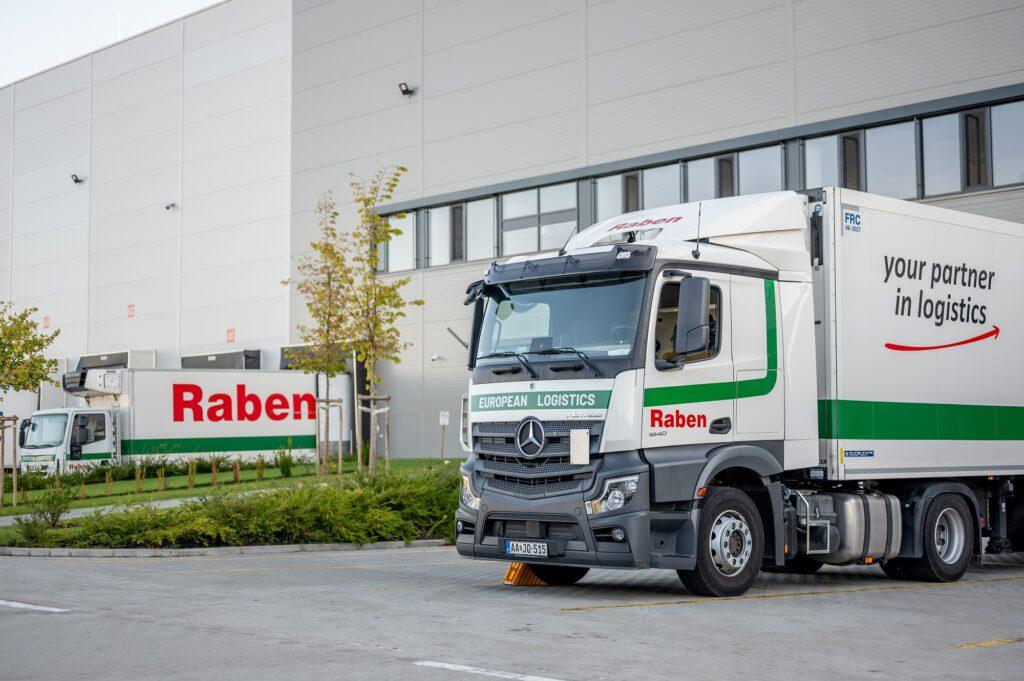 The logistics of the Christmas period are characterized by the fact that the system is loaded on several fronts at once: more goods than usual have to be handled and delivered strictly on time, often with a short deadline. At such times, even the smallest slippages quickly add up in the chain. According to Zoltán Üveges, head of sales and marketing at Raben Trans European Hungary, it is true that volumes decrease at the end of the season, especially in the 50–51 season. peak in the first week, but by the end of the year, inventory increases actually begin in September–October, and from the end of October, a permanently high load is experienced in deliveries, with an average volume increase of 20–30 percent.
“3–4 months before Christmas, we can already see the order books, and it is practically clear what the holiday season will be like. The biggest challenge this year is volatility: a wave of backorders can increase the volume within a week, while additional capacity would have to be mobilized suddenly during a peak period. Bottlenecks can develop at several points – in the last domestic kilometer, at the throughput of transhipments, or even on the international section”
– said Zoltán Üveges.
FMCG: the most sensitive sector, with the tightest schedule
The FMCG sector is the most sensitive to the Christmas shopping season: in addition to food, this also includes many other product categories (such as cosmetics or decorative products). A significant number of FMCG customers need to ensure that products are available in stores weeks before Christmas. For this reason, the season does not start in mid-December from a logistical point of view, but is supplemented by earlier stock replenishments and additional operations related to gift sets in many categories, and then ends at the end of the year, in weeks 50-51, with a tight schedule. Christmas is also an extremely intensive period for logistics, as the sector has to cope with increased operational demands along with increased purchases. The efficiency of logistics processes fundamentally determines whether the masses heading out for Christmas shopping will find the products they are looking for.
E-commerce: shorter chain, higher expectations, higher readiness
E-commerce operates according to its own rules, as the logistics chain is shortened: the goods are delivered directly from the operator’s warehouse to the consumer, who decides when to order and when to request delivery. In this case, logistics must focus on resources that provide extremely high flexibility, which are also suitable for handling sudden increases in purchases. However, this level of delivery readiness comes with high costs.
In the weeks before Christmas, the last certain deadlines are therefore particularly valued in the market, this is the time until which the system can still fulfill a given channel (domestic or international, home delivery or collection point) with great certainty. In the 51st week, the logic is no longer when it is cheapest, but when it is most certain.
Even an imperfect plan is better than guessing
“Our experience in Hungary for a decade and a half is that in the weeks before the holidays, logistics is mostly about time. At such times, warehouse operations, line transportation and delivery are all tight at the same time. We see that the key to the solution is disciplined, data-driven planning. An imperfect but time-shared forecast is worth more than guessing: this can be used to organize capacity and to break the peak into manageable waves”
– says Zoltán Üveges.
According to Raben’s experience, those manufacturing and retail partners are the ones who can most stably who provide forecasts and release the volume into the system with as few surprises as possible. Intermittent, impulsive order patterns, on the other hand, make delivery unplanned and easily lead to congestion. Raben is preparing for the peak period with additional capacities, but at the same time efficiency must be kept within reasonable limits: the goal is not to have unlimited reserves available, but to operate flexibly, with controlled operation and accurate information flow.
Related news

New tachograph regulations – groupage could be a solution
🎧 Hallgasd a cikket: Lejátszás Szünet Folytatás Leállítás Nyelv: Auto…
Read more >
The foundation stone of a logistics and truck terminal was laid in Debrecen
🎧 Hallgasd a cikket: Lejátszás Szünet Folytatás Leállítás Nyelv: Auto…
Read more >
Customs authorities handle half a million packages a day, e-commerce is booming
🎧 Hallgasd a cikket: Lejátszás Szünet Folytatás Leállítás Nyelv: Auto…
Read more >Related news

Oat-based “feta” wins the cheese innovation competition of Lidl Germany and ProVeg
🎧 Hallgasd a cikket: Lejátszás Szünet Folytatás Leállítás Nyelv: Auto…
Read more >
Finger Food Experience
🎧 Hallgasd a cikket: Lejátszás Szünet Folytatás Leállítás Nyelv: Auto…
Read more >
KPMG: Easter boom: the season is exploding for families, retail and the chocolate industry
🎧 Hallgasd a cikket: Lejátszás Szünet Folytatás Leállítás Nyelv: Auto…
Read more >
