
The butterfly of the year in 2026 is the large firefly

Based on the public’s online vote, the butterfly of the year in 2026 was the large firefly – the Hungarian Ornithological and Nature Conservation Association (MME) announced to MTI on Wednesday.
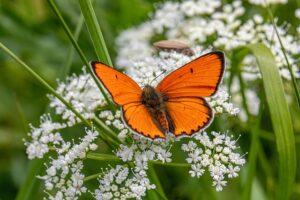
(Photo: Pixabay)
The MME’s Butterfly Conservation Department launched the Butterfly of the Year program in 2023 with the aim of drawing attention to species affected by nature conservation problems. The large firefly is a Eurasian species. Three subspecies have been described in Europe: the main form lived in England but became extinct, the subspecies living in Germany is on the verge of extinction, and the subspecies that currently still has a significant Eurasian distribution area occurs in our country. A fourth subspecies populates the areas stretching from the Pacific Ocean to Mongolia. The great firefly is listed as an endangered species in the Red Book, a Natura 2000 designation species in the European Union, and an important invertebrate species of the National Biodiversity Monitoring System in Hungary.
Protected, monetary value 50 thousand forints
The wings of the great firefly are a fiery red color. Males and females differ. The surface of the male’s wings is flame red, with a small black spot on each upper wing. The wings are bordered by a thin black band, and the wing fringes are snow-white. The base color of the upper wings of females can vary from brick red to yellowish red, while the base color of the lower wings is always brownish, often with a reddish tint. Its wingspan is 24-42 millimeters, with females being slightly larger than males.
The large firefly occurs in almost all flat, rural, fresh, moist habitats in Hungary, and in forest areas, only on the edges or in clearings
It prefers moorland and marsh meadows, stream valleys, tall grasses accompanying watercourses, grasslands, irrigation areas, and hayfields. It usually flies two generations per year, and in favorable weather conditions, a partial third generation is also possible. Male butterflies vigorously defend their territory from their male counterparts. Females tend to wander, which is important for the protection of the species because they can also populate new habitats. Both sexes are flower visitors, consuming nectar, but they often suck on animal excrement and fallen fermenting fruits. Their primary food plants, on which the female also lays her eggs, are horse sorrel species – the announcement said.
MTI

Related news
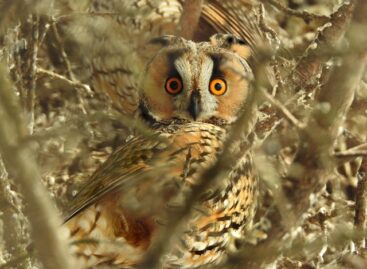
Nearly twenty thousand long-eared owls wintered in Hungary
🎧 Hallgasd a cikket: Lejátszás Szünet Folytatás Leállítás Nyelv: Auto…
Read more >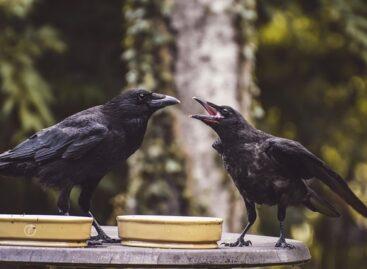
MME has compiled an electronic resource to assist in the survey of nest colonies of the urban crow
🎧 Hallgasd a cikket: Lejátszás Szünet Folytatás Leállítás Nyelv: Auto…
Read more >
MME calls attention to the protection of hedgehogs during spring gardening
🎧 Hallgasd a cikket: Lejátszás Szünet Folytatás Leállítás Nyelv: Auto…
Read more >Related news

István Nagy: the government’s goal is to further strengthen the competitiveness of Hungarian agriculture and place the future of domestic agriculture on a solid foundation
🎧 Hallgasd a cikket: Lejátszás Szünet Folytatás Leállítás Nyelv: Auto…
Read more >
Good Friday is in a week: the Easter shopping season has begun
🎧 Hallgasd a cikket: Lejátszás Szünet Folytatás Leállítás Nyelv: Auto…
Read more >
ENAG Innovation BootCamp for the Development of Women Agribusiness Entrepreneurs in Hungary Successfully Ended
🎧 Hallgasd a cikket: Lejátszás Szünet Folytatás Leállítás Nyelv: Auto…
Read more >
