
The song thrush is the bird of the year in 2026

The song thrush became the bird of the year in 2026 as a result of a public online vote, the Hungarian Ornithological and Nature Conservation Association (MME) announced to MTI on Monday.
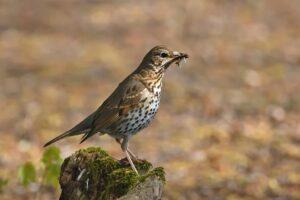
(Photo: Pixabay)
As they wrote, the MME launched its “bird of the year” program in 1979, the aim of which is to present species or bird groups affected by nature conservation problems at a societal level. The announcement highlighted that the song thrush is smaller than the black thrush, the male and female are identical: olive-brown above, with a whitish throat, the beak, breast and sides of the body are striped with brown spots on a yellowish-white background. The feathers of the wings and tail are dark olive-brown, the lower wing coverts visible during flight are yellowish.
One of the most characteristic features of the species is the song of the males, which is considered one of the most beautiful in Europe.
It is native to Eurasia, but with early European immigrants the species reached Australia and New Zealand. It is widespread in Hungary, and is the second most common thrush species after the black thrush. Its original habitat is deciduous and mixed forests with rich undergrowth, as well as pine forests, but in the past few decades the species has begun to move to settlements in Hungary, so we can increasingly see them in gardens and parks. It eats invertebrates, earthworms and arthropods, including many caterpillars. It often breaks open the nesting snails on the same hard surface, usually stone, which is called “thrush anvil”.
The song thrush breeds twice a year
It builds its classic, cup-shaped nest, made of dry plant fibers and small twigs, on trees and bushes. Its special feature is that the inner surface is covered with a layer of wood mixed with the egg’s saliva. Except for the southernmost populations of its distribution area, it is migratory, spending the winter in Southern Europe, North Africa and the Middle East. Among those living in settlements, wintering is mainly in Western Europe, but also increasingly common in Hungary. The world, European and Hungarian populations of the song thrush, estimated at 342 thousand-357 thousand pairs, also show a stable-growing trend. Due to its migration towards the European, North African and Middle Eastern Mediterranean, this species is also affected by the bird trapping and hunting, which is still a living tradition in the region and is estimated at around 25 million annually. In Hungary, tree and bush cutting during the breeding season can also affect the song thrush. The operation of waterers and bird baths recommended throughout the year in the Bird-Friendly Garden program also helps the song thrush.
MTI

Related news
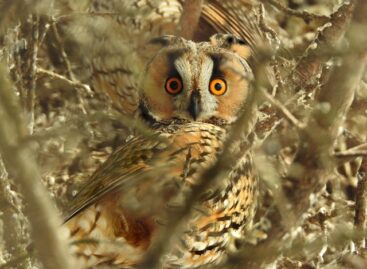
Nearly twenty thousand long-eared owls wintered in Hungary
🎧 Hallgasd a cikket: Lejátszás Szünet Folytatás Leállítás Nyelv: Auto…
Read more >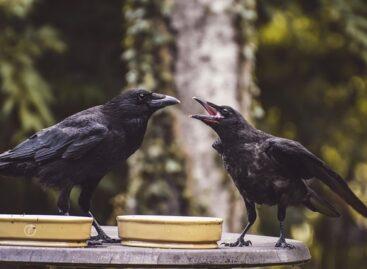
MME has compiled an electronic resource to assist in the survey of nest colonies of the urban crow
🎧 Hallgasd a cikket: Lejátszás Szünet Folytatás Leállítás Nyelv: Auto…
Read more >
MME calls attention to the protection of hedgehogs during spring gardening
🎧 Hallgasd a cikket: Lejátszás Szünet Folytatás Leállítás Nyelv: Auto…
Read more >Related news

BioTechUSA: a plant-based diet is an opportunity, not a risk
🎧 Hallgasd a cikket: Lejátszás Szünet Folytatás Leállítás Nyelv: Auto…
Read more >
They’re coming, crunching and munching
🎧 Hallgasd a cikket: Lejátszás Szünet Folytatás Leállítás Nyelv: Auto…
Read more >
Vergil AI to Open Up to SMEs This Year With Its Intelligent Learning Management Platform
🎧 Hallgasd a cikket: Lejátszás Szünet Folytatás Leállítás Nyelv: Auto…
Read more >
