
The role of palms goes far beyond ornamental plants – they are strategic raw materials in food and industrial chains

While in Europe, including Hungary, we primarily consider palms as ornamental plants, on a global scale, palms provide one of the most important raw materials for the food, chemical and energy industries. The plant group, which includes more than two hundred genera and nearly three thousand species, is not only unique from a botanical point of view, but also has outstanding economic significance. writes Agrarszektor.
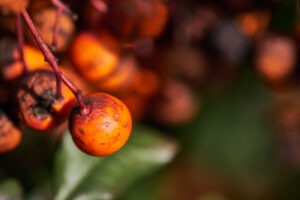 The growth system of palms differs from that of conventional trees: they are monocotyledonous plants, they have no cambium, therefore their trunk is not capable of secondary thickening, and their injuries do not heal. Their root system is shallow, located near the surface, which also makes their water management unique. These biological characteristics also mean that palms are sensitive to environmental changes, making their cultivation highly climate-dependent.
From an economic perspective, the best-known and most controversial product is palm oil, which is made from the fleshy fruit shell of the oil palm (Elaeis guineensis). Palm oil and palm kernel oil together constitute one of the world’s largest vegetable fats. Their use is extremely wide:
-
food industry (cooking oil, shortening, margarine),
-
cosmetics, cleaning agents,
-
biodiesel production,
-
chemical raw materials.
Its technological advantage is that it can be easily fractionated, is stable, has a high melting point, and after industrial processing, a variety of functional properties can be achieved with it. At the same time, it is also surrounded by health and environmental controversies: due to the high proportion of saturated fatty acids and the risks of glycidyl fatty acid esters formed during refining, its use is being re-examined in more and more countries and brands.
The deforestation related to palm oil production now poses not only a conservation risk, but also a reputational and ESG risk for global FMCG and energy companies. The expansion of plantations in Southeast Asia and Africa is associated with significant biodiversity loss, which is why transparency in supply chains, certified production, and the search for alternative vegetable fats are increasingly strategic directions.
However, the importance of palms does not end with palm oil. Several species also play a key role as food, construction and industrial raw materials:
-
the date palm is a staple food in the Middle East, the basis of sugar substitutes,
-
the coconut palm is an important player in food, gardening and home decoration through coconut milk, copra and fiber,
-
the starch content of the sago palm is a flour base,
-
the fibers of the raffia palm are used in horticulture and the packaging industry,
-
the The fruits of the ivory palm were once the “biobased” raw materials of the pre-plastic era.
These uses clearly demonstrate that palms are one of the oldest and most versatile staple crops of the global biobased economy.
In the sustainability discourse, palms today appear in a dual role:
on the one hand, symbols of industrial monocultures that threaten biodiversity,
on the other hand, important resources for an economy based on renewable raw materials.
Related news
Palm oil crisis could lead to global food price hikes
🎧 Hallgasd a cikket: Lejátszás Szünet Folytatás Leállítás Nyelv: Auto…
Read more >
Palm oil has lost its position as the cheapest cooking oil in the world
🎧 Hallgasd a cikket: Lejátszás Szünet Folytatás Leállítás Nyelv: Auto…
Read more >
Ferrero on track with sustainability initiatives
🎧 Hallgasd a cikket: Lejátszás Szünet Folytatás Leállítás Nyelv: Auto…
Read more >Related news

Oat-based “feta” wins the cheese innovation competition of Lidl Germany and ProVeg
🎧 Hallgasd a cikket: Lejátszás Szünet Folytatás Leállítás Nyelv: Auto…
Read more >
The horticulture of the future is being built in Szentes
🎧 Hallgasd a cikket: Lejátszás Szünet Folytatás Leállítás Nyelv: Auto…
Read more >
Finger Food Experience
🎧 Hallgasd a cikket: Lejátszás Szünet Folytatás Leállítás Nyelv: Auto…
Read more >
