
NEURA Robotics and Drees & Sommer launch strategic partnership for robot-ready buildings

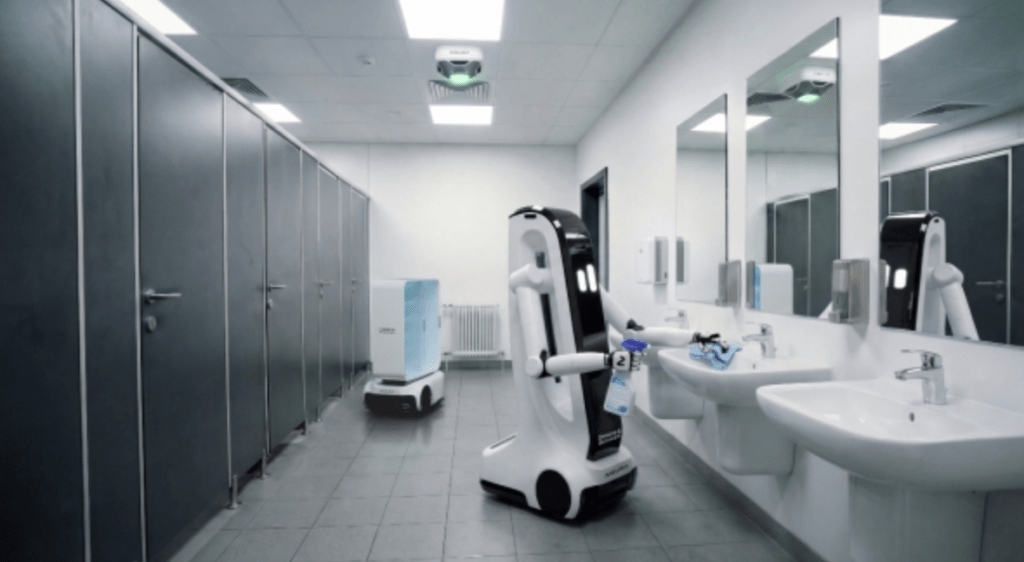
The future of smart buildings begins now: NEURA Robotics, a pioneer in cognitive robotics (“Physical AI”), and Drees & Sommer, an international market leader in consulting for the construction and infrastructure sector, are entering into a strategic partnership. The partners’ common goal is to not only design and operate buildings, but also to create them as self-learning, interactive systems, i.e. as environments that interact with humans and robots in real time. The companies are initially focusing on water block solutions, where automation, hygiene and availability are particularly urgent requirements.
 The collaboration represents a reinterpretation of architecture and technical solutions: buildings become adaptive, processes become more automated, safer and more efficient, and robotics are planned from the start. “We are connecting two worlds: the physical and the digital. This is creating the conditions for robots to interact better with their environment and people in the future,” says Dierk Mutschler, member of the board of directors at Drees & Sommer. “This opens up new possibilities for their use in care facilities, manufacturing, office buildings or airports.”
Smart buildings require intelligent actors
“Robots will soon no longer be just tools, but will become our natural, intelligent companions in buildings,” says David Reger, CEO of NEURA Robotics. “They will clean, service and maintain in a networked, learning and autonomous way, precisely where specialists are currently lacking. This creates places that make people’s lives noticeably easier: robots save us time, increase safety and allow us to focus on what really matters.”
The partnership is deliberately targeting the area of water blocks: this is an area where frequent use, hygiene requirements and staff shortages come together in a particularly problematic way. Cognitive robots are able to detect dirt, handle real-world needs, refill consumables and report technical faults before they lead to breakdowns. The goal is more reliable processes, greater cleanliness and greater safety in everyday life.
The building as a digital nervous system
The collaboration focuses on the concept of a sensorized environment: light, movement, temperature, noise and other signals are recorded and analyzed in real time, allowing them to be used for the interaction between humans, space and robotics. This creates a “digital nervous system” within the building, which makes it possible for robotics to not only be present in it, but also to work together with it.
“Our robots see, hear, sense and make decisions independently, meaning they don’t just do the job, they also think together with the system,” says Reger.
Drees & Sommer is contributing its expertise in design, sensorics, digital twins and IT/OT networks to the project. NEURA Robotics offers cognitive robotics, the foundations of artificial intelligence and expertise in interfaces. The result: buildings that not only function, but also learn, interact and adapt – a new dimension of modern infrastructure. “We are no longer talking about building automation, but about cognitive infrastructure,” says Veit Thurm, the Drees & Sommer partner responsible for the collaboration. “Buildings map their environment, interpret situations and interact with robots – all in a safe, scalable and increasingly autonomous way.”
Related news
Related news

McDonald’s deletes 80% of its vegan menu in the UK
🎧 Hallgasd a cikket: Lejátszás Szünet Folytatás Leállítás Nyelv: Auto…
Read more >
REWE Launches Drive&Go Pickup Service
🎧 Hallgasd a cikket: Lejátszás Szünet Folytatás Leállítás Nyelv: Auto…
Read more >
Molson Coors buys Monaco Cocktails owner in RTD expansion
🎧 Hallgasd a cikket: Lejátszás Szünet Folytatás Leállítás Nyelv: Auto…
Read more >
