
The pre-tax profit of agricultural cooperatives was heterogeneous in 2024

The number of agricultural cooperatives decreased by 4.5 percent to 8,570 in 2024. The income of the sector decreased at a slower rate, by 2.7 percent, changing from HUF 201.4 billion in 2023 to HUF 196.0 billion.

(Photo: Pixabay)
The pre-tax profit of agricultural cooperatives in 2024 showed significant heterogeneity both in terms of territory, farm level, size and sector breakdown. The largest decline in pre-tax profit was observed in the Great Plain and Central Hungary, while income increased in Northern Hungary and the southern and western parts of Transdanubia. Based on the data of the 8,201 farms that submitted tax returns in both years, even within the counties where income decreased overall, a significant proportion of farms were able to increase their pre-tax profit (46.2–52.3 percent), and the income of a further 2.2–7.1 percent was at the same level as in 2023. 23.5 percent of the 3,765 enterprises that realized decreasing profits became loss-making, while 23.2 percent of the 4,134 farms that increased their income continued to operate at a loss. The difference between the county-level average and the farm-level results draws attention to the fact that the performance of larger farms can significantly influence the aggregate data.
Income decreased the most in medium-sized and large enterprises
By 5.9 billion forints for medium-sized enterprises and 14.6 billion forints for large enterprises. The largest decline in medium-sized enterprises was in the Southern Great Plain, especially in Bács-Kiskun County (–4.7 billion forints), while the largest decline in income for large enterprises was in Hajdú-Bihar County (–9.0 billion forints). The pre-tax profit of micro-enterprises increased in almost all regions, by 5.3 billion forints in the Great Plain and by 4.3 billion forints in Southern Transdanubia. The decline in income was partly due to higher fixed costs and higher price sensitivity, while lower exposure may have played a role in the more favorable development of micro-enterprises.
AKI PÁIR

Related news

NAK: New free trade deals could threaten EU agriculture and consumers
🎧 Hallgasd a cikket: Lejátszás Szünet Folytatás Leállítás Nyelv: Auto…
Read more >
EU allocates €21.5 million to support farmers in Bulgaria, Estonia and Hungary
🎧 Hallgasd a cikket: Lejátszás Szünet Folytatás Leállítás Nyelv: Auto…
Read more >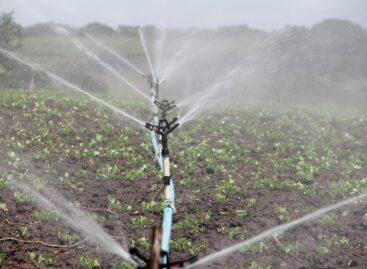
Csaba Lantos: the water replenishment project in the Sandbank will solve the irrigation of 4,000 hectares of land
🎧 Hallgasd a cikket: Lejátszás Szünet Folytatás Leállítás Nyelv: Auto…
Read more >Related news

KSH: in February the foreign trade surplus for goods was 665 million euros, the volume of exports was 2.3 percent lower, and that of imports was 6.7 percent higher than in the same period of the previous year
🎧 Hallgasd a cikket: Lejátszás Szünet Folytatás Leállítás Nyelv: Auto…
Read more >
REGIO Játék: Families spend a maximum of ten thousand forints on Easter gifts
🎧 Hallgasd a cikket: Lejátszás Szünet Folytatás Leállítás Nyelv: Auto…
Read more >
Péter Szijjártó: the domestic food industry is further strengthened with the investment of SUGO FOOD Kft. in Baja
🎧 Hallgasd a cikket: Lejátszás Szünet Folytatás Leállítás Nyelv: Auto…
Read more >
