Two-thirds of Hungarian families already shop this way

Private-brand products are becoming increasingly important for consumers across Europe, and are no longer just a cheaper option, but a conscious choice for those who want to buy at the lowest possible price without compromising on quality. In Western European markets, 42 percent of food turnover is now private label, and at home, at Kifli.hu, almost two-thirds of orders include at least one such product.
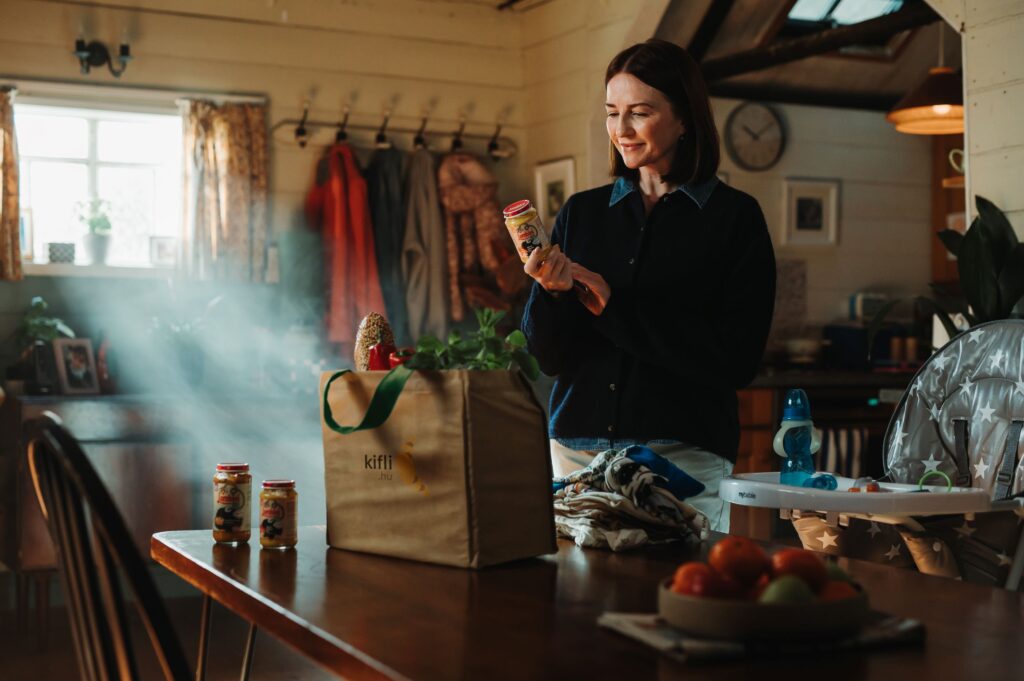 Private label products already account for 42 percent of food turnover in the largest Western European countries, and according to Circana’s 2024 analysis, this proportion will reach 44 percent in supermarkets. Private label products have become a defining pillar of shopping internationally. More and more people are choosing these items in Hungary as well, and the majority of Kifli.hu customers now not only try out, but also regularly buy private label products. In the past three months, 65 percent of baskets included private label products.
Private label is no longer a compromise, but a tool for families to consciously shape their spending without having to give up good taste, the quality of ingredients or a reliable place of origin. The growing trust in private labels is indicated by the fact that the popularity of private label products on the Hungarian market has increased by nearly 25 percentage points in four years: while four years ago, such products were included in 40 percent of Kifli.hu orders, this proportion increased to 50 percent three years ago, 54 percent two years ago, 59 percent last year, and 65 percent this year. Behind the numbers, a real change in attitude is emerging. For an average basket of basic products, this can mean savings of several thousand forints per month – without the family having to give up the usual flavors and quality.
This is also due to the fact that the price of private label products in Hungary is on average about 40 percent cheaper than similar products from big brands. In certain areas, the price difference is even greater, exceeding 50 percent. In the case of mozzarella or Prague ham, the difference per kilogram is 20–40 percent, while the quality parameters – such as high meat content – are the same. A lower price does not mean lower quality. Private label products are subject to the same strict purchasing and quality requirements as branded alternatives, and in many cases they even have better certification than them. Lambini baby food, for example, is Demeter-certified, which is one of the strictest forms of organic certification. This means that the raw materials come from controlled, sustainable farms, and the production takes place in a particularly strict, detailed regulated system.
Retailers have now moved far beyond the period when their own brand was limited to a few basic canned goods. The offer of Kifli.hu currently includes 433 products from 12 own brands, and this number is growing day by day. The portfolio ranges from everyday staples – milk, butter, cold cuts – to durable foods and ready-made meals, to household products, baby food and pet food. The selection includes Dacello’s meat offering, along with traditional Hungarian winter salami under protection and premium international specialties such as Spanish sausage made according to the traditional recipe of Catalan masters. The Italian selection is particularly strong in the private label offering, with several products bearing the DOP (Denominazione di Origine Protetta) or PGI/IGP (Protected Geographical Indication) certification. These designations guarantee that the product comes from a specific geographical area and is made using a traditional, strictly regulated process. The range includes, among others, PGI-certified mortadella, passata made from Italian tomatoes and canned tomatoes, as well as numerous protected cheese specialties. The range also includes Ubomi’s own brand coffee, which is available in compostable capsules and a decaffeinated version, the latter being made using the more environmentally friendly Swiss Water process. The goal with these products is not to serve a narrow, price-sensitive segment, but to allow customers to complete their shopping in good quality, at a price even lower than discount stores, with the help of private labels.
In addition to traditional foods, there are also plant-based, lactose- and gluten-free options – for example, the Yutto brand offering plant-based products or Miil’s lactose-free dairy products – so that private labels can be used
Related news
Hungarians’ favorite is the non-carbonated one and a half liter mineral water
🎧 Hallgasd a cikket: Lejátszás Szünet Folytatás Leállítás Nyelv: Auto…
Read more >
The expanding Kifli.hu reaches hundreds of thousands of new customers in five counties
🎧 Hallgasd a cikket: Lejátszás Szünet Folytatás Leállítás Nyelv: Auto…
Read more >
After 10 million orders shipped, a new era begins at Kifli.hu: Hungarian CEO takes over
🎧 Hallgasd a cikket: Lejátszás Szünet Folytatás Leállítás Nyelv: Auto…
Read more >Related news
Brake on Shein’s growth in Europe
🎧 Hallgasd a cikket: Lejátszás Szünet Folytatás Leállítás Nyelv: Auto…
Read more >
GKI: High base rate, low inflation?
🎧 Hallgasd a cikket: Lejátszás Szünet Folytatás Leállítás Nyelv: Auto…
Read more >
Lidl sold nearly 100 million liters of Hungarian milk
🎧 Hallgasd a cikket: Lejátszás Szünet Folytatás Leállítás Nyelv: Auto…
Read more >
