
In the grip of the wooden spoon: Why do we cook the same amount as in the Kádár era, when everything is machine-made?

Forty years, Hungarian cuisine was synonymous with the obligatory household robot and the smell of Sunday fried meat, but today it has become a generational front line. While cooking was still an altar of care for baby boomers, Generation Z is already baking Insta-compatible dinners in an oven preheated with an app – but the sobering Hungarian reality has not changed: we burn 137 minutes a day doing housework, just like in the eighties. LG looked into the depths of the pot with the help of generation researcher Enikő Bereczki and Michelin-starred chef Szilárd Tóth: how did the necessity of the “second shift” become a technology-supported social experience?
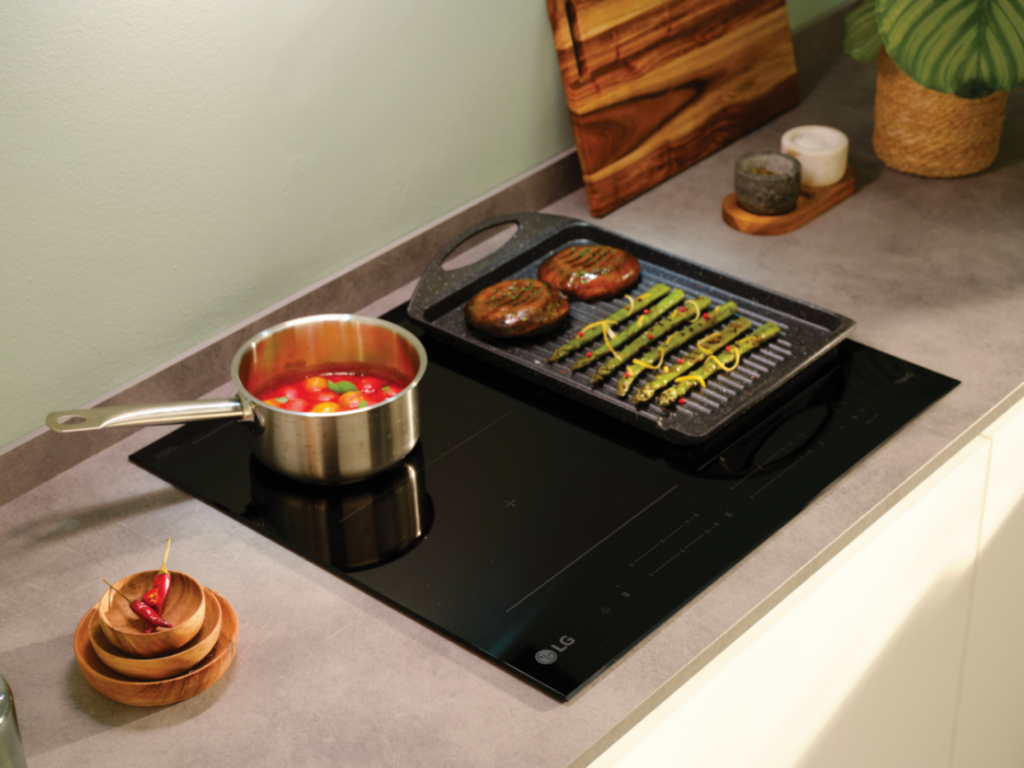 According to the KSH time balance data, in 1986, Hungarians spent an average of 137 minutes a day doing housework. Even after four decades, this time has remained almost exactly the same down to the minute, with household chores still taking up a lot of our free time. However, how we spend this time and what we expect from it has changed.
From obligation to experience – as many generations, as many cuisines
“The history of cooking is actually a social history: it includes how roles and norms develop, how technology develops, and how we think about time, quality, and family”
– says Enikő Bereczki generation researcher. Each generation is shaped by different experiences in their youth, and this is also reflected in their relationship to the kitchen, according to the expert.
For older generations – veterans (born between 1925-1945) and baby boomers (born between 1946-1964) – cooking often meant duty and care. For Generation X (born between 1965-1979), who work and help their children and elderly grandparents, cooking is no longer just a tradition, but also a logistics issue – lack of time, costs, energy efficiency – and quickly manageable routines and predictability have become more valued in their kitchens, with the machine being more of a “rationalizing tool” than a status symbol. For younger generations, cooking is now often an experience and self-expression, and the kitchen is a space where technology, sustainability, comfort, and simplicity are also important. For Generation Y (born between 1980-1995), digitalization is a basic expectation: app-controlled ovens, energy management and design also enter the decision. Generation Z (born between 1996-2009) grows up in a digitally integrated space: for them, mobile control is natural, the essence of technology is not “wiring”, but optimizing the experience, sharing offline and online, and saving time.
Over the past decades, roles have also been rearranged spectacularly: while for veterans and baby boomers the kitchen was for a long time typically a “women’s space”, today the division of tasks between women and men is increasingly natural.
So who is at the stove and how we approach cooking has changed, and kitchen tasks have become more complex than before: they require more planning, health awareness, quality, new flavors, aesthetics and, of course, the logistics of family members come to the fore. Perhaps this is also why today, people aged 15–74 spend an average of almost an hour a day, or almost seven hours a week, in the kitchen or on kitchen-related tasks.
What can we do to ensure that time spent in the kitchen is not a source of stress, not a mandatory shift, but rather a place of joy? And how can our kitchen appliances help with this?
Related news

Green transition on the air conditioning market
🎧 Hallgasd a cikket: Lejátszás Szünet Folytatás Leállítás Nyelv: Auto…
Read more >
LG Unveils AI-Powered Home Robot at CES 2026
🎧 Hallgasd a cikket: Lejátszás Szünet Folytatás Leállítás Nyelv: Auto…
Read more >
Belgian startup uses AI to reduce food waste
🎧 Hallgasd a cikket: Lejátszás Szünet Folytatás Leállítás Nyelv: Auto…
Read more >Related news

Using the system has a boost effect
🎧 Hallgasd a cikket: Lejátszás Szünet Folytatás Leállítás Nyelv: Auto…
Read more >
Hungarian consumers are saving on ham, label reading is becoming more important
🎧 Hallgasd a cikket: Lejátszás Szünet Folytatás Leállítás Nyelv: Auto…
Read more >
International food prices have risen due to the impact of the Middle East conflict on energy prices
🎧 Hallgasd a cikket: Lejátszás Szünet Folytatás Leállítás Nyelv: Auto…
Read more >
