
Digital agriculture is on the verge of explosive development in Hungary

Digital agriculture currently only affects 5-10 percent of domestic producers, but significant progress is expected in this area in the next decade, according to Syngenta’s analysis. Experts believe that the generational change, the challenges caused by climate change and increasingly accurate, data-based technologies together can fundamentally transform Hungarian crop production.
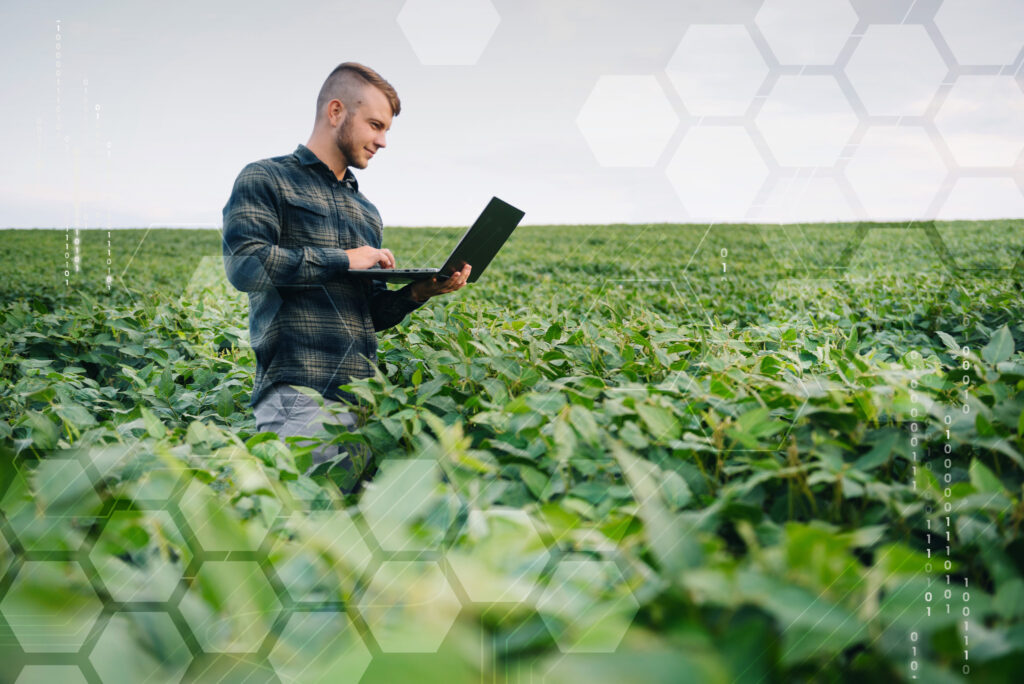 Currently, about 10 percent of Hungarian farmers use data-based, precision solutions, and only 5 percent of them exploit the potential of digital tools – says Syngenta’s analysis. Experience shows that the 30-40 year old generation is much more open to the use of digital tools and as the management of farms is gradually transferred to them, the pace of digitalization is accelerating in Hungary.
What does digital agriculture mean in practice today?
According to Syngenta, the most important direction of digital agriculture today is more precise, accurate and material-saving input material application, which serves both profitability and sustainability. This is based on site-specific management within the field, where the entire area no longer receives uniform treatment, but different decisions are made per zone.
The most important digital trends
The company sees four rapidly developing trends in Hungary: the first is differentiated sowing, i.e. the application of different plant numbers within the field, which is made possible by the development of modern mechanization, hybrid experiments and data analysis. The second is differentiated nutrient supply, where more and more producers apply fertilizer based on soil samples and zone maps.
The third defining area is precision crop protection, especially the nozzle-by-nozzle control of modern sprayers, which reduces overlap and drift, and the door is slowly opening for drone spraying, which also allows for further differentiation of spraying within the field.
The fourth is a spectacularly developing direction: the use of drone footage and satellite images: early detection of stress, nutrient deficiency or disease in the crop is now possible from the air and from space. By continuously monitoring plant health, farmers can make decisions based on real-time information about when, where and what kind of intervention is needed.
Optimization is the key
The most important goal of digital agriculture is optimization, i.e. applying the right amount of input material to the right place. This can improve profitability in two ways: on the one hand, unnecessary application can be avoided, and on the other hand, zones with better conditions can realize higher yields.
Decision support and real-time data
Digital systems are playing an increasingly important role in decisions made during the season. Automated meteorological stations, disease prediction systems and models based on decades of weather data help with planning. Real-time data collection – whether it is yield maps, meteorological measurements or future sensor networks – enables informed decision-making. Data analysis, even with the help of artificial intelligence, is an important development direction of digital agriculture.
Syngenta is at the forefront of developing digital solutions
The company has an extensive experimental network spanning Europe, in which it tests its varieties and hybrids under different climatic conditions, soil types and weather anomalies. This many years of data collection provides a solid basis for data-based farming recommendations and hybrid and variety selection.
Syngenta has been focusing on supporting precision input application for more than seven years, first focusing on site-specific nutrient supply. The backbone of its digital developments is the Cropwise family, which helps farmers in planning and making decisions in the season in an integrated way. The system includes the Cropwise Protector disease forecast based on meteorological data and modeling, which warns of expected infection risks, and the Cropwise Seed Selector seed selection tool, based on decades of weather data, which provides support in the selection of sowing time and the right hybrid for winter barley, sunflower and maize.
In addition, the Interra Scan precision soil testing service offers detailed nutrient and microelement analysis, while Cropwise Planting enables the creation of differentiated fertilizer application and sowing maps tailored to zones within the field. These tools enable informed planning, help fprepare for expected stress effects, optimize sowing time, and timing of biostimulant and micronutrient treatments.
Generational change can bring a real breakthrough
Experts agree that the next 5-10 years will be decisive. The younger generation of farmers has grown up in a digital environment, is more open to new solutions, and is more confident in using data-driven decision support. Although many still farm according to a traditional approach today, technological advances and the challenges arising from climate change are increasingly forcing a more precise, conscious approach.
Photo credit: Syngenta
Related news
Knowledge-based responses to challenges: Syngenta supports farmers with complex solutions
🎧 Hallgasd a cikket: Lejátszás Szünet Folytatás Leállítás Nyelv: Auto…
Read more >
Stable above 700 thousand hectares: domestic sunflower cultivation continues to strengthen
🎧 Hallgasd a cikket: Lejátszás Szünet Folytatás Leállítás Nyelv: Auto…
Read more >
Drought, poor harvest, technological breakthroughs – this is how the 2025 agricultural season ended
🎧 Hallgasd a cikket: Lejátszás Szünet Folytatás Leállítás Nyelv: Auto…
Read more >Related news
Green transition on the air conditioning market
🎧 Hallgasd a cikket: Lejátszás Szünet Folytatás Leállítás Nyelv: Auto…
Read more >
BudapestGO continues to develop: the March application update brings more convenient use
🎧 Hallgasd a cikket: Lejátszás Szünet Folytatás Leállítás Nyelv: Auto…
Read more >
Why does the rabbit lay eggs at Easter?
🎧 Hallgasd a cikket: Lejátszás Szünet Folytatás Leállítás Nyelv: Auto…
Read more >
