
Grana Padano Gets €500m Boost For Cheese Production

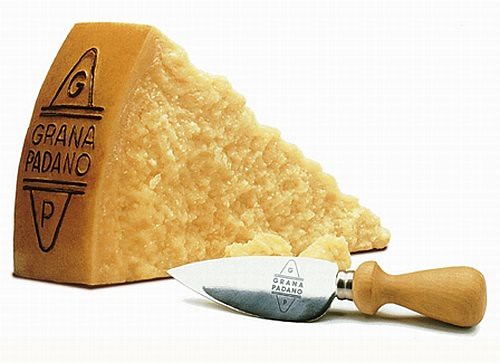
The Grana Padano Protection Consortium has launched a €500 million fund to support businesses involved in producing Grana Padano PDO (protected designation of origin) cheese.
This partnership with Banca Monte dei Paschi di Siena (MPS) aims to boost growth, sustainability and competitiveness across the entire supply chain.
Member businesses will benefit from improved access to credit, specialised consulting, and financial literacy programmes.
MPS has allocated a credit line, available until 31 December 2027, promising priority processing and rapid assessments for all financial requests.
A key aspect of the agreement involves financing for new production quotas for consortium dairies.
The consortium will verify both existing and newly allocated ‘wheel quotas’, ensuring they are transferable but cannot be sold without the bank’s approval if they are financed.
Furthermore, these financed quotas can only be sold to other authorised Grana Padano PDO dairies.
The partnership also includes access to MPS Agridop centres for financial, energy, and subsidised financing services, assistance with internationalisation, sustainability reporting, and access to services such as confirming or reverse factoring.
Controlled Growth Strategy
Alongside this financial boost, the Grana Padano Protection Consortium has updated its 2026 production plan to ensure controlled growth and prevent the significant overproduction witnessed in the second half of 2025.
While overall consumption and revenue forecasts are currently being met or exceeded, the 8% increase in production weight in 2025 – resulting in over three million tonnes of milk being processed for Grana Padano – was “absolutely unusual,” according to general manager Stefano Berni.
This surge was largely driven by the high profitability of processing milk into Grana Padano, compared to low spot milk prices.
To manage future growth more sustainably, the consortium will allow continued production increases, but at a more regulated rate.
Additionally, a “growth multiplier” will be applied to costs for production that exceeds quotas, acting as a “delay in excess” to discourage oversupply, Berni explained.
He noted that while the recent increase in production slightly lowered wholesale prices, this shift had the secondary effect of encouraging higher consumer consumption.

Related news
Despar Italia realises EUR 1.1bn private label sales in 2025
🎧 Hallgasd a cikket: Lejátszás Szünet Folytatás Leállítás Nyelv: Auto…
Read more >
Amazon reportedly reverses course on drone delivery in Italy
🎧 Hallgasd a cikket: Lejátszás Szünet Folytatás Leállítás Nyelv: Auto…
Read more >
Ryanair fined €256 million in Italy, airline to appeal
🎧 Hallgasd a cikket: Lejátszás Szünet Folytatás Leállítás Nyelv: Auto…
Read more >Related news

THE LATEST ISSUE OF TRADE MAGAZINE HAS BEEN PUBLISHED!
🎧 Hallgasd a cikket: Lejátszás Szünet Folytatás Leállítás Nyelv: Auto…
Read more >
Spring renewal: interest in surprising products increased in spring
🎧 Hallgasd a cikket: Lejátszás Szünet Folytatás Leállítás Nyelv: Auto…
Read more >
A new director will lead Nestlé’s factories in Szerencs and Diósgyőr from April
🎧 Hallgasd a cikket: Lejátszás Szünet Folytatás Leállítás Nyelv: Auto…
Read more >
