
Logistics professional organizations welcome the new year with a 10-year concept

Domestic logistics professional organizations have entered the year 2026 with long-term plans. The National Logistics Concept 2030-2035 has been completed, which sets a clear goal for Hungary to become a leading logistics center in Central Europe. The professional material, which looks ahead for 10 years, deals with the domestic development opportunities of logistics in an integrated manner.
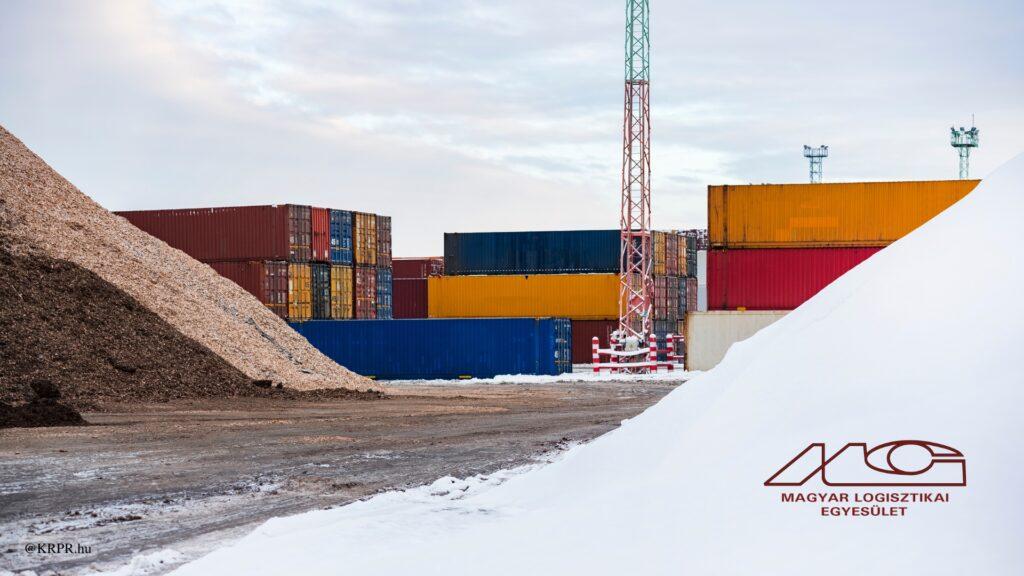 The umbrella organization of the domestic logistics profession is 20 years old: they celebrate with ambitious plans
The most important domestic logistics professional organizations are among the members of the Logistics Coordination Forum (LEF), which was established in 2006. The National Logistics Concept was developed jointly by its organizations, but its future implementation is divided into several stages.
“The preparation of the National Logistics Concept was only the first step. By ensuring the appropriate conditions, the focus can shift to developing a more detailed strategy and action plans in 2026. After that, the creation of digital foundations and the introduction of green incentives can come to the fore”
– said Dr. Zoltán Doór, President of the Hungarian Logistics Association (MLE), which participated in the development, and added that the logistics disruptions experienced in Hungary during the Christmas period in 2025 also pointed out that there are areas in constant need of innovation in the sector.
From 2027 to 2030, the main developments will be on the railway and intermodal infrastructure, as well as the logistics They can focus on developing economically viable railway connection opportunities for parks. In the period after 2030, Hungary can thus become a regional logistics and customs service center, actively managing Central European freight traffic. However, a number of significant developments are still required for this.
“The development of logistics is an indispensable supporter and at the same time a benchmark for general economic development”
– emphasized Dr. Attila Chikán, co-chairman of MLBKT, who also participated in the development.
According to all this, regardless of the outcome of the 2026 parliamentary elections, it may be important to pay due attention to the logistics sector in the coming years.
The volume of rail freight transport may double
Significant growth can be achieved in the logistics sector in the next 10 years, including in the field of rail and intermodal transport – of course, all this only if the right conditions are ensured. As part of the National Logistics Concept, railway development plans include a 20% increase in track capacity, a 30% expansion of sidings, the modernization of rolling stock, and the digitalization of border crossings. Further terminal developments are also proposed: among the first in the Zalaegerszeg, Győr and Szeged regions.
“The performance of rail freight transport could even double by 2035, while continental intermodal traffic could increase threefold”
– highlighted the president of the Hungarian Logistics Association (MLE). He added that adequate support for the logistics sector can have a positive impact on economic results and the achievement of environmental goals.
Logistics sector emissions could be reduced by up to 40% by 2035
The green transition could play a prominent role in road freight transport. High-performance electric chargers are envisaged every 50 kilometers along highways, and zero-emission vehicles could even be granted a full toll discount. The so-called Green Logistics Program aims to ensure that warehouses use renewable energy and that the entire logistics sector’s emissions are reduced by up to 40% by 2035. In the field of digitalization, the National Logistics Data Platform can ensure real-time data sharing. This can provide both AI-based network optimization and automated customs processing. By 2030, every logistics park larger than 50 hectares could be connected to the railway network, and a regional e-commerce and customs logistics center could offer continuous, 24/7 service.
Developments are expected on both water and air
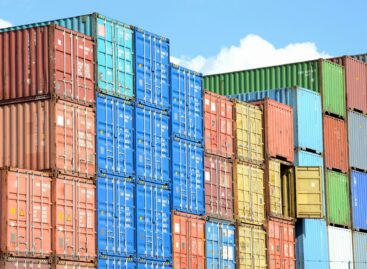
Container shipments from the Adriatic Sea and northern ports could reach domestic recipients in a maximum of four working days.
“The role of the Danube in freight transport could increase to 10% by 2030, the proportion of ships flying the Hungarian flag could reach 25%, while the volume of air freight could increase by up to 80% by 2035,” he pointed out. Dr. Door Zo

Related news
New tachograph regulations – groupage could be a solution
🎧 Hallgasd a cikket: Lejátszás Szünet Folytatás Leállítás Nyelv: Auto…
Read more >
The foundation stone of a logistics and truck terminal was laid in Debrecen
🎧 Hallgasd a cikket: Lejátszás Szünet Folytatás Leállítás Nyelv: Auto…
Read more >
Customs authorities handle half a million packages a day, e-commerce is booming
🎧 Hallgasd a cikket: Lejátszás Szünet Folytatás Leállítás Nyelv: Auto…
Read more >Related news
KSH: in February the foreign trade surplus for goods was 665 million euros, the volume of exports was 2.3 percent lower, and that of imports was 6.7 percent higher than in the same period of the previous year
🎧 Hallgasd a cikket: Lejátszás Szünet Folytatás Leállítás Nyelv: Auto…
Read more >
REGIO Játék: Families spend a maximum of ten thousand forints on Easter gifts
🎧 Hallgasd a cikket: Lejátszás Szünet Folytatás Leállítás Nyelv: Auto…
Read more >
Péter Szijjártó: the domestic food industry is further strengthened with the investment of SUGO FOOD Kft. in Baja
🎧 Hallgasd a cikket: Lejátszás Szünet Folytatás Leállítás Nyelv: Auto…
Read more >
